I am learning flutter from JustAcademy, They provide very much great environment where people gather and work simultaneously. totally project based training institute.
MOHD ABU BAKAR ANSARI
Flutter Developer
Awesome Experience. I am a Front-end Web Designer working at Star India for 3 years now. I applied for Full-stack development and my experience has been phenomenal & they really do help with placements exceptionally. Thank you Roshan sir so much.
What Hyderabad hiring managers really look for in freshers, and how live mentor led project work builds the proof they trust
Every year, thousands of graduates in Hyderabad sit down with the same quiet worry. They have a degree, a few course certificates and a resume that looks almost identical to the one on the next desk, yet their search for IT jobs for freshers keeps ending in polite silence. If that sounds familiar, the missing piece is rarely another certificate. It is usually proof, the kind you only get from IT projects that you planned, built, broke, fixed and can explain without peeking at your notes.
This guide is written for the Hyderabad learner who wants that proof. At JustAcademy, our offline institute sits in Mumbai, so learners from Hyderabad join us through live interactive, instructor led and mentor led sessions online, and you can feel how those sessions work by booking a free demo class before you commit to anything. Stay with me for the next few thousand words and you will know what recruiters actually look at, which projects deserve your weekends, and how to turn that work into interview calls.
One thing before we start. Nothing here claims that certificates are useless, because they are not. But if a certificate is all you have, you are asking a stranger to trust a document, and strangers on a hiring panel are paid to be careful. A working project does the trusting for them.
The Certificate Shelf Is Full and the Interview Room Is Still Silent
What a Hyderabad Recruiter Sees in the First Ninety Seconds
Walk through the IT corridors of Hyderabad, from HITEC City to Gachibowli, Madhapur and Kondapur, and you will meet recruiters who open a few hundred resumes before lunch. They are not being rude when they skim. They are being practical. In those first ninety seconds they usually hunt for three things: a clear sense of what you can build, a line or two that proves it, and a hint that you can talk about it without sounding rehearsed.
A fresher resume that lists six certificates and one vague sentence about being a quick learner gives the recruiter almost nothing to hold. A resume that says you built a small inventory tracker in Python, deployed it, and fixed a bug that double counted stock hands the recruiter a story. Stories travel. They move from the screening call to the hiring manager and from the hiring manager to the final round. That is why so many people searching for IT company jobs for freshers discover, a little painfully, that the shortlist leans toward the candidate with something to show.
Why a Pile of Certificates Rarely Answers the Real Question
Think about what a certificate actually says. It says you attended, or you passed an assessment. It does not say whether you can open an empty folder on Monday morning and make something useful appear by Friday. Hiring managers in the IT sector are quietly asking that second question all the time, because on the job nobody hands you a multiple choice paper. They hand you a vague requirement, a half working codebase and a deadline that was set before anyone understood the problem.
Many freshers also stack certificates because it feels productive. It is the study version of buying gym equipment. The shelf looks impressive, the muscles do not appear. Meanwhile the learner who spent the same three months on two modest IT projects can speak for twenty minutes about decisions, trade offs and mistakes. When a panel hears that, it remembers the name.
The Honest Place Certificates Still Hold
Fairness matters here. A well chosen certificate can get you through an automated filter at a large firm, and it shows that you can finish what you start. The trick is to treat it as a supporting actor rather than the lead. If you are wondering which ones are worth your money, the guide on top IT certifications that help freshers get jobs walks through the sensible options without any hype. Pick one or two that match your direction, then pour the rest of your energy into things you can demonstrate.
What a Project Proves That a PDF Never Will
Proof of Work Instead of Proof of Attendance
A project is a small, honest experiment on yourself. You pick a problem, you make a plan, you hit walls, and you either climb them or learn why you could not. Every wall leaves evidence. There is a commit history that shows how your thinking changed, a README that shows how you explain things, and a live link that shows you finished. Nobody can fake that whole trail for long, and interviewers know it.
There is also a quieter benefit. Projects teach you the vocabulary of real work. You stop saying “I know APIs” and start saying “I used a rate limited API and had to cache responses because it kept failing at peak time.” That second sentence is worth more than any line you will ever copy from a course outline.
Technical Skills in Resume for Freshers That Actually Get Read
Most people write the technical skills section of a resume like a shopping list. Java, Python, SQL, HTML, communication, teamwork. The problem is that every other fresher writes the same list. When you think about technical skills in resume for freshers, the winning move is to attach each skill to a project line. Instead of writing Python as a bare word, write that you used Python to automate a weekly report and cut the manual effort from two hours to ten minutes. Now the skill has a face.
Recruiters who screen for technical skills required for HR fresher shortlists, which is a phrase you will hear from campus teams all the time, are usually working from a checklist given by the hiring manager. If your project lines mirror the language in that checklist, you jump the queue without doing anything flashy. Reading the job description carefully and matching your project descriptions to it is boring advice, and it works very well.
Skills Required for IT Jobs Show Up Under Pressure
The skills required for IT jobs are not only languages and tools. They include reading error messages calmly, asking a useful question in a team chat, estimating how long something will really take, and admitting early when you are stuck. None of that is visible on a certificate, yet all of it appears naturally during a project, especially one done with a mentor who pushes back on your shortcuts.
Look at the list of IT skills for freshers that companies mention again and again: problem solving, version control, basic testing, clear documentation, and the ability to learn a new tool quickly. Every single item on that list is trained by building something real. You cannot learn version control from a slide deck. You learn it the day you overwrite your own work and have to recover it. That is the day you become a better developer than most people who only watched tutorials, and it is also the day you gain the kind of technical skills for freshers that recruiters trust.
Reading the Hyderabad Hiring Floor Without the Rumours
IT Companies Hiring Freshers Around HITEC City and Beyond
Ask ten friends about IT companies hiring freshers and you will get ten different rumours, most of them a year old. The reality is more ordinary. Large services firms, product companies, startups and captive centres all hire fresh graduates in waves, usually tied to campus drives, referrals and the budget cycle. A learner who searches for a list of IT companies hiring freshers will find plenty of long pages, but a list only tells you who exists. It does not tell you what each of them wants to see on day one.
Many people also type “IT companies near me for freshers” into a phone and trust whatever appears first. Location is a fine starting filter in a city as sprawling as Hyderabad, where commute time can eat two hours of your day. Just remember that a nearby office and a good fit are two different things. IT companies for freshers range from structured training programmes with fixed batches to lean startups where you will touch production code in week two. Your projects should be built so that they speak to both kinds of employer.
How to Read an IT Job Vacancy for Freshers Like a Recruiter
Open any IT job vacancy for freshers and you will see a pattern. The first few lines talk about the company. The middle is a list of tools. The end mentions a degree and a notice period that does not apply to you. Skip straight to the tools, then ask yourself which of them you have actually used in a project, not just heard of in class. That honest answer tells you whether to apply now or build one more thing first.
When you see a vacancy in IT company for freshers that asks for “basic knowledge of SQL, any one programming language and good communication,” read it as a hint about the screening round. They will test the basics, then they will ask you about something you built. The same logic applies to an IT vacancy for freshers that lists a framework by name. If you have a small project using that framework, even a modest one, you are suddenly ahead of people who only mention it in a skills line. IT job openings for freshers are often written generously, but the shortlist is written strictly.
Where Projects Sneak Into Fresher IT Recruitment Rounds
Fresher IT recruitment usually moves through four stages: an online assessment, a technical conversation, a managerial or project discussion, and an HR round. People prepare hard for the first and the last, and then freeze in the middle two. It is in those middle rounds that your projects do their quiet work. The interviewer opens your resume, picks one line, and asks, “Tell me how this was built.” From that point the interview is about you, not about a question bank.
In IT recruitment for freshers, this is the moment where a certificate cannot help and a project can. If you can walk through your architecture, explain why you picked a database, describe a bug that cost you a whole evening and tell them what you would change in version two, you have answered half of the technical round and most of the managerial one. Interviewers rarely expect polish. They expect ownership.
Project Management Is Hiding Inside Every Good Build
Project Management in IT Starts Smaller Than You Think
When people hear project management in IT, they picture a person in a meeting room with a laptop and a Gantt chart. The real thing begins much earlier and much smaller. It begins the first time you decide what goes into version one, what waits for version two, and how you will know you are done. That is project management it style, even if you are the only person on the team.
The good news is that project management for IT professionals is a learnable habit, not a talent. You write down the goal in a sentence. You break it into tasks that fit inside a day. You track what is finished, what is blocked and what you underestimated. Freshers who build this habit early find that managing IT projects at work feels familiar rather than frightening, because they have been doing a smaller version of it for months. IT and project management are closer cousins than most syllabi admit, and project management for IT teams rewards anyone who can show that they plan before they code.
You will also hear people say IT software project management as if it were a separate universe. It is not. It is the same discipline, applied to teams, budgets and release dates. A fresher who has already shipped a tiny app on a deadline, with a backlog and a few honest retrospectives, understands more of it than a person who has memorised every definition in a textbook.
Drawing an IT Project Plan Before Writing a Single Line
An IT project plan sounds formal, but for a student project it can fit on one page. Write the problem, the users, the features for version one, the tools you will use, a rough timeline in weeks, and the three things most likely to go wrong. That is it. The plan will change, and that is fine, because the act of planning is what makes the later changes easier to handle.
Include quality checks in the plan from day one. Decide how you will test the app, even if it is only a short list of scenarios you will run by hand before each release. Once the project grows, you can graduate to automated checks, and a structured course such as the Selenium training in Hyderabad shows how those checks are written and maintained in a professional setting. Learners who add even a few automated tests to their projects tend to stand out, because most fresher projects have none.
If you work with a friend or two, borrow ideas from agile IT project management. Keep sprints short, one or two weeks at most. Hold a ten minute standup. At the end of each sprint, look at what you finished and ask what slowed you down. This is lightweight, it costs nothing, and it gives you language to use in interviews. Saying that you ran two week sprints on a college project lands very differently from saying that you worked in a team.
Choosing IT Project Management Software Without Wasting a Weekend
Beginners often lose an entire weekend comparing the best IT project management software on the market, then never create a single task. Please do not do that. For a fresher, the right IT project management software is whichever tool you will actually open every day. A free board with three columns, to do, doing and done, is enough to learn the rhythm. Once you are comfortable, try one of the more complete tools so you can say you have seen how they handle backlogs, sprints and reports.
Think of an IT task management software as a mirror. If you keep your tasks in a tidy list, you will notice when something sits in the doing column for nine days and ask why. That one habit trains your judgment faster than most lectures. Pick one tool, use it on your next project from start to finish, and take a screenshot of the board at the end. That screenshot is a surprisingly good talking point in an interview, because it shows you did not just build something, you ran it like a small team would.
Roles Beyond Pure Coding Where Project Thinking Opens Doors
The IT Project Coordinator Role and Why IT Project Management Software Helps You Get There
Not everyone wants to write code all day, and the industry has room for people who prefer to keep work moving. An IT project coordinator sits between developers, testers, designers and clients, making sure tasks are assigned, dates are tracked and nothing quietly falls through a crack. It is one of the friendlier entry points into project work, and freshers who have already used IT project management software on their own builds often find the interview conversation surprisingly easy.
What does a coordinator actually do in a week? Updates the board, chases blockers, writes the status note, books the review call, and keeps a calm tone when a deadline slips. Every one of those tasks has a tiny version in a student project. If you tracked bugs, wrote a short weekly summary for your teammates and kept a clean list of pending work, you have rehearsed the job already. Say so on your resume, and say it with numbers where you can, such as how many tasks you tracked or how many sprints you completed.
IT Project Manager Is a Destination, Not a Starting Line
Let me be honest about the title everybody dreams of. An IT project manager is usually someone who has spent years inside delivery, who knows how code ships, where it breaks and how people behave when a release is late. The phrase project manager IT teams look for is rarely a fresher. That is not discouraging, it is simply a map. You reach the role by doing the earlier jobs well, and you do the earlier jobs well by building things now.
Plenty of Hyderabad learners also type phrases like “isb it project management” into search, partly because ISB sits right here in Gachibowli and the name carries weight. Advanced programmes of that kind are built for people who already have work experience, and they make far more sense after a few years in the field. The same is true of a master in IT project management or an MS IT project management degree abroad. These are good paths for a later chapter. For the first chapter, a fresher is better served by shipping projects, learning how teams work and collecting a few honest stories about deadlines.
IT Jobs That Don’t Require Coding and the Truth Behind That Search
People search for “it jobs that don t require coding” every single day, and the curiosity is fair. There are real roles in testing, support, business analysis, documentation, operations and coordination where you will write little or no code. The honest part, though, is that even these roles expect comfort with technology, and they reward people who understand how software is made. A tester who has built an app understands bugs better. A business analyst who has run a project understands requirements better.
The same goes for those exploring non IT jobs for freshers and wondering whether to cross over. A career change is absolutely possible, and many people do it without a technical degree. If that is your situation, the story in how to switch careers into IT without a technical background is worth a slow read. The common thread in people who succeed is the same one we keep returning to in this guide: they built something small, real and visible, and they let it speak.
Projects Worth Building Before Your Next Application
IT Projects for Students That Actually Get Finished
The graveyard of student work is full of ambitious ideas that never reached version one. A clone of a food delivery giant, a full social network, a smart home controller. They sound exciting and they die in week three. If you are hunting for IT projects for students that will really help, pick something small enough to finish in three or four weeks and useful enough that you can explain who would use it.
Good examples include an expense tracker that exports a monthly summary, a job application tracker with reminders, a quiz app for a subject you teach a younger cousin, a simple booking system for a neighbourhood clinic, or a script that cleans messy spreadsheets for a small shop. If you want a language that lets you build these quickly and also opens doors to data and automation work, the Python training in Hyderabad is a natural place to learn the fundamentals in a guided way, with someone checking your code instead of leaving you alone with a forum thread.
Risk Management in IT Projects at Student Scale
Risk management in IT projects sounds like a topic for senior people, but a student version is easy to practise. Before you start, list the three things most likely to derail you. Maybe you have never used the database you picked. Maybe your teammate has exams in week two. Maybe the API you rely on changes its pricing. For each risk, write one small action that lowers it, such as a quick prototype, a backup plan or a clear handover note.
At the end of the project, review which risks actually appeared and which surprises you never predicted. That review is gold in an interview. Saying that you identified three risks, handled two and learned from the one you missed tells the interviewer you think about uncertainty like an adult. It also shows that you understand the heart of managing IT projects, which is less about avoiding trouble and more about meeting it early with a plan.
Matching Each Project to the Skill Track You Want
Different careers need different proof. If you are drawn to interfaces and product thinking, build a small app with a proper design process: user research notes, wireframes, a clickable prototype, then a coded version. A guided track like the Figma training in Hyderabad teaches the design half of that journey, and pairing it with a coded build gives you a portfolio piece that few freshers can match.
If you lean toward quality and reliability, build a project and then write tests for it. If you lean toward data, pick a real dataset from your own life, like your monthly spending or your cricket club scores, and tell a story with it. The point is not the topic. The point is to leave the project with a short list of technical skills for freshers that you can attach to real work, and to be able to explain every line of it in plain language.
From First Project to First Paycheque
IT Jobs for Freshers Work From Home and the Portfolio Question
Remote roles look attractive, and they should. But IT jobs for freshers work from home are competitive, because the employer cannot watch you learn at the next desk. They need evidence that you can work independently. That evidence is a portfolio, a tidy repository and a couple of projects you have documented well enough that a stranger could run them.
If you are scanning for work from home IT jobs for freshers, notice how many postings ask for a portfolio link or a repository. People hunting for IT jobs work from home for freshers also tend to underestimate communication. Write clear commit messages. Keep a README that explains setup in five steps. Record a two minute screen walkthrough of your best project. These small acts of clarity make a remote hiring manager feel safe about trusting you. If you are unsure whether remote or classroom style learning suits you better while you build all of this, the comparison in online vs classroom training and which learning method works better lays out the trade offs honestly.
Freelancer IT Projects as Paid Practice
Once you have one or two projects behind you, small freelancer IT projects can be a wonderful way to practise under real pressure. A local shop wants a simple catalogue app. A coaching centre wants a fee reminder tool. A friend running a small business wants a landing page. The pay may be modest at first, but the learning is enormous, because you must handle unclear requirements, change requests and deadlines that belong to someone else.
Mobile apps are an especially friendly area for this, since small businesses love the idea of an app of their own. A structured course like the Flutter training in Hyderabad helps you build cross platform apps, and a finished client project becomes a story that no certificate can replicate. Keep the scope tight, write down what is included, and be polite but firm about extras. That alone will set you apart from many beginners.
Software, Engineering and Field Roles on the Fresher Map
Let us zoom out and look at where the work really is. IT software jobs for freshers cover developers, testers, support engineers and associate analysts. IT engineering jobs for freshers include system, network, cloud and infrastructure roles, where practical labs matter even more than theory. IT field jobs for freshers are the on site support and installation roles that keep real offices running. IT sector jobs for freshers also stretch into operations, quality, documentation and project coordination, and many of them are good entry points that lead to bigger things within a couple of years.
Whichever corner interests you, the same principle holds. A fresher who can say, “Here is what I built, here is what broke, here is what I changed,” is easier to hire than one who can only say, “I have completed the course.” IT company jobs for freshers are won in that exact sentence.
A Twelve Week Plan to Build Proof Before You Apply
Weeks One to Four: Learn Just Enough and Build Something Small
Picture a fresher in Hyderabad who has twelve weeks before campus season gets busy. In the first month she picks one direction, say web development, and learns only what her first project needs. No hoarding of tutorials. She writes a one page plan, sets up her board, and builds a plain version one of a clinic appointment tracker. It is not pretty, but it works, and by week four it has a public link and a short README. This is an illustration, not a case study, yet it matches what many successful learners describe.
The secret of this stage is restraint. Resist the urge to add login, payments, notifications and a dark mode all at once. Every extra feature is another chance to stall. Finish the boring core, then improve it. A finished small project teaches more than three ambitious ones that never leave your laptop.
Weeks Five to Eight: Add Quality, Feedback and a Second Project
In the second month, our learner shows the project to a mentor and gets honest feedback. The code is repeating itself, the error messages are confusing and there is no testing. She fixes the top three issues, adds a handful of tests and writes down what she learned. Then she starts a second project in a different shape, maybe a small data tool, so her portfolio shows range instead of repetition.
This is also a good time to practise explaining. Record yourself describing the project in two minutes, play it back and cringe a little. Then record it again. By the third attempt your explanation will be smoother, and that smoothness will carry into real interviews. Ask a friend to play the interviewer and pick a random line from your resume. If you can survive that, you are getting ready.
Weeks Nine to Twelve: Package, Apply and Practise Out Loud
The last month is about packaging. Tidy the repositories, pin the best two projects, rewrite the resume so every skill is attached to a project line, and prepare a short story for each project covering the problem, the plan, the biggest bug and the next improvement. Only now does she start applying widely, and she does it in small batches so she can learn from each round. After every interview she writes down what was asked and what she would answer differently. By the end of the twelve weeks, she has two solid projects, a cleaner resume and the quiet confidence of someone who has rehearsed the real conversation many times.
Questions Hyderabad Freshers Ask Again and Again
How Many IT Projects Should a Fresher Have Before Applying?
Two well finished projects are better than six half done ones. Aim for one main project that shows depth, such as a full application with a database and tests, and one smaller project that shows range, such as an automation script or a design prototype. Both should have a readable README, a live link where possible and a short story you can tell in two minutes. Quantity impresses nobody. Clarity impresses everyone.
Do Certificates Still Matter for IT Jobs for Freshers?
Yes, but in a supporting role. A recognised certificate can help you clear an automated filter and signals commitment, which is useful. It rarely decides the final offer on its own. Think of it as the cover of a book and your projects as the chapters. People may pick the book up because of the cover, but they decide whether to buy it by reading a few pages. Build the pages first.
Can I Build Projects Without a Computer Science Degree?
Absolutely. Plenty of working developers, testers and analysts in Hyderabad came from commerce, arts, mechanical or electronics backgrounds. What matters is that you can show the same thing a computer science graduate would show: a working project, a clear explanation and a habit of learning. A guided course with a mentor can speed this up because it keeps you on a sensible path instead of letting you wander between random topics for months.
Is Live Training Really Better Than Recorded Videos?
For project work, usually yes. Recorded videos are excellent for revision and for concepts you want to replay, but projects need conversation. When you are stuck on an error at nine in the evening, a live session or a quick mentor check in saves you days. Live interactive sessions also create a rhythm and a sense of accountability, which is what most self learners are missing when they drift away from a half finished course.
The Certificate Route and the Project Route Side by Side
A Quick Comparison Every Fresher Can Use
Sometimes a table says in ten seconds what a paragraph needs a page to explain. Here is a plain comparison of the two routes as a Hyderabad recruiter is likely to experience them. Use it as a mirror when you plan your next three months.
What the recruiter checks
Certificate route
Project route
Can this person build something?
Implied, never shown
Shown through a live link and a repository
Can they explain their choices?
Rarely tested
Tested naturally in the project round
Do they plan and track work?
Not visible
Visible through a board, a plan and sprint notes
How do they handle bugs and risk?
Unknown
Told as a short, honest story
Will they stand out in a large pile?
Seldom, many people hold the same one
Often, because every project is a little different
Does it help in remote hiring?
Marginally
Strongly, because it proves independent work
Time and cost to build
Fixed fees and exam dates
Flexible, with mentor feedback speeding it up
How HR Reads Both Without Taking Sides
The most useful way to think about this is not as a fight. HR teams read certificates as a signal of effort and projects as a signal of ability. A candidate who has both, with the projects clearly in front, is the easiest decision a panel makes all week. A candidate with only certificates takes more convincing, and a candidate with only unexplained projects takes some convincing too, because the story needs polish.
So the practical order is simple. Build the project first, learn the tool as you build, then add a certificate if your target employer cares about one. That order keeps the learning attached to something real, and it keeps your resume honest. Whenever you feel the urge to buy another course, ask whether it will add a line to your project list or just another logo to your certificate shelf.
There is one more thing HR teams quietly appreciate, and that is consistency. A resume where the projects, the skills and the story all point in the same direction feels trustworthy. If you say you want to be a tester, your projects should include testing. If you say you love design, your portfolio should show design thinking. Random collections of unrelated work make a recruiter wonder what you really want. A clear direction, even a modest one, makes their decision simpler, and simple decisions tend to go in your favour.
Self learning works for a while. Then the gaps show up. You do not know which topics matter, you cannot tell whether your code is clean, and nobody tells you that your project looks like fifty others. Videos are wonderful for explaining a concept, but they cannot look at your repository and say, “This function is doing three jobs, split it.” That kind of feedback is what turns an average project into a convincing one.
This is where live interactive sessions make a real difference. In an instructor led class, you ask questions the moment they arise. In a mentor led review, someone who has seen hundreds of student projects points out what a recruiter will notice in your work before a recruiter does. At JustAcademy, learners from Hyderabad join these live interactive sessions online, while learners who want a classroom setting can attend our Mumbai institute. Many students looking for the best course in Mumbai are really looking for this blend of guidance and accountability, and the live online format brings it to your screen wherever you are.
What Live Instructor Led and Mentor Led Training Actually Looks Like
A typical live interactive training week mixes concept sessions, guided practice and a project checkpoint. The instructor explains an idea, then you build a small piece of the project with support. A mentor reviews your work, asks you to justify your decisions, and challenges you the way an interviewer would. By the time you reach an actual interview, you have already been through that conversation many times, so it feels familiar instead of scary.
Placement support completes the picture. It is not magic, and nobody can honestly promise a job, but guided resume building, mock interviews and project walkthrough practice give you a real advantage. If you want a full stack path that is built around real projects, the MERN Stack Developer Bootcamp in Hyderabad brings frontend, backend, databases and deployment together in one guided journey, with placement support and plenty of mentor time along the way.
Choosing a Learning Partner You Can Trust
When you compare options, look beyond the brochure. Ask how many projects you will build, how often a mentor reviews your code, whether classes are live and interactive or only recorded, and what placement support really involves. Ask to see a sample class. Trust is built the same way a project is built, through small proofs. JustAcademy is an ISO certified training institute with a long record of guiding learners across India, and a free demo is the simplest way to judge whether the teaching style suits you.
It also helps to speak with people who have walked the path before you. Ask the trainer what kind of projects past learners built, how they presented them in interviews and what feedback recruiters gave. A good mentor will answer with specifics, not slogans. Pay attention to how the session feels, too. Do the instructors invite questions, do they slow down when you are lost, and do they push you to think instead of just copying code? Those small signals say more about the quality of training than any promise on a banner, and they are worth checking before you spend your time or your money.
Conclusion
If there is one idea to carry out of this guide, let it be this: the job market in Hyderabad is not asking you to collect more paper, it is asking you to show more work. IT jobs for freshers are won in the project round, where a recruiter hears you explain what you built, why you built it that way and what you would do differently next time. Certificates help you reach that round. Projects help you win it.
So start small this week. Pick a problem you actually understand, write a one page plan, set up a three column board, and build version one. Track your risks, test what you ship, and write a short README. Then do it again with something a little harder. After three or four rounds you will have a resume that talks, a portfolio that proves, and the confidence that comes from having done the work. If you want mentors beside you on that journey, with live interactive, instructor led sessions and genuine placement support, we would love to help.
Ready to build real proof for your next interview?
A practical, mentor friendly walkthrough for Hyderabad testers who want to move from repeating manual checks to building automation they can be proud of
A practical guide for Hyderabad developers who want to build safer Laravel applications through live interactive, instructor led and mentor led learning
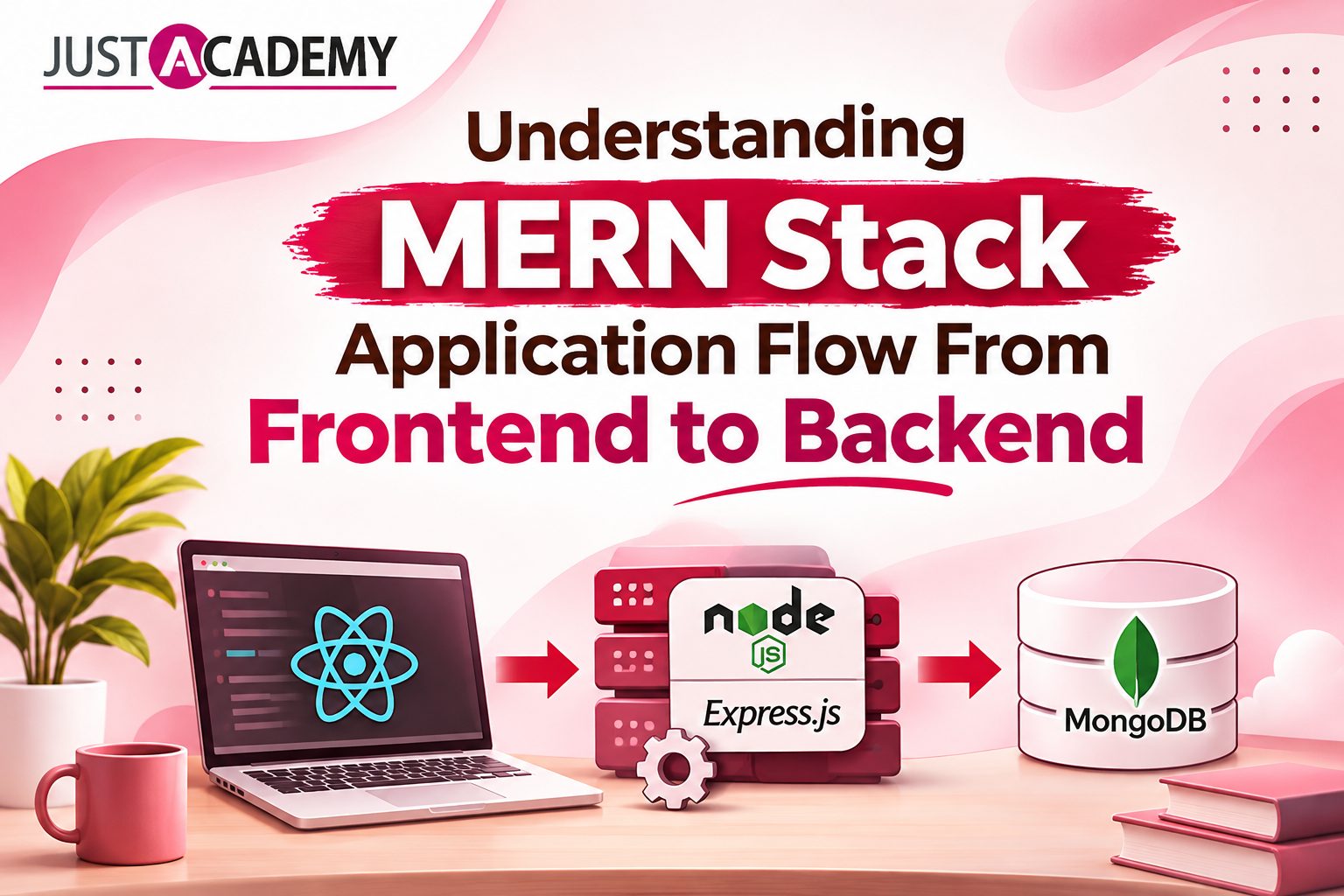
A practical walk through React, Express, Node and MongoDB for Hyderabad learners, explained through live interactive, instructor led and mentor led training.