I am learning flutter from JustAcademy, They provide very much great environment where people gather and work simultaneously. totally project based training institute.
MOHD ABU BAKAR ANSARI
Flutter Developer
Awesome Experience. I am a Front-end Web Designer working at Star India for 3 years now. I applied for Full-stack development and my experience has been phenomenal & they really do help with placements exceptionally. Thank you Roshan sir so much.
A Hyderabad friendly guide to IT support jobs, beginner roles and the first ninety days of a career change that actually holds up
Somewhere between the third alarm snooze and the second cup of chai, a lot of people in Hyderabad quietly ask themselves the same question. Is it too late for me to move into tech? You may be a bank executive who has watched the Gachibowli skyline fill up with glass towers, or a school teacher whose cousin got an offer in HITEC City, or a pharmacy assistant who keeps hearing that IT is where the future is. Here is the honest answer before we go any further: no, it is not too late, and a technical degree is not a gatekeeper the way you were told it was. The cleanest doorway for most career switchers is the world of it support jobs, where patience, communication and a habit of fixing things matter more than a computer science certificate. This guide walks you through the whole map of it career opportunities, from the first job you can realistically land to the roles you can grow into later.
Before the deep dive, a quick note on how we will approach this. At JustAcademy, the learning model is built around live interactive sessions, instructor led classes and mentor led guidance, because career switchers do not fail for lack of talent, they fail for lack of someone to ask. Our offline institute is in Mumbai, and learners from Hyderabad join the same live online batches from home, so you get a real person answering your doubts in real time instead of a pre recorded video. If you would like to feel what that looks like, you can register for a free demo session at any point while reading, and if you would rather browse first, the full catalogue is on the JustAcademy all courses page. Now, let us get into the real substance.
Why Hyderabad Is the Right City to Start Over In
A City That Already Speaks Technology
Hyderabad has spent two decades becoming one of the busiest technology cities in the country. Walk through Madhapur or the Financial District on a weekday evening and you will see the proof in the chai stalls, the shared cabs and the sheer number of people carrying laptop bags. That density matters for a career switcher, because the it sector here is not a single type of employer. Global product companies, services firms, banks running their technology operations, pharmaceutical and healthcare organisations, startups and government linked bodies all hire in the same city. When so many kinds of employers exist side by side, the number of entry points multiplies, and your odds of finding one that suits your background improve.
There is also a cultural advantage that rarely gets mentioned. In a city where half your neighbours work in or around tech, advice is everywhere. Someone in your extended circle knows someone on a service desk team, or an infrastructure team, or a testing team. Use that. Career switching is a lonely business when you do it in secret, and a much friendlier one when you start asking questions out loud.
What Is Actually Changing in IT Career Opportunities
The shape of it career opportunities has been shifting for a while now. Companies no longer need only people who write code all day. They need people who keep systems running, protect data, explain dashboards to managers, onboard clients, audit processes and make sure a hundred small tools keep talking to each other. Every one of those tasks has a job title attached to it, and many of them welcome people from non engineering backgrounds. Cloud tools, remote work and automation have also created new support and coordination roles that simply did not exist a decade ago, which is good news if you are starting late.
That does not mean every door is open without effort. It means the doors are more numerous and more varied than the old stereotype suggests. The stereotype says IT equals programming, programming equals engineering degree, and therefore everyone else should stay out. The reality is that the field has dozens of lanes, and several of them are built for people who learned their skills somewhere else first.
The Myth of the Technical Background
Let us bust the biggest myth directly. A technical background is not a single thing you either have or lack. It is a collection of habits: breaking a problem into smaller pieces, reading documentation, testing a guess, writing down what worked, and asking a precise question when you are stuck. You can develop every one of those habits without a degree, and many working professionals already have them from other jobs. An accountant who reconciles messy ledgers is practising structured troubleshooting. A customer service lead who calms an angry caller is practising the exact skill that a service desk values most. The label on your previous degree matters far less than the evidence that you can learn, communicate and stay calm when something breaks.
A Plain Map of the Types of IT Jobs
Support and Service Desk Roles
Think of support roles as the front door of the whole industry. Titles like it help desk jobs, it service desk jobs, it technician jobs and it field jobs all sit here. A service desk analyst answers tickets and calls, resets passwords, fixes email and printer problems and escalates anything bigger. A field technician does the same kind of work in person, visiting offices or client sites to set up hardware and repair faults. These roles are the most common answer to the question of how to get started in it with no experience, because employers train for the company specific tools and care more about attitude than pedigree.
If you have ever been the person in your family who gets the Wifi back on, you already have the raw instinct. The job simply turns that instinct into a process, with ticketing tools, response times and documentation. Many people who start here move up into it specialist jobs, administrator roles or infrastructure within two or three years, which is why support is often called the best place to learn how a company really runs.
Infrastructure, Networking and Security
One step beyond the service desk you will find it administrator jobs, it networking jobs and it security jobs. Administrators manage user accounts, servers, backups and the many small configuration tasks that keep an office running. Networking professionals make sure data travels reliably between devices, offices and the cloud. Security roles protect systems from misuse, which has become one of the most in demand areas because every organisation now stores sensitive information. These paths do demand more technical study, but they are very reachable if you build up from support. Plenty of security analysts started out resetting passwords and noticed patterns in suspicious login attempts.
The key insight is that you do not have to choose your final destination on day one. You choose a starting lane, collect evidence of what you enjoy, and then branch. Someone who loves untangling cables and diagnosing connections may drift to networking. Someone who enjoys policies and risk may drift to security or audit.
Data, Analysis and Business Facing Roles
The third big family covers it analyst jobs, it business analyst jobs and it audit jobs. These roles sit between technology and the business. An analyst studies data or processes, finds patterns, and explains them in plain language. A business analyst gathers requirements from stakeholders and translates them into something a technical team can build. An audit professional checks whether systems and controls follow the rules. They reward communication and logical thinking, and many career switchers from finance, operations, marketing or teaching find them surprisingly natural. The table below gives you a quick comparison across the main families so you can see where your current strengths might land.
Role Family
Typical Titles
Starting Difficulty
Good Fit If You
Support
Help desk, service desk, technician, field support
Lowest
Enjoy helping people and solving small problems quickly
Infrastructure
Administrator, networking, cloud support
Medium
Like understanding how systems connect
Security and Audit
Security analyst, IT audit, compliance
Medium to higher
Pay attention to detail and rules
Data and Analysis
IT analyst, business analyst, reporting
Medium
Enjoy patterns, numbers and explaining findings
Business Facing
IT sales, consultant, project coordinator
Medium
Are strong communicators with domain knowledge
IT Jobs Without Coding and Why They Exist
How to Get Into IT With No Experience, Starting at the Help Desk
The single most practical answer to how to get into it with no experience is to aim for a support role first. Hiring managers for these positions know that most applicants will not have prior IT titles, so they screen for different things: clear communication, willingness to follow a process, basic comfort with operating systems and a calm temperament. If you can show that you have fixed your own laptop problems, helped colleagues with software, or handled difficult customers, you have already got the story. Pair that with some structured learning and you become a very credible candidate for it trainee jobs and entry level it jobs with no experience requirements.
Picture a woman we will call Anjali, a retail supervisor in Kukatpally who spent six years managing a store. She is used to deadlines, difficult conversations and doing three things at once. When she looked at job boards for it help desk jobs, she realised she met half the criteria without trying. What she lacked was vocabulary and tool familiarity, and both of those can be learned in weeks, not years. That is the pattern we see again and again: the gap is smaller than the fear.
IT Jobs Without Coding That Pay Reasonably Well
It is worth saying plainly that it jobs without coding are not consolation prizes. Support, administration, networking, testing coordination, documentation, project coordination and analysis roles all exist because organisations need them, and they pay respectably, especially as you gain experience. You will often hear that coding is the only route to the best it jobs, and that is simply not the whole story. Coding opens certain lanes, but plenty of well paid professionals spend their careers in infrastructure, customer facing technical work or process roles without writing production code daily.
If you do decide later that you want to code, support work is a perfectly sensible launchpad. You can learn scripting for automation, which is a gentle introduction, and then decide how deep you want to go. Starting without coding does not lock you out of coding. It simply lets you earn while you decide.
Sales, Consulting and Project Roles Around Technology
People often forget that the industry also runs on conversation. It sales jobs involve explaining technical products to non technical buyers, which is a skill that people from sales, banking and hospitality already own. It consultant jobs involve advising clients on tools and processes, which suits those with strong domain knowledge in finance, logistics or healthcare. It project manager jobs and it manager jobs involve coordinating people, timelines and budgets, and they usually come after a few years of experience, but the path often starts in coordination or analysis roles that are open to switchers.
For those who like numbers and dashboards, analyst paths are especially welcoming. If you are curious about it analyst jobs and it business analyst jobs, a structured programme such as the Data Analytics bootcamp for Hyderabad learners covers the tools, projects and live mentoring that turn curiosity into a portfolio, and you can compare how that feels against self study before you decide.
Your Old Career Is Not Baggage, It Is Leverage
Turning Teachers, Bankers and Shopkeepers Into IT Candidates
One of the biggest mistakes career switchers make is hiding their previous job as if it were an embarrassing gap. Recruiters in this field often look for the opposite. A former teacher knows how to explain complicated ideas patiently, which is exactly what a trainer, a technical support specialist or a documentation writer needs. A former banker understands compliance, reconciliation and risk, which are valuable in it audit jobs and security governance. A former shop owner understands customers, inventory and the pain of downtime, which makes them thoughtful in service roles and in consulting conversations.
The trick is translation. Do not write that you managed a store. Write that you handled a team of eight, resolved customer escalations daily and kept an inventory system accurate across three shifts. Same facts, different language, and suddenly it reads like experience a service desk or operations team would want.
Healthcare IT Jobs and the Value of Domain Knowledge
Domain knowledge is the underrated superpower of switchers, and healthcare IT jobs are the clearest example. Hospitals, diagnostic chains, insurers and pharma companies in and around Hyderabad run on software that handles patient records, billing, appointments and compliance. They need people who understand both the clinical or administrative side and the technology side. A nurse, lab technician or medical coder who learns support, data handling or analysis skills becomes a very attractive hire, because they already know the vocabulary and the stakes. The same logic applies to finance, education, logistics and manufacturing. Technology is a layer on top of every industry, and people who understand the industry underneath are in short supply.
Writing the Story Recruiters Want to Read
Your resume and your answer to the classic question, why are you switching, should be the same story told at two lengths. A strong version sounds like this: you built a career in one field, you noticed that technology kept solving the problems you faced, you started learning it systematically, and you now want to apply your experience plus your new skills in a role that connects both. Notice that it is not an apology. It is a direction.
It also helps to understand what hiring teams are screening for at the fresher stage. We have gone deeper on this in our piece on what recruiters expect from freshers entering the IT industry, and the short version is that they care about fundamentals, communication, honesty about what you know and visible curiosity. Read it alongside your resume draft and you will catch things you would otherwise miss.
The Skills Stack Worth Learning First
How to Get Started in IT With No Experience: The First Thirty Days
When people ask how to get started in it with no experience, they usually expect a long list. A shorter answer works better. In the first thirty days, focus on four basics. Understand how an operating system works, including files, users, permissions and updates. Learn how networks function at a simple level: what an IP address is, what DNS does, why a connection drops. Get comfortable with the idea of tickets and documentation, since almost every IT role runs on written records. And practise troubleshooting out loud, explaining each step as if teaching someone else.
That last habit is more valuable than it sounds. Troubleshooting is less about knowing every answer and more about narrowing possibilities in a logical order. Interviewers for it support jobs love candidates who can describe their thinking, because it reveals how they will behave when a real outage arrives.
Tools That Open Doors Quickly
Beyond fundamentals, a small set of tools gives you an outsized advantage. Spreadsheet skills, especially formulas, lookups and pivot tables, show up in almost every office and make you immediately useful. Basic SQL lets you ask questions of data and is a stepping stone into analyst paths. A visualisation tool is the next logical layer, and here the Microsoft Power BI training for Hyderabad learners is a practical option if you want to move toward reporting and analysis, because it teaches you to turn raw numbers into dashboards that managers actually read.
Do not try to learn everything. A beginner who knows a little about operating systems, networks, one ticketing tool, a spreadsheet and a reporting tool is more employable than someone who has skimmed twelve topics without finishing any. Depth over breadth, at least for your first role.
Soft Skills That Quietly Decide Hiring
Technical skills get you shortlisted, and soft skills get you hired. In support roles you will be speaking to stressed people at awkward times, so tone matters enormously. Learn to write short, clear emails. Learn to say I do not know yet, but I will find out and update you by this time. Learn to give estimates honestly. These habits sound small, but they are exactly what managers remember. A calm voice during a crisis is a rarer asset than another certificate.
Proof of Work: Certificates, Internships and Small Projects
Which Certificates Are Worth Your Time
Certificates can help, but only when they are chosen with a purpose. Many it certificate jobs listings mention a foundation level certification in support, networking or cloud as a preferred qualification, and holding one signals that you took the trouble to learn the basics formally. Where people go wrong is collecting certificates like stamps, hoping quantity will impress. One or two relevant ones, backed by projects and the ability to talk about what you learned, carry far more weight than a long list with nothing behind it.
If you are unsure which ones deserve your money, our breakdown of the top IT certifications that help freshers get jobs compares them by difficulty, relevance and the kinds of roles they support. Treat it as a menu, then pick based on the lane you chose earlier, not on whichever certificate has the loudest marketing.
Internships, Trainee Programmes and Part Time Work
Experience is the thing every switcher is missing, and an it internship is the cleanest way to manufacture some. Many companies run internships or trainee programmes, and the best ones are open to people at different life stages, not only to final year students. You can also look at it trainee jobs, which combine paid work with structured learning. If a full time move is too risky right now, part time it jobs remote can let you test the waters while you keep your current income. These arrangements are modest in salary, but the line they add to your resume is worth more than the pay in the first year.
Freelance work is another path, especially for those with a domain background. Small businesses constantly need help with setup, troubleshooting, spreadsheets, simple reporting or basic website maintenance. Taking on freelance it jobs, even at low rates, gives you real clients, real feedback and real stories for interviews.
Small Projects That Prove You Can Do the Work
Projects are the proof that your learning is real. They do not need to be glamorous. Build a home lab by installing and breaking a virtual machine, then document what you fixed. Set up a small network at home and explain the settings. Clean a public dataset in a spreadsheet and build a one page dashboard. Write a short troubleshooting guide for common office problems. Each of these takes a weekend and gives you something concrete to show. When an interviewer asks what you have worked on, you will have an answer that sounds like experience, because it is.
Keep everything in one place, whether that is a simple portfolio page or a shared folder, and write two or three sentences about each project: the problem, what you did and what you learned. This tiny habit separates serious candidates from casual ones.
Searching Smart: Where the Jobs Actually Sit
Using Job Boards Without Getting Overwhelmed
Job search engines make everything look both abundant and impossible. Typing it jobs near me into a search bar will return hundreds of listings, many of them outdated or mislabeled. A smarter approach is to build a short list of titles that match your chosen lane, such as service desk analyst, desktop support engineer, junior administrator or trainee analyst, and search each one with your city name. Save the searches, check them on a schedule, and apply in small batches with tailored resumes rather than sending the same document to fifty places.
Read the requirements honestly. If a listing demands five years of experience for an entry role, skip it. If it lists ten tools and you know three, apply anyway, because companies often write wish lists. Aim for roles where you meet roughly half to two thirds of the requirements and can show how you would learn the rest.
A weekly rhythm keeps the search from swallowing your life. Set aside two evenings for applications, one for learning something new, one for reaching out to people and one weekend block for projects. Keep a simple tracker with the company, the role, the date you applied and any follow up you promised yourself. When a recruiter calls, you will know exactly which listing they mean, and that small bit of organisation makes you sound far more prepared than the dozens of candidates who cannot remember where they applied.
Big Brands, Startups and Government Roles
People love searching for big names, and that is fine as long as you understand how those companies hire. Searches for amazon it jobs and google it support jobs are among the most common, and those employers typically look for strong troubleshooting fundamentals, clear communication and evidence of learning, often through structured interview loops. Preparing for them takes time, so treat them as stretch targets while you also apply to services firms, mid sized companies and startups that offer faster entry and wider learning.
Do not ignore government it jobs either. Public sector organisations, state departments and linked bodies hire for technical support, data and systems roles, and they value stability and process knowledge. Exams and notifications follow their own calendar, so watch official sources and prepare ahead. The mix of options across the it sector is wide, and the best strategy is to apply across a few types rather than betting everything on one dream employer.
Remote, Online and Work From Home Options
Remote work has changed what a first job can look like. Work from home it jobs and online it jobs exist in support, testing coordination, data entry and reporting, and some are suitable for beginners. They come with trade offs. You lose some of the casual mentoring that happens in an office, and you need stronger self discipline. If you take a remote first role, deliberately build relationships by asking questions in team channels, requesting regular check ins and finding a senior colleague to learn from. Remote does not mean alone, unless you let it.
Be careful with offers that promise easy money for little effort or ask you to pay a fee to get hired. Real employers do not charge candidates. If something feels too convenient, check the company on professional networks and ask for details in writing before you share documents or money.
Growth, Money and the Top IT Jobs in Demand for the Future
The Realistic Career Ladder
A first role is a starting line, not a destination. A common ladder looks like this: service desk, then it specialist jobs or administrator roles, then infrastructure, security or analysis, and then senior or leadership roles such as it manager jobs and it project manager jobs. Alongside that vertical climb you can move sideways into it engineer jobs, cloud, testing or data, depending on what you enjoy. Each step usually takes a couple of years, and the speed depends on how deliberately you learn at each stage.
The people who move fastest tend to do three things. They document their work so promotions are easy to justify. They volunteer for slightly harder tasks than their title requires. And they keep learning something new every quarter, whether it is a tool, a certificate or a process. Compounding works on skills just as it does on money.
Highest Paying IT Jobs and What They Actually Demand
Everyone wants to know about the highest paying it jobs, and the honest answer is that pay follows scarcity and responsibility. Security specialists, cloud architects, data professionals, senior engineers, consultants and experienced managers tend to sit near the top because their mistakes are costly and their skills are hard to replace. These are not first jobs, but they are reachable destinations. The best it jobs for you may not be the highest paying ones; they are the ones that fit your strengths, give you room to grow and let you do work you can sustain for years.
Salaries vary by city, company size, skills and experience, so treat any single figure you see online with caution. A more useful habit is to compare a few role descriptions, note which skills appear repeatedly in the better paid ones, and build your learning plan around those gaps.
Top IT Jobs in Demand for the Future
Looking ahead, the top it jobs in demand for future years tend to cluster around data, security, cloud, automation and the human layer that connects them. Companies will keep needing people who can interpret data, protect systems, support users and translate business needs into technical work. Many it tech jobs will change in form as automation takes over repetitive tasks, but the need for people who understand context, communicate clearly and make judgement calls is unlikely to disappear.
If data interests you, tools like Tableau are worth knowing, and the Tableau training in Hyderabad gives you structured practice with dashboards and storytelling, which pairs well with an analyst or reporting role. Whatever tools you pick, remember that the underlying skill is the same: asking good questions, finding evidence and explaining it clearly.
Mistakes That Quietly Slow Career Switchers Down
Collecting Courses Instead of Building Skills
There is a trap that catches enthusiastic beginners almost every time. You buy one course, then another, then a bundle that promises everything, and you feel productive because your library keeps growing. Meanwhile nothing in your life has changed, because watching someone else solve a problem is not the same as solving it yourself. The cure is simple but uncomfortable. For every hour of learning, spend at least another hour doing something with it: break a virtual machine and repair it, write the steps you followed, rebuild a dashboard from scratch without looking. If a topic cannot be turned into a small piece of evidence, you probably have not learned it yet.
Employers can sense this difference within minutes. When you describe a problem you personally faced, the detail in your voice gives you away in the best possible manner. When you recite a definition, the interviewer politely moves on. Aim to be the first kind of candidate.
Waiting to Feel Ready Before You Apply
Almost nobody feels ready, and this is especially true for people who are changing fields in their late twenties or thirties. The feeling of readiness tends to arrive after you start interviewing, not before, because interviews teach you what the market actually asks. Apply when you can handle roughly half of what a role asks and can explain how you will learn the rest. Treat your first few interviews as paid tuition in the sense that every awkward answer becomes a sharper one the next time. If you wait for perfection, you will watch the same listings come and go while your confidence stays exactly where it was.
A related habit is overestimating how much you need to know about advanced topics. A person applying for it jobs with no experience requirements does not need to understand cloud architecture or deep security theory. They need to show that fundamentals are solid and curiosity is real. Save the advanced material for after you land the first role.
Ignoring the Human Side of the Search
Job hunting is often described as a numbers game, and part of it is, but a surprising share of opportunities travel through conversations. A former colleague mentions an opening. A mentor forwards your resume. A trainer remembers your project and recommends you when a team needs someone. None of this happens if you stay behind a screen submitting forms. Make a modest habit of speaking to people each week, whether that is peers in your batch, professionals on networking platforms or alumni of the programme you joined. Ask what their day looks like, what they wish they had learned earlier and what they would look for in a new hire.
Be kind to yourself in the process as well. Career change is emotionally heavier than people admit, because you are temporarily a beginner in front of colleagues, friends and family who knew you as an expert. That discomfort is not a sign you chose wrongly. It is the ordinary price of growth, and it fades faster than you expect once the first role begins.
The Ninety Day Plan for Absolute Beginners
Month One: Foundations and Honest Self Assessment
Plans make nervous people braver, so here is a simple ninety day structure. In the first month, spend your energy on foundations and on finding your lane. Learn the basics of operating systems, networking and troubleshooting. Read job descriptions for three or four titles from the earlier map and highlight the words that keep repeating. Then ask yourself which of those tasks you would be happy doing on a Monday morning. Pick one primary lane and one backup, and write them down. Do not worry that you are choosing forever. You are choosing for now.
Alongside learning, set a daily routine you can actually keep. Ninety minutes on weekdays and a longer block on weekends beats an ambitious plan that collapses by week two. Consistency is the quiet engine behind nearly every successful switch we have seen.
Month Two: Tools, Projects and Practice Interviews
In the second month, move from reading to building. Take the tools relevant to your lane, whether that is a ticketing system, a virtual lab, a spreadsheet or a reporting tool, and create two small projects. Write them up. Start practising interview answers aloud, especially the story of why you are switching, and the classic troubleshooting scenario where a user says their computer is slow. Record yourself if you can bear it. The first recording is always cringe, the third is decent, and by the fifth you sound like a professional.
This is also the right time to start talking to people. Message two or three professionals in roles you admire, ask for fifteen minutes, and prepare real questions. Most people say yes more often than you expect, particularly when your request is specific and respectful of their time.
Month Three: Applying, Learning From Rejection and Adjusting
The third month is for applications. Send tailored resumes to a manageable number of roles each week, track every application in a simple sheet, and note feedback when you receive it. Rejection will happen, and it is data rather than a verdict. If you keep stalling at the same stage, say the technical round, you know what to practise. If you are not getting calls, adjust the resume. The question of how to get into it with no experience is answered less by a single brilliant move and more by a loop of apply, learn, adjust and apply again.
People over thirty or forty often worry that they are too late. Employers hiring for support, operations and analysis roles frequently value maturity, because reliability and judgement are hard to teach. Your age is not the obstacle you imagine, and your it related jobs search will go better when you stop apologising for your timeline.
Why Structured Training Beats Going Alone
The Real Cost of Learning Without a Guide
Free tutorials are wonderful, and we would never tell you to avoid them. But self study has hidden costs for career switchers. Without a guide, you do not know what to skip, so you spend weeks on topics that never appear in interviews. You do not get feedback on your projects, so mistakes harden into habits. You also face the quiet loneliness of being stuck at midnight with nobody to ask, which is where many people quit. A structured it job training programme exists to remove those frictions, giving you a sequence, accountability and a person who can say that is a good answer, now try it this way.
What Live Interactive, Instructor Led and Mentor Led Learning Feels Like
At JustAcademy, live interactive sessions mean you are in a real class, even when you attend online. An instructor explains a concept, you ask questions as they come, the group works through examples together and mentors review your work in smaller conversations. Instructor led teaching gives you the structure, and mentor led guidance gives you the personal attention to apply it to your own situation. The combination matters because a career switcher needs both the map and a travelling companion.
Our offline institute is in Mumbai, which many learners consider the best course in Mumbai for hands on classroom energy, while learners in Hyderabad and across the country join the same live interactive training online. You get the same instructors, the same projects and the same mentoring, without relocating. If you are weighing formats, our comparison of online vs classroom training and which method works better lays out the trade offs honestly, so you can choose the one that suits your life instead of the one that sounds fashionable.
Placement Support and Why It Matters for Switchers
For a career switcher, learning is only half the job. The other half is getting seen. Placement support helps with resume building, mock interviews, interview preparation and introductions to hiring conversations, which is precisely where people without a traditional background tend to need help the most. As an ISO certified training institute, JustAcademy builds these steps into the journey so that it training jobs do not end with a certificate and a good luck message. Learners practise real scenarios, get feedback and walk into interviews having already rehearsed the hard questions. Nothing can guarantee a job, since effort and the market both play a part, but preparation changes your odds in ways that are very visible once the interview starts.
If you are a fresher or a switcher looking at it jobs for freshers, keep one principle in mind: choose a programme that makes you do the work, not one that only shows you the work. Live practice, real projects and honest feedback are what turn knowledge into confidence.
One last thing before we close the loop. Many readers tell us that the hardest part is not the learning, it is believing they are allowed to be here. If that sounds like you, borrow a little confidence from the evidence you will collect over the next ninety days: a project you finished, a tricky ticket you solved in a practice lab, a mock interview that went better than the last one. Confidence in a new field is built the same way strength is built in a gym, slowly and by repetition, and nobody looks impressive in week one. Give yourself the same patience you would give a friend starting out, and keep showing up on the days when motivation is missing, because those are the days that quietly decide the outcome.
Conclusion
Switching into IT without a technical background is not a fantasy and it is not a shortcut. It is a skill based move that thousands of people make every year, and Hyderabad, with its crowded mix of employers, is one of the better cities in which to try it. Start with the map of roles. Choose a lane that fits your history and your temperament. Learn the fundamentals, build small projects, tell your story clearly and apply steadily. Lean on live interactive sessions, instructor led teaching and mentor led feedback so that you are never stuck alone with a confusing problem at midnight.
You do not need to become a different person to enter this industry. You need to carry the person you already are into a new setting, with a few new skills in your bag. The first step is smaller than it feels. Pick a lane, open a laptop and begin.
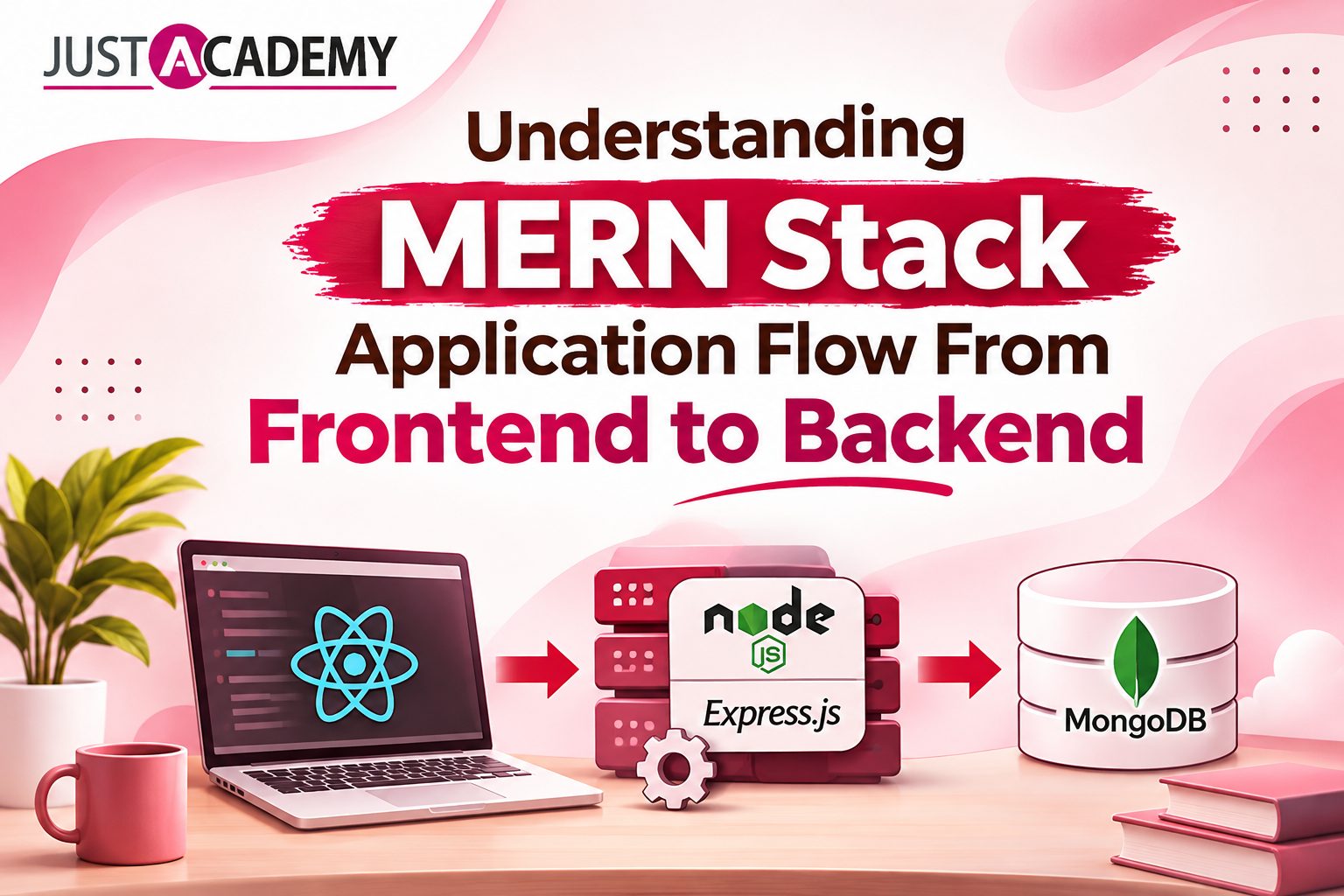
A practical walk through React, Express, Node and MongoDB for Hyderabad learners, explained through live interactive, instructor led and mentor led training.
A practical look at instructor led and mentor led live interactive sessions, and how learners in Hyderabad can get classroom quality teaching without leaving the city
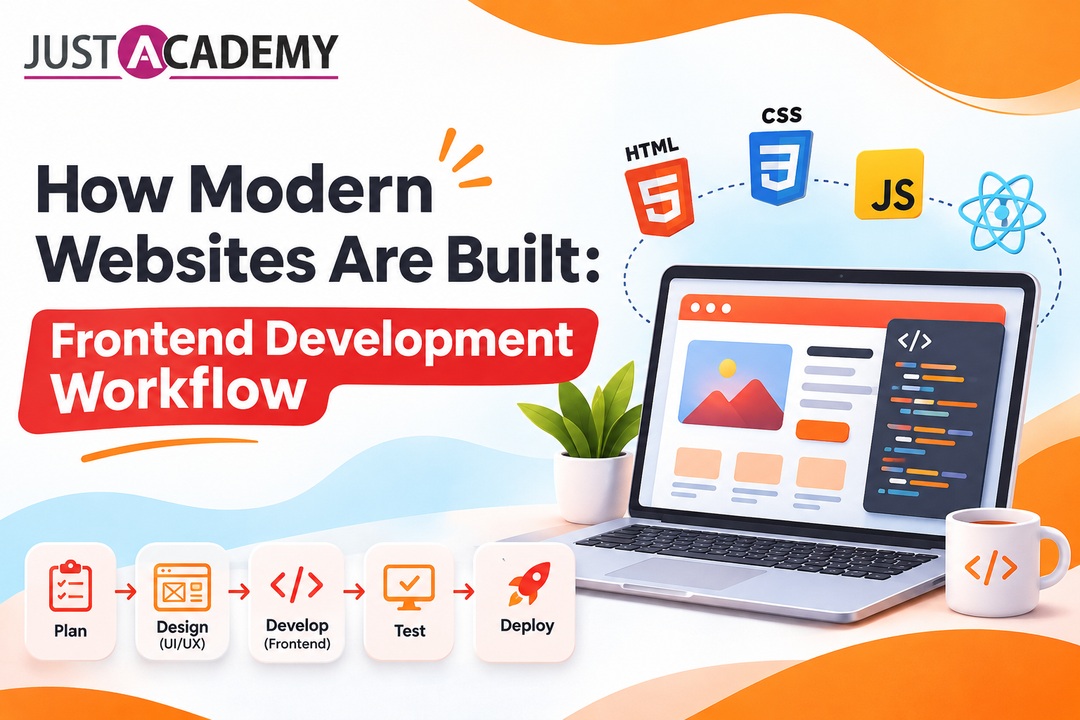
A practical walk through every stage of website development, written for Hyderabad learners who want to think and code like working front end engineers
A mentor style breakdown of React, Vue and Angular for Hyderabad learners, covering market share, hiring demand, learning curve and the smartest way to train.
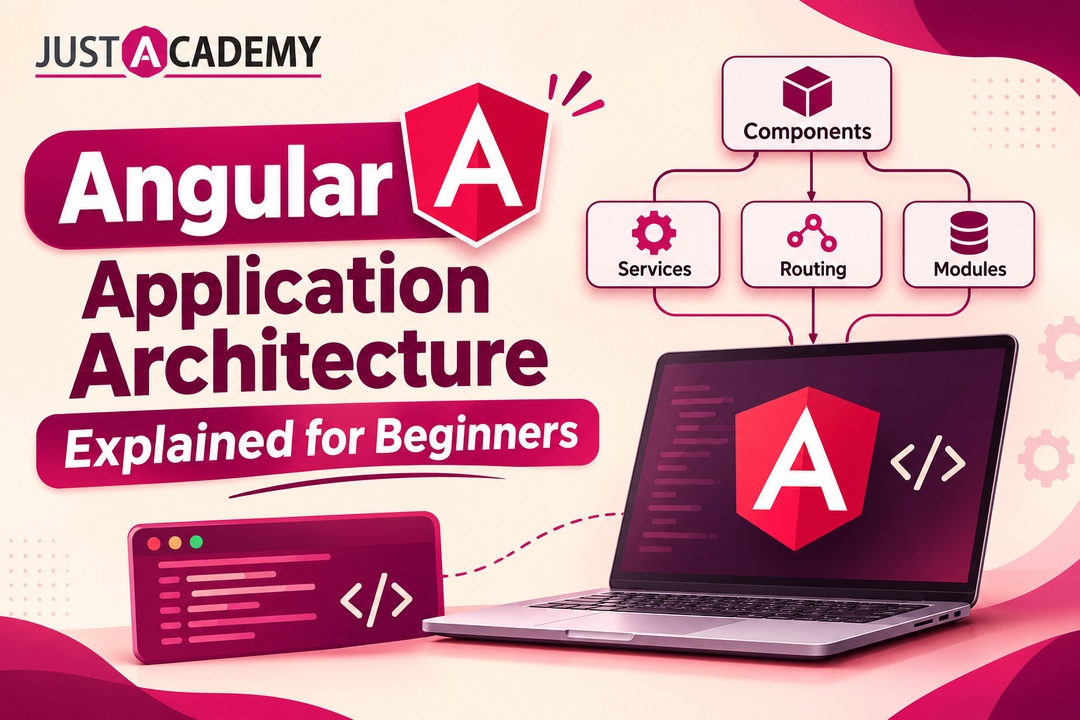
How components, services, standalone building blocks and the Angular CLI fit together, explained in plain words with live interactive and mentor led learning in mind
Drop us a Query
+91 99871 84296
Available 24x7 for your queries
Want To Connect with us
🚀 Kickstart Your IT Career
with JustAcademy
Learn Industry-Focused Courses with Live Projects & Placement Assistance
Full Stack Java(Java, Spring Boot, Hibernate, REST API, React JS)
Data Analytics(Excel, SQL, Power BI, Python, Tableau)