I am learning flutter from JustAcademy, They provide very much great environment where people gather and work simultaneously. totally project based training institute.
MOHD ABU BAKAR ANSARI
Flutter Developer
Awesome Experience. I am a Front-end Web Designer working at Star India for 3 years now. I applied for Full-stack development and my experience has been phenomenal & they really do help with placements exceptionally. Thank you Roshan sir so much.
A friendly, honest look at the skills, projects and habits that turn a fresher resume into an offer letter
Every year, thousands of graduates in Hyderabad open a laptop on a Sunday night, type "jobs for freshers in it industry" into a search bar, and scroll until their eyes hurt. Some of them have strong marks, some have none to brag about, and almost all of them share the same quiet worry: what does a recruiter actually want from someone who has never held a job? The answer is simpler and also more demanding than most people expect, and this guide is written to explain it plainly, without the corporate fog.
Before we get into the details, a quick word on how this blog is shaped. If you already lean toward app development, you can look at the Flutter training in Hyderabad that JustAcademy runs through live interactive sessions, and you can see how it feels by joining a free live demo session before you commit to anything. The institute's classroom is in Mumbai, but Hyderabad learners join the same instructor led and mentor led batches online, which is the thread this whole article follows, because recruiters keep telling us that people who learn with real guidance walk into interviews differently.
Here is what we will cover. We will look at how recruiters screen resumes, which skills and traits push you up the pile, which roles are truly open to a fresher, where genuine openings live, how to judge internships, and how to put together a ninety day plan that fits a normal life. Think of it as a conversation with someone who has sat on both sides of the interview table, not a lecture.
What Happens in the First Thirty Seconds of a Resume Review
Picture a recruiter in Gachibowli with a hundred and twenty resumes in the queue and a hiring manager waiting for a shortlist by lunch. She is not going to read your career objective. She is scanning for three things: a clear role you are targeting, a few skills that match the job post, and any sign that you have built or finished something. If those three show up within thirty seconds, your resume moves to the maybe pile. If they do not, it gets a polite rejection from an automated system that no human ever sees.
This is why a general resume that says "seeking a challenging position in a reputed organisation" does so badly. It says nothing. A resume that says "aspiring backend developer, built a library booking app with login, search and an admin panel" says something specific, and specific is what gets remembered. Recruiters are not looking for perfect candidates, because freshers are never perfect. They are looking for evidence of direction.
How IT Recruitment for Freshers Really Works Behind the Scenes
Most people imagine it recruitment for freshers as one big exam followed by one big interview. In reality it is a funnel with several small filters. First comes the resume or application screen, then usually an online assessment covering aptitude, basic coding or logic, then a technical round, then a managerial or HR round. Smaller companies compress this into two conversations. Larger ones stretch it across weeks.
The point of the funnel is not to find geniuses. It is to find people who will become useful within three to six months of joining, because that is the window in which a company decides whether training a new hire was worth the money. Understanding this one fact changes how you prepare. You stop trying to look brilliant and start trying to look teachable, reliable and curious. In a typical it job recruitment for freshers cycle, the candidate who explains a small project honestly beats the candidate who recites ten definitions perfectly.
The Difference Between Being Shortlisted and Being Hired
Shortlisting is about paper. Hiring is about people. You can be shortlisted because your resume lists the right tools, but you will only be hired if the interviewer believes you actually used them. The easiest way recruiters test this is by asking you to walk through something you built, then pushing gently on the decisions. Why this database? What broke? What would you change?
If you can answer in plain words, without panic, you pass. If your answers sound memorised, the interviewer senses it within two questions. That is the central divide between candidates who collect certificates and candidates who collect experience, and it is the reason this blog keeps returning to projects, practice and mentoring rather than to marks.
Why Hyderabad Is Such a Strong Launchpad for Fresher IT Careers
The City, the Campuses and the Competition
Hyderabad has spent two decades becoming one of India's most active technology cities. Walk through Hitec City, Madhapur or Financial District and you see global product companies, service firms, captive development centres and young startups sharing the same skyline. For a fresher, that mix is a gift, because it means the range of roles is wide: support, testing, development, data, design, cloud and operations all hire here.
It also means competition is real. Plenty of people search for fresher it jobs near me and land on the same few well known names, which is why those job posts attract enormous numbers of applicants. Looking at it jobs near me for freshers beyond the famous campuses, at mid sized product companies and local software firms, often gives a much better hit rate and a faster learning curve, because smaller teams hand responsibility to new people sooner.
One more habit helps here. Make a short map of it companies near me for freshers by neighbourhood, because commute decides more careers than people admit. A role in Madhapur that costs you three hours on the road every day will drain your energy, and tired freshers learn slowly. Many it companies for freshers also run hybrid schedules now, so ask about office days early. Choosing a workplace you can reach comfortably gives you more hours to practise, sleep and enjoy the first year of work, which is the year that shapes everything after it.
How to Read a Vacancy in IT Company for Freshers Without Getting Misled
A job post is a piece of marketing as much as a hiring tool, so learn to read between the lines. When a vacancy in it company for freshers asks for "strong knowledge of five frameworks and two years of experience", that is usually a wish list written by someone who copied it from a senior role. Do not rule yourself out of a fresher posting just because the list looks long. Rule yourself in if you can honestly cover the core two or three requirements.
Equally, be careful with posts that promise unusual salaries, ask you to pay for training before an interview, or say "no skills needed, urgent hiring". Genuine fresher postings are boring in a good way. They state the role, the basic skills, the location and the process. Anything that feels like a lottery ticket probably is one. A useful habit is to check whether the company has an official careers page that lists the same opening.
Spotting Fresher Hiring IT Companies That Genuinely Train People
Plenty of fresher hiring it companies advertise training, but not all of them follow through. Look for signals: do they mention a structured onboarding period, a named mentor, a defined project rotation? Do their junior employees talk about learning on social platforms? Ask during the interview what the first ninety days look like. A company that invests in people can answer that question in detail.
When you build your own list of it companies hiring freshers, sort it by how likely you are to be taken seriously, not by how famous the brand is. A list of it companies hiring freshers with fifteen names, five dream ones, five realistic ones and five safe ones, is far more useful than a list of fifty logos copied from a forum. Update it weekly, and note which skills each company keeps asking for. Patterns will appear quickly and they will tell you what to practise next.
Skills Recruiters Look For Before They Even Glance at Your Percentage
Skills Needed for IT Jobs, Ranked by What Interviewers Actually Test
Ask ten hiring managers about the skills needed for it jobs and you will hear ten slightly different answers, but a pattern sits underneath. Problem solving comes first, because it predicts whether you can handle tasks nobody has explained. Basic programming or tool fluency comes second. Understanding of how software is built and shipped comes third. Communication comes fourth, and it often decides ties.
The fresher job requirements you see in postings, such as knowledge of data structures, databases, version control or a particular framework, are really proxies for those four qualities. When a company asks for SQL, it is checking whether you can think about data. When it asks for Git, it is checking whether you can work in a team. Seen this way, the list stops feeling like a wall and starts feeling like a map.
Technical Knowledge That Survives Follow Up Questions
Technical knowledge is not about how much you have read. It is about how much survives pressure. A candidate who says "I know Python" will be asked to write a loop, explain a dictionary, and describe a bug they fixed. A candidate who has spent two months building small tools will answer calmly. If you are choosing a first language, Python training in Hyderabad is a sensible starting point, because the syntax is gentle and the same language opens doors into automation, data work, testing and backend development.
Whichever tool you choose, go one level deeper than the syllabus. Learn why something works, not only how to type it. Interviewers love the question "what happens if this input is empty?" because it separates people who copied a tutorial from people who understood it. Practise answering that kind of question aloud, ideally with a mentor or a friend who will interrupt you.
Fundamentals You Cannot Skip, Whatever Language You Choose
Three fundamentals show up in almost every fresher interview: logic building, basic data structures, and databases. Logic building is the habit of breaking a problem into steps. Data structures, even at the level of arrays, lists, maps and stacks, give you the vocabulary to talk about solutions. Databases teach you that applications are mostly about storing and retrieving information well.
If your interest leans toward websites, pairing those fundamentals with JavaScript training in Hyderabad gives you a language that runs in the browser and on the server, which means one skill can show up in many job postings. The deeper point is that fundamentals transfer. A person who understands them can pick up a new framework in a few weeks, and recruiters know it, which is why they ask about basics even for glamorous roles.
The Quiet Traits That Tip the Scale in Your Favour
Communication That Sounds Like You
Freshers often assume communication means perfect English or confident body language. It does not. It means being understandable. Can you explain what you built in three sentences? Can you say "I do not know, but here is how I would find out" without freezing? Recruiters in Hyderabad work with teams from many regions and languages, so clarity matters far more than accent or vocabulary.
A practical exercise is to record a two minute explanation of your best project on your phone and watch it back. You will notice filler words, long pauses and places where you skip important steps. Fix those, record again, and repeat three times. It feels awkward, but it is the cheapest interview preparation available, and it works because it turns vague nervousness into specific, fixable habits.
Curiosity, Ownership and the Habit of Finishing Things
Ask any engineering manager what they value in a new joiner and the word "ownership" appears quickly. Ownership means that when something is assigned to you, you follow it through, ask for help early and say honestly when you are stuck. A fresher who finishes a small project and documents it has shown more ownership than one who starts five ambitious ones and abandons them.
Curiosity is the companion trait. People who ask why a build failed, why a page loads slowly or why a query returns duplicates become good engineers, because they refuse to treat problems as mysterious. In interviews, curiosity shows up as good questions about the team, the codebase and the way work is reviewed. Prepare two or three such questions. They signal that you are thinking about the job, not only about getting one.
How Recruiters Test Attitude Without Saying So
Much of the evaluation of attitude happens in small moments. How do you react when a question is hard? Do you argue with feedback or take notes? Do you reply to the recruiter's email promptly and politely? Do you show up on time to a video call with working audio? These look trivial, but they are quiet predictors of how you will behave in a sprint with deadlines.
Group discussions and case style questions are often designed for this purpose. The panel is less interested in the final answer than in whether you listen, build on others' points and stay calm when someone disagrees. If you treat every round as a chance to show how you work with people, not just how you solve problems, you will stand out in a pool of equally qualified candidates. For anyone thinking about it careers for freshers as a long game, this is the part of the fresher it journey that compounds the most.
Which Doors Are Open: Support, Software, Data and Design Roles
IT Support Jobs for Freshers and Why They Are Underrated
Plenty of ambitious graduates look down on support roles, which is a pity. Many it support jobs for freshers teach you how real systems fail: networks drop, passwords expire, servers slow down and users panic. You learn troubleshooting, documentation and customer communication, all of which are valuable later whether you move into development, cloud or security.
If you are weighing it support fresher jobs against software roles, think about what you want in two years. Support can lead to systems administration, cloud operations, site reliability and technical account roles. It also tends to have more openings, so it can be a faster way to start earning and learning. The mistake is to take a support job without a plan to grow. Learn scripting, study for a basic certification and volunteer for automation tasks, and the role becomes a ladder instead of a corner.
IT Software Jobs for Freshers, From Web to Mobile
When people say it software jobs for freshers, they usually mean web development, backend development, mobile apps and testing. Web roles ask for HTML, CSS, JavaScript and a framework. Backend roles ask for a language, databases and APIs. Mobile roles ask for Android, iOS or a cross platform tool. Testing roles ask for manual skills first, then automation.
Mobile deserves a special mention because businesses keep investing in apps, and a single cross platform skill can cover two stores. If you want to understand why companies care, this piece on how Flutter helps businesses build apps faster explains the business side in plain language, and it gives you good material for the interview question "why did you choose this technology?". Recruiters love candidates who understand the reason behind a tool, not only its syntax.
Data Roles for Freshers and the Power BI Angle
Data roles have become one of the most popular entry points because almost every company has more data than it can handle. A junior analyst cleans data, builds dashboards, answers business questions and learns how decisions are made. Tools like Excel, SQL, Python and Power BI show up in nearly every posting, and projects built on public datasets give you excellent interview material.
If you want a guided route, the data analytics bootcamp in Hyderabad is built around real world projects delivered through live online training, and the data analyst roadmap for 2026 lays out the skills, tools and projects in an order that makes sense. Read the roadmap first, then decide whether a bootcamp suits your pace.
A home lab with documented fixes for common issues
Software Development
Logic, one language in depth, version control
A programming language, data structures, SQL, Git
A small full application with login and a database
Mobile Development
UI sense, state handling, API calls
Flutter or native Android, REST APIs, basic design
A published or demo ready app with real data
Data and Analytics
Curiosity, accuracy, storytelling with numbers
Excel, SQL, Python, Power BI or Tableau
A dashboard answering a clear business question
Testing and QA
Attention to detail, test thinking
Manual testing, test cases, basic automation
A test plan and bug report set for a public website
Use the table as a starting conversation, not a cage. Many careers begin in one family and drift into another after a year or two, and that is perfectly normal in the it sector jobs for freshers landscape. What matters is that your first role gives you a skill you can build on, and that you can show proof of it in the form of a project, a repository or a short case study.
It also helps to know how hiring managers think about it company jobs for freshers. A manager would rather hire a fresher who is slightly under skilled but eager than one who is brilliant on paper and indifferent in conversation, because training a motivated person is faster than motivating a talented one. In the wider it field jobs for freshers market, this attitude shows up again and again, and it is the reason humble, consistent candidates tend to win offers after several rounds of interviews, even when they started with weaker marks than their peers.
Another practical tip: talk to people already working in the role you want. A twenty minute conversation with a junior developer, tester or analyst will teach you more about daily tasks, tools and growth than any job description. Ask what they wish they had learned before joining, which mistakes they made in their first months and which habits helped them most. Write the answers down, compare them across three or four people, and use the common themes to shape your learning plan for the next quarter.
Where Genuine Openings Hide: Portals, Referrals and Remote Options
Using Job Portals and Communities Without Burning Out
The internet is full of places that list openings, and freshers often waste weeks refreshing them. A better way is to choose three or four sources and check them at fixed times. Community style sites such as freshersvoice it jobs pages are popular because they collect many postings in one place, and general portals do the same at larger scale. Use them to spot the latest jobs in it for freshers, but always click through to the company's own page to confirm the post is real and current.
Keep a simple spreadsheet. Record the company, role, date, source, skills asked and status. After two weeks you will see which latest it jobs for freshers match your profile and which ones you chase only because they look exciting. The sheet also stops you from applying twice to the same place, which looks careless. When you see an it vacancy for freshers that asks for skills you lack, note the gap and add it to your learning list instead of ignoring it.
Watch how postings are worded, too. An it company vacancy for freshers that mentions "training provided" and "mentorship" is usually hiring for potential, while an it jobs vacancy for freshers that lists five years of experience for a fresher role is probably a mistake or a trap. Over time you will develop an eye for these signals, and that eye saves hours of wasted effort that you can redirect into practice.
Standing Out When Every Vacancy in IT Company for Freshers Gets Hundreds of Applications
Popular fresher posts are flooded within hours. To rise above the pile, personalise. Read the job post, pick the two most important requirements, and write a short, honest note that connects your project to them. A message like "your post mentions building REST APIs, and I recently built a small expense tracker with an API and a database" is worth ten generic applications.
Also pay attention to timing. Apply early in the week and early in the posting window, because recruiters often review applications in the order they arrive. When you notice a new it openings for freshers announcement, respond within a day if you can. And when you apply to a fresher it job openings list on a company site, make sure your resume file name is sensible, something like your name and the role, not "final_resume_new2". Small details signal professionalism.
Work From Home and Online Roles: What Is Real and What Is Bait
Remote work is attractive, and plenty of people search for it jobs for freshers work from home or it jobs work from home for freshers as a first choice. Some of these roles are real, especially in support, content, testing and junior development at remote friendly companies. But most employers prefer to train freshers in person for the first few months, so true online jobs for it freshers are rarer than the search results suggest.
Protect yourself. Never pay a fee to get a job, never share bank details or identity documents before an official offer, and be suspicious of any post that promises high pay for simple tasks. Verify the company, ask for a proper interview, and read the offer letter carefully. A genuine remote role will usually involve a video interview, a technical discussion and a clear description of reporting lines. If the process feels too easy, step back.
Referrals, Walk Ins and Campus Drives
Not every opening lives online. Referrals still carry weight, because an employee who recommends you stakes a little of their own reputation. Be polite, specific and respectful when asking: share a short summary of what you have built and which role interests you, and do not ask a stranger to promise anything. Alumni groups, meetups and community events in Hyderabad are good places to meet people who work in the field.
Walk in drives and campus events are also worth attending when they come from verified companies. Carry printed resumes, a pen and a calm attitude. These events are fast, so you will have a few minutes to make an impression. Lead with a project, be clear about the role you want, and follow up politely afterwards. If a free live demo or a mentor session helps you rehearse, you can book a demo class and get a feel for how guided preparation works before you walk into your next drive.
Internships That Count: Building Experience Before the First Offer
Choosing Internship Providing Companies Wisely
An internship is the closest thing a fresher can get to a trial run, and the best ones teach real tasks under real supervision. When you shortlist internship providing companies, ask three questions. Will I work on actual projects? Will someone review my work? Will I get a letter or a reference at the end? If the answer to any of these is no, the internship might be little more than a certificate factory.
It helps to look at internship companies the way you would look at employers. Read employee reviews, check whether past interns moved into jobs, and ask during the interview what a typical day looks like. An internship in it companies of any size can be valuable, but a small team that lets you ship real features often teaches more than a large one where interns watch from the sidelines.
The Truth About Internship Without Interview Offers
You will see a lot of advertisements for internship without interview roles, and they deserve careful reading. Some are genuine, particularly open source programs, volunteer projects and company led learning programs where you are admitted based on a short task or form. Others are marketing hooks for paid courses, or unpaid work with no mentoring.
The question to ask is simple: what will I learn and who will guide me? If the answer is clear, the lack of a formal interview may be a sign of an open, skill first programme. If the answer is vague, move on. Real learning has structure, a mentor and a deliverable. Without those three, you are spending your time on something that will not help you in a real interview, no matter how impressive the certificate looks.
Paid, Online and Power BI Internships for Students
A paid internship for students is nice because it covers expenses and signals that the company values your work, but do not rule out unpaid ones that offer strong mentoring and a chance to build real projects. Early in your career, learning and credibility matter more than the stipend, as long as you can afford the time. If money is tight, prioritise paid options or part time arrangements.
Online internships for students are convenient, and they have grown quickly in the past few years. Use them to build specific skills, for example a power bi internship that asks you to produce dashboards from business data, or internships it teams run for support and testing. When you scan listings for internships it related, look for a defined scope, a named mentor and a short project description. Those three details separate genuine opportunities from vague ones.
Turning Internship Experience Into Resume Proof
Internship experience becomes valuable only when you can describe it clearly. For every internship, write three lines: what you worked on, what tools you used and what changed because of your work. "Built three dashboards used by the sales team to track weekly targets" is much stronger than "worked on data visualisation".
If your interest lies in design or user experience, a short internship can seed an entire portfolio, and Figma training in Hyderabad is a useful way to learn the tool recruiters ask about most for interface work. Keep screenshots, repositories and write ups organised as you go. When an interviewer asks about your internship experience, you will have stories, not just a line on a resume, and stories are what people remember.
Resume, Portfolio and Interview Rounds, Explained Like a Friend Would
A Resume That Respects the Recruiter's Time
A good fresher resume fits on one page and reads quickly. Put your name, contact details and links at the top. Follow with a short summary of two lines naming your target role and strongest skills. Then list projects before education, because projects are your evidence. Each project should have a title, a one line description, the tools used and a visible link if possible.
Avoid decoration. Heavy graphics confuse the automated systems many companies use to parse resumes, and they rarely impress humans. Use a clean font, consistent spacing and plain headings. Proofread for spelling mistakes, because carelessness on a resume suggests carelessness in code. Ask a friend or mentor to read it aloud, and fix anything that sounds vague or inflated. Honest resumes build trust, and trust is half of the battle in any hiring conversation.
The GitHub or Portfolio Page That Actually Gets Opened
Recruiters and interviewers do click on portfolio links, but only if the page loads fast and tells a story quickly. Pin three to five of your best projects, write a clear readme for each, explain what the project does, how to run it and what you learned. A clean readme tells a hiring manager that you can communicate, which is a rare skill among beginners.
Quality beats quantity. A single well built, well documented project is stronger than twenty tutorial clones. If you build something that solves a real problem, even a small one like tracking hostel expenses or scheduling classes, mention the problem first and the technology second. That order tells interviewers that you think about users, and users are the reason software exists.
What the Interview Rounds Look Like and How to Prepare for Each
Most fresher interviews follow a pattern. An online assessment tests aptitude and basic coding. A technical round explores your projects and fundamentals. A managerial or HR round checks attitude, communication and fit. Prepare for each with a different mindset: speed and accuracy for the test, depth and honesty for the technical round, warmth and clarity for the HR conversation.
For technical preparation, practise common questions aloud. If you are leaning toward backend or enterprise roles, working through a set like these full stack Java interview questions will show you how questions escalate from definitions to scenarios. Even if you do not choose Java, the style of reasoning carries across languages. Always explain your thought process while you answer, because interviewers want to see how you think, not just whether you land on the final answer.
Finally, remember the questions you ask at the end. When an interviewer says "do you have any questions for us?", this is not a formality. Ask what a successful first six months looks like, how code or work gets reviewed and what learning support the team offers. These questions show maturity, and they help you decide whether the company is truly right for you. An interview is a two way conversation, and the candidates who treat it that way tend to leave stronger impressions, even when the technical rounds were not perfect.
After each interview, spend ten minutes writing down what was asked, what you answered well and where you hesitated. Over a dozen interviews, this log becomes a personal question bank that is more useful than any generic list. It also reveals patterns in your own habits, such as rushing through answers or forgetting to mention results, which you can correct before the next round. Treat every interview, including the ones you fail, as paid tuition for the offer that eventually arrives.
Why Structured Training Changes the Outcome for Freshers
Live Interactive Sessions Versus Recorded Videos
Self study is possible, and many successful engineers started that way. But it is slow, lonely and easy to abandon. Recorded videos give you information, but they cannot see where you are confused or answer a question at the moment it appears. Live interactive sessions solve that problem, because the instructor reacts to the class, changes pace when needed and lets you break things safely while someone watches.
At JustAcademy, live interactive training is the core of every course. Learners write code during the session, ask questions as they arise and get immediate feedback. That rhythm builds confidence much faster than watching alone, and it is the closest thing to an actual workplace conversation you can get before you have a job. For Hyderabad learners, the online format removes the travel barrier completely, so a student in Kukatpally or Uppal gets the same class as someone sitting in Mumbai.
There is also a quieter benefit: accountability. When a class meets at a fixed time and a mentor expects your next project update, procrastination loses its grip. Many freshers start strong and fade within a month when they study alone. Fixed sessions, small assignments and friendly deadlines keep momentum alive, and momentum is what turns a ninety day plan into a finished portfolio rather than a pile of half read tutorials.
Instructor Led and Mentor Led Support: What Each One Does
An instructor led class gives you structure. Topics come in a logical order, concepts build on each other and nothing important is skipped. It is the backbone of the learning process. A mentor led layer sits on top of it, and it feels different. Mentors review your projects, help you through confusing bugs, guide you on resumes and rehearse interviews with you.
Both matter. Without an instructor, you may learn randomly. Without a mentor, you may learn correctly but never apply it to a job search. Recruiters notice the difference, because candidates who have been mentored usually speak about their work with clarity and humility. They have been questioned, challenged and corrected many times before the real interview, so the real interview feels familiar instead of frightening.
Mumbai Classroom, Online for Hyderabad and the Placement Support Layer
JustAcademy is an ISO certified technology training institute with its classroom branches in Mumbai and Pune, and live interactive online courses available across India and abroad. Many learners search for the best course in Mumbai, and they often discover that the same quality is available online, which is why Hyderabad students can access it without relocating. The institute teaches the same curriculum to classroom and online batches, with the same instructors and the same project standards.
Placement support is the final layer. It includes resume reviews, mock interviews, portfolio feedback and guidance on applying to companies that match your skills. No institute can guarantee a job, and be wary of anyone who does, but consistent practice combined with honest feedback makes a measurable difference. If you want to see how the sessions feel, you can take a live demo class at no cost, ask your questions and decide whether this style of learning suits you.
A Ninety Day Plan for Hyderabad Freshers Who Want Results
Days One to Thirty: Build Your Foundation
Spend the first month on fundamentals. Pick one direction, such as development, data or support, and choose one primary tool or language. Study daily, even if only for ninety minutes, and write something every day, however small. Set up Git, create a repository and commit regularly. The aim is not speed. It is consistency.
Alongside learning, clean up your online presence. Create a professional email address, update your LinkedIn profile with a clear headline and a short summary, and remove anything you would not want a recruiter to see. Start a learning log, which is a simple document where you note what you studied, what confused you and what you solved. It will become your best revision material and your best source of interview stories.
Days Thirty One to Sixty: Projects and Practice
The second month is for building. Choose one main project and one smaller one. Plan features, build them in small steps and write a readme as you go. Share progress with a mentor, a friend or an online community, because feedback speeds up learning dramatically. If you are in a live interactive program, use the instructor and mentor sessions to review your code, not just to ask theory questions.
At the same time, begin interview practice. Do one mock interview a week with a friend or mentor, record yourself and review. Solve a few problems a day on logic and data structures. Read about the companies on your list and note which skills they ask for repeatedly. By the end of this month you should have a project you can demo in five minutes and a list of fifteen target companies with notes on each.
Days Sixty One to Ninety: Apply, Learn and Repeat
The third month is for applications. Send tailored applications to at least ten companies each week. Follow up politely after a week if you hear nothing. Keep improving your project based on interview feedback, because every rejection carries a lesson if you look for it. Ask recruiters for brief feedback whenever possible. Some will respond, and those responses are gold.
Do not stop learning during the search. Pick one new concept per week, such as testing, deployment or database design, and add it to your project. Stay patient. It is common for a fresher it job search to take several months, especially in a competitive market, and persistence matters more than any single interview. Take care of your health, sleep and mood, because a calm mind interviews better than an exhausted one.
Conclusion
The honest summary of what recruiters expect from freshers entering the industry is this: they want direction, fundamentals, proof of work and a pleasant way of working with others. They do not expect perfection, and they know you are new. If you can show a clear target role, a handful of solid skills, a project you can explain and an attitude that says "I will learn quickly and take feedback well", you are already ahead of most applicants for jobs for freshers in it industry.
Hyderabad gives you the opportunity, and structured preparation gives you the confidence. Live interactive sessions, instructor led teaching, mentor led reviews and steady placement support turn scattered effort into a plan you can follow. Start small, stay consistent, and keep building things you can show. When you are ready to see how guided learning works, register for a free demo or download the brochure to explore the courses, bootcamps and schedules that fit your goals.
The Hiring Table Nobody Shows You: How Recruiters Really Read a Fresher Profile
Skills Recruiters Look For Before They Even Glance at Your Percentage
Internships That Count: Building Experience Before the First Offer
A Ninety Day Plan for Hyderabad Freshers Who Want Results
A practical walk through React, Express, Node and MongoDB for Hyderabad learners, explained through live interactive, instructor led and mentor led training.
A practical look at instructor led and mentor led live interactive sessions, and how learners in Hyderabad can get classroom quality teaching without leaving the city
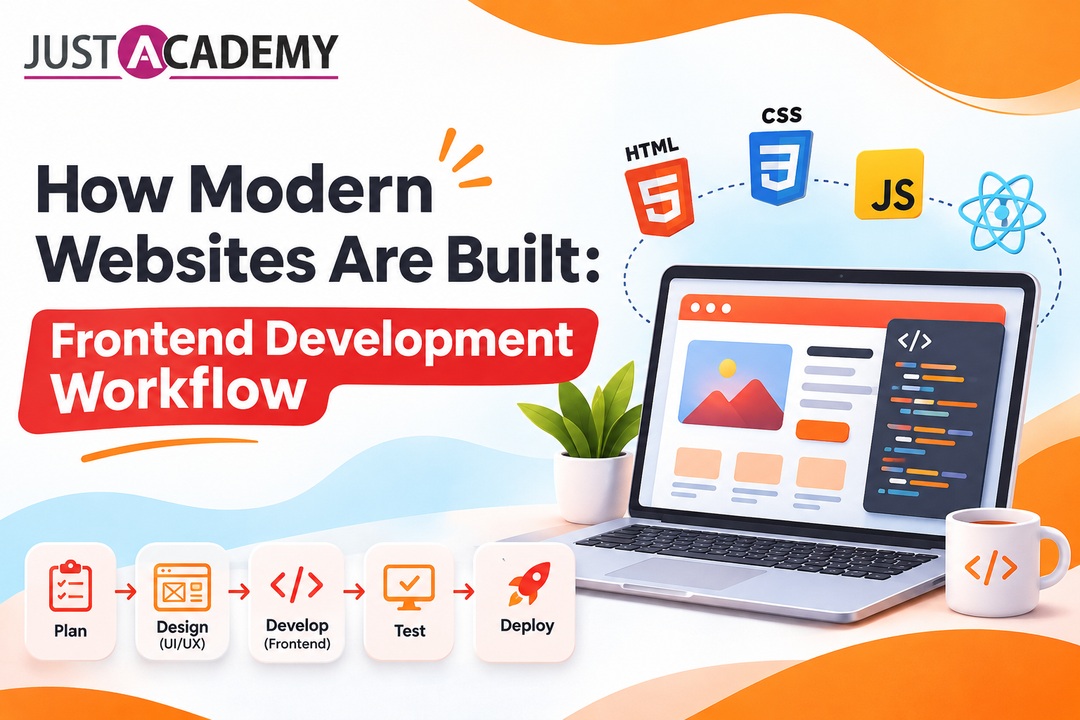
A practical walk through every stage of website development, written for Hyderabad learners who want to think and code like working front end engineers
A mentor style breakdown of React, Vue and Angular for Hyderabad learners, covering market share, hiring demand, learning curve and the smartest way to train.
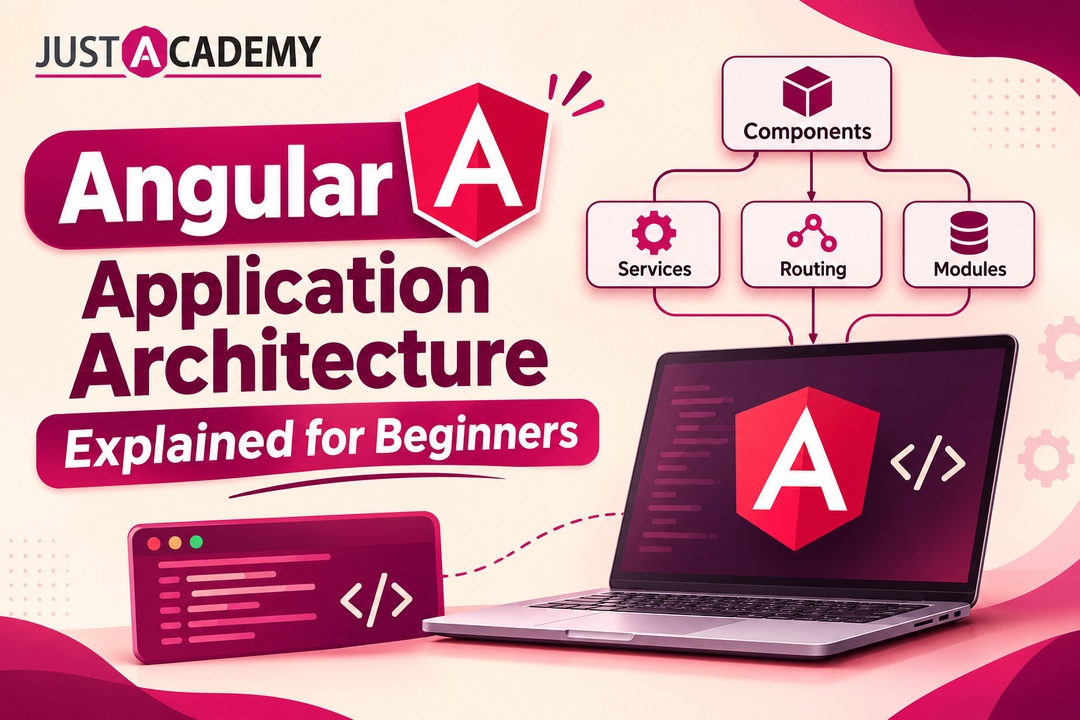
How components, services, standalone building blocks and the Angular CLI fit together, explained in plain words with live interactive and mentor led learning in mind
A practical guide for Hyderabad developers to react hooks, custom hooks and the design patterns that keep real projects clean, taught through live interactive, instructor led and mentor led learning
Drop us a Query
+91 99871 84296
Available 24x7 for your queries
Want To Connect with us
🚀 Kickstart Your IT Career
with JustAcademy
Learn Industry-Focused Courses with Live Projects & Placement Assistance
Full Stack Java(Java, Spring Boot, Hibernate, REST API, React JS)
Data Analytics(Excel, SQL, Power BI, Python, Tableau)