I am learning flutter from JustAcademy, They provide very much great environment where people gather and work simultaneously. totally project based training institute.
MOHD ABU BAKAR ANSARI
Flutter Developer
Awesome Experience. I am a Front-end Web Designer working at Star India for 3 years now. I applied for Full-stack development and my experience has been phenomenal & they really do help with placements exceptionally. Thank you Roshan sir so much.
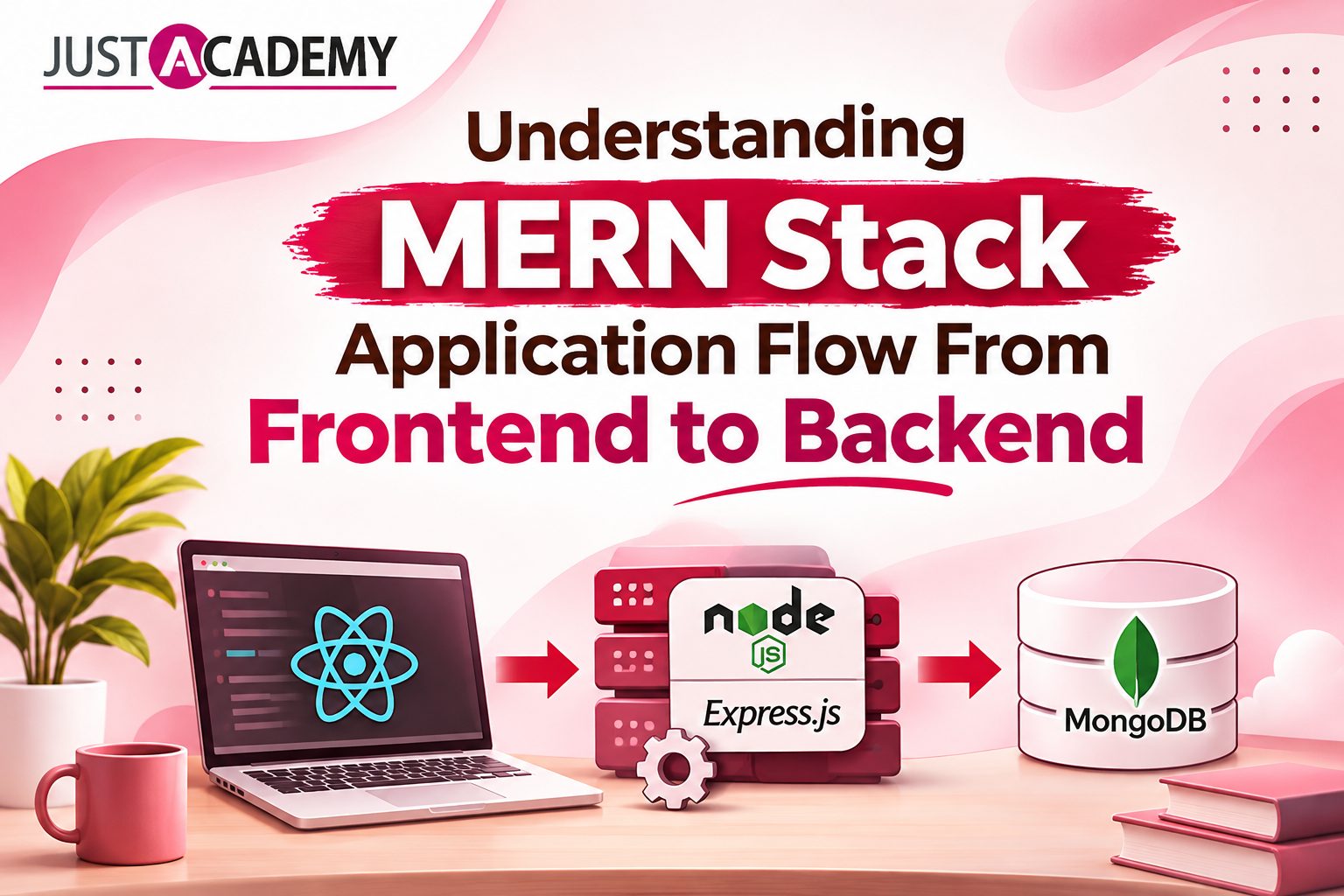
A practical walk through React, Express, Node and MongoDB for Hyderabad learners, explained through live interactive, instructor led and mentor led training.
Every time you tap a Pay Now button, scroll through a feed or log into a dashboard, a quiet relay race begins behind the screen. A request leaves the browser, finds a server, asks a database a question, waits for an answer and then travels all the way back so that something changes in front of your eyes. All of this happens in a fraction of a second, and most people never think about it. Anyone who wants a career in mern stack development, however, has to think about it constantly, because understanding this relay race is the difference between copying tutorials and actually building software that works.
If you are a learner in Hyderabad and you have been wondering where to start, you are in the right place. At JustAcademy, a Mumbai based, ISO certified technology training institute with a classroom campus in Mumbai and Pune, we teach Hyderabad learners through live interactive, instructor led and mentor led online sessions that feel like sitting in the room with us. Our MERN Stack Developer Bootcamp in Hyderabad with placement support is built around exactly the flow explained in this article, and if you would like to see how a class actually feels before deciding anything, you can book a free live demo session and judge for yourself.
This guide is long on purpose. It walks through the whole journey of a request in a real mern stack application, from the first click in React to the last write in MongoDB, and it explains each stop in plain language. Whether you are a fresher, a working professional switching careers or a student who simply wants to understand how modern web products are built, keep reading. By the end you should be able to explain the flow to another person without looking at notes, and that is the best test of understanding there is.
One Tap, Five Stops: The Journey Every Request Takes
The Moment a User Clicks Something
Imagine a student in Madhapur opening a course portal and pressing the Enroll button. To the student, one thing happened. To the developer, at least five things happened. The browser captured a click event, the frontend gathered some data, an HTTP request travelled across the internet, a server decided what to do with it, and a database stored the result. Then a response walked the same road home and the screen updated. Those five stops are the skeleton of every web product you have ever used, and the mern stack gives you a very clean set of tools for each one.
Learners often make the mistake of studying each tool in isolation. They learn React for a month, then Node for another month, then MongoDB, and they never see how the pieces talk to each other. That is why so many people can build a pretty button but cannot explain what happens after it is pressed. Our trainers push the opposite habit. We ask every batch to trace one single action through the entire application, draw it on a whiteboard and then watch it happen in the browser network tab. That small exercise changes how people think.
MERN Stack Full Form and What the Letters Really Mean
Let us clear the basics first, because a lot of search traffic goes to the mern stack full form and the full form of mern stack. MERN stands for MongoDB, Express, React and Node. The M is the database, the E is the web application framework that sits on the server, the R is the user interface library and the N is the runtime that lets JavaScript run outside the browser. When people search for mern meaning or mern full form, this is the answer, but the full form alone does not tell you much. What matters is that each letter owns one responsibility and that together they cover the entire product.
You will also see phrases like mern developer meaning, mern stack developer meaning or mern full stack developer meaning in job descriptions. In simple words, a mern stack developer is a person who can build the visible part of an application, the invisible server logic and the stored data, all using JavaScript. A mern stack engineer is the same person at a more senior level, someone who also thinks about performance, security, testing and deployment. Companies in Hyderabad, from product startups in Gachibowli to service giants in HITEC City, hire for exactly this blend because it lets one person move a feature from idea to production. Job boards even use full stack mern and full stack developer mern as interchangeable titles.
Why Developers Call It a Single Language Stack
The biggest charm of the mern web stack is that you write JavaScript from top to bottom. The React code in the browser is JavaScript, the Express code on the server is JavaScript, the queries to MongoDB are written in a JavaScript friendly syntax and even the data travels in JSON, which stands for JavaScript Object Notation. You do not have to switch mental gears between a frontend language and a backend language, and the objects you shape in one layer look almost identical in the next. For a beginner this is a huge relief, and for a team it is a huge saving in communication.
This is also why people compare it with other options like the mean stack. If you have ever read about mean & mern stack side by side, you already know that the only real difference is the first layer, because the mean stack with Angular replaces React. When people say mean stack react, they usually mean a hybrid project where Angular was swapped out for React, and that hybrid is simply the mern stack by another name. You may see the mean stack with react in forum threads, or phrases like mern stack mean in search queries, but the idea behind them is identical. We will compare these options properly later in this article.
Meet the Four Players Who Make the MERN Stack Tick
React as the Face of Your Application
Think of React as the face and hands of your product. Everything a user can see, touch, scroll or type into is produced by React components. A react front end developer spends the day thinking about how to break an interface into small reusable pieces, how to keep data in sync with what is displayed and how to react to user actions without refreshing the page. The big idea behind React is that your screen is a function of your data. When the data changes, React works out the smallest possible update and applies it, which is why modern single page applications feel so quick. It is also one reason the mern tech stack is so popular, and why mern tech skills appear in so many job listings. People who look up the front end developer meaning often discover that the role is less about decoration and more about thinking in components.
When you hear people talk about the react front end in a mern project, they are describing a separate folder, often called client, that runs in the browser and knows nothing about databases. It only knows how to ask the server for data and how to display what comes back. This strict separation is healthy. It means a designer can change the look without touching business rules, and a backend developer can change a database without breaking the screen.
Node and Express as the Brain and the Traffic Police
Node is the runtime that allows JavaScript to run on a server machine, and Express is the lightweight framework that sits on top of it and organises incoming requests. If React is the face, mern nodejs is the brain, and Express is the traffic police standing at the junction pointing each request toward the right road. A request for the list of courses goes to one function. A request to save a new student goes to another. A request to log in goes to a third. Without Express you would write all of this routing by hand, and nobody enjoys that.
This is the part of the mern stack express combination that beginners find mysterious, because it is invisible. You cannot see a server the way you see a button. But once you start logging each request in the terminal and watching it arrive, the mystery disappears. In our instructor led sessions we deliberately make students break things here, sending a wrong request, forgetting a field or using the wrong method, so that they learn to read the errors calmly instead of fearing them.
MongoDB as the Memory That Never Forgets
MongoDB is the memory of the application. It stores data as documents, which look like JSON objects, inside collections. A student record, a course, an order or a comment can all live as documents, and they do not need to follow a rigid table structure the way a traditional relational database does. This flexibility is a gift when you are building quickly, because you can add a new field without rebuilding the whole structure. Anyone searching for a mongodb mern stack tutorial will find that the first lesson is always the same: think in documents, not in rows.
There is a quiet danger in that freedom, though. Because MongoDB lets you store almost anything, careless developers store anything. Messy data comes back to bite them later in the form of slow queries, duplicate records and confusing bugs. That is why we spend real time on data modelling in our programme, and why a good mern stack developer treats the database design as seriously as the screen design. We will come back to this in a dedicated section.
Inside the Frontend: How React Starts Every Conversation
Components, State and the Art of Listening to Users
Every conversation in a mern stack application begins in the browser, and it begins with state. State is simply the memory of a component, the current value of a text box, the list of tasks on screen or whether a menu is open. When the user types or clicks, an event handler fires, state changes and React redraws the affected part. A beginner who understands state, props and the component lifecycle can already build impressive interfaces, and a beginner who does not will fight their own code forever.
The people who succeed here learn to see every screen as a tree of components. A dashboard contains a sidebar, a header and a content area. The content area contains cards, and each card contains a title, a number and a small chart. Once you can see that tree, you know where each piece of data should live and who should be allowed to change it. This habit of decomposing a screen is the single most useful skill we try to build in the first weeks of the programme.
Calling the Server: Fetch, Axios and Honest Error Handling
The moment React needs data that it does not have, it must ask the server. This is done with an HTTP request, usually through the built in fetch function or a library like Axios. The request carries a method such as GET, POST, PUT or DELETE, a URL that tells the server what resource we want, and sometimes a body containing JSON. Understanding these methods is central to the front end back end meaning that interviewers love to test. The frontend asks, the backend answers, and the contract between them is the API.
What separates a junior from a confident developer is how they handle failure. Networks drop, servers return errors and users type strange things. A good react front end shows a loading indicator while it waits, shows a friendly message if something fails and never leaves the user staring at a blank screen. We teach students to write these states first, before the happy path, because real users spend much more time in the unhappy path than we would like to admit.
Routing and Forms for a Better Front End Web Developer Experience
Most mern stack applications are made of several pages, such as a home page, a login page, a course list and a profile screen. React Router lets the browser move between them without a full reload, which makes the experience smooth. Behind the scenes, the address bar changes and a different component is rendered. The front end web developer meaning in this context is simple: someone who owns what the user sees, how they move around and how they enter information.
Forms deserve special attention because they are where the frontend and backend first shake hands. A good form validates input on the screen so that users get instant feedback, and the server validates it again because it can never trust the browser. This double validation is one of those habits that sounds boring in a lecture and feels like magic the first time it saves you from a bad record. We make students write both sides so that the lesson sticks.
The Backend Handshake: Routes, Middleware and Controllers
Routes as the Front Desk of Your Application Backend
When a request leaves the browser, the first thing it meets on the server is a route. A route is a combination of a URL pattern and an HTTP method, and it tells Express which function should handle the request. A GET request to the courses address might return a list, while a POST request to the same address might create a new course. If you have ever wondered what people mean by a backend system or an application backend, this is the front door of it. It is the place where the outside world meets your logic.
Good developers keep routes thin. A route file should read almost like a table of contents, listing what the application can do without burying the details. This is one of the first lessons in mern backend design, and it pays off the moment a project grows past ten endpoints. When routes are tidy, a new teammate can open the folder and understand the shape of the product within minutes, which is exactly what companies hope for when they hire.
Middleware as the Security Checkpoints
Between the front door and the real work sits a chain of middleware. Middleware functions are small pieces of code that run in order on every request, and each one can read the request, modify it, reject it or pass it along. One middleware might parse incoming JSON. Another might log the request for debugging. A third might check whether the user is logged in. Think of an airport where you pass through ticket checks, security scanning and boarding gates before you reach the plane. Each checkpoint has one job, and together they keep the system safe and predictable.
Many learners find middleware confusing at first because the order matters and the flow is invisible. A reliable trick is to draw the chain on paper and number each step. Our mentor led sessions often start with a student pasting a broken middleware chain into the shared screen, and the whole group finds the bug together. That kind of live debugging teaches more in thirty minutes than a week of silent reading.
Controllers and Services Where Real Decisions Happen
After the checkpoints, the request reaches a controller. The controller reads what the user sent, calls the right logic and decides what to send back. In a clean back end it technically stays small, handing the heavy lifting to service functions that talk to the database. This separation looks like extra work to a beginner and feels like a lifesaver to anyone maintaining a real product, because it keeps business rules in one predictable place instead of scattered across the codebase.
In the world of back end it jobs, this is the layer where a lot of interview questions come from. Interviewers ask how you would structure a feature, where validation belongs, how you would return errors and how you would keep the code testable. If you have actually built controllers and services in a live project, with an instructor reviewing your pull requests, these questions stop feeling scary and start feeling like conversations about something you have already done.
Where Data Lives: MongoDB, Mongoose and Smart Schema Thinking
Documents, Collections and the Flexibility Advantage
At the end of the journey, the request needs to read or write something permanent. In a MERN project this almost always means MongoDB, usually accessed through a library called Mongoose. Mongoose lets you describe the shape of your documents in a schema, which gives you the flexibility of a document database with some of the discipline of a structured one. A student document, for example, might hold a name, an email, a list of enrolled courses and a creation date, all in one place.
The advantage is that data you read together is often stored together, which makes common queries fast and simple. A course page that needs the title, the instructor and the syllabus can fetch one document instead of joining five tables. For a team building quickly, this is a big deal. It is also one reason why mern full stack development has become popular among startups that need to ship features fast and change direction often.
Full Stack Development Using MERN Starts With Good Data Modelling
The phrase full stack development using mern sounds like it is mostly about code, but the experienced developers will tell you it begins with a decision about data. Should an order store a copy of the product price, or only a reference to the product? Should comments live inside a post document, or in their own collection? There is no single correct answer, and the right choice depends on how the data will be read and how often it will change.
We teach a simple rule of thumb. Embed data when it is read together and rarely changes on its own, and reference data when it grows without limit or is shared across many documents. A blog post with a handful of tags can embed them. A blog post with thousands of comments should reference them. Students who learn this early avoid the painful rewrites that haunt people who only discover data modelling after their first production bug.
Indexes, Validation and Keeping Queries Fast
Even a well modelled database can become slow if you ignore indexes. An index is like the index at the back of a book, a shortcut that lets MongoDB jump to the right document instead of scanning everything. Without one, a search for a user by email must look at every record. With one, it finds the match almost instantly. As your data grows from a hundred records to a hundred thousand, this difference moves from invisible to critical.
Validation matters just as much. Mongoose schemas let you mark fields as required, set minimum lengths, restrict values to a list and add custom checks. This is your last line of defence against bad data, and it complements the validation in the form and in the controller. In our programme, students build a small project where they deliberately send broken data to the server and watch the schema reject it. It is a simple exercise that builds a lot of trust in the system.
Locking the Doors: A MERN App With Authentication
Passwords, Hashing and Why You Never Store the Real Thing
Sooner or later every real product needs to know who is using it, which is why a mern app with authentication is the most common project in any serious curriculum. The first rule is that you never store a password as plain text. Instead, you pass it through a hashing algorithm such as bcrypt, which turns it into a long scrambled string that cannot be reversed. When the user logs in again, you hash what they typed and compare the two results. If they match, the password was correct, and you never needed to know the original.
This one habit separates hobby code from professional code. News stories about leaked databases are common, and the developers involved are rarely malicious, only careless. We make students feel the weight of this responsibility by walking through what could happen to real people when data is mishandled. It is a short conversation, but it tends to stay with them for the entire career.
JSON Web Tokens and the Journey Between Frontend and Backend
Once the user is verified, the server needs a way to remember them without asking for a password on every request. The most popular solution in the MERN world is the JSON Web Token. After a successful login, the server creates a signed token that contains the user identity and an expiry time, and sends it to the frontend. The frontend stores it and attaches it to every future request. The server checks the signature, trusts the identity inside and moves on.
This is a beautiful example of how the whole stack cooperates. React collects the credentials in a form and sends them with a request. Express receives them at a login route, verifies them against MongoDB and signs the token. The token returns to React, which stores it and uses it to unlock protected screens. A student who can narrate this flow from memory has understood the heart of full stack engineering, and interviewers can feel it in how they speak.
Protected Routes, Roles and the MERN Admin Dashboard
Authentication tells you who someone is. Authorisation tells you what they are allowed to do. In a typical mern admin dashboard, ordinary users can see their own data, while administrators can manage everyone. This is done with roles stored on the user document and with middleware that checks the role before letting a request through. On the frontend, protected routes redirect people who are not logged in to the login page, and hide menu items they are not permitted to use.
Building an admin dashboard is one of the best practice projects you can attempt because it forces you to combine routing, forms, tables, filters, permissions and database queries in a single product. If you are looking for ideas that go beyond the usual to do app, the article on MERN stack project ideas for job ready developers lists several realistic builds that employers actually enjoy seeing in a portfolio.
Tracing a To Do List Through Every Layer
Step by Step Walkthrough of One Task Being Saved
Let us now put everything together using the most famous beginner project, the to do list mern stack application. A user types Buy groceries into a text box and presses Add. React captures the click, reads the text from state and sends a POST request to the tasks route with a JSON body. The browser attaches the login token. The request reaches Express, passes through the JSON parser and the authentication middleware and lands in the task controller.
The controller validates that the text is not empty, creates a new task document tied to the logged in user and asks Mongoose to save it. MongoDB writes the document to the tasks collection and returns the saved record with its new identifier. The controller sends that record back as JSON with a success status. React receives the response, adds the new task to its state and redraws the list. The user sees Buy groceries appear instantly, and nobody notices that eleven separate things just happened. This is the mern project tutorial that every beginner should be able to describe from memory.
MERN Stack Versus MEAN and Java: A Quick Comparison
Students often ask whether the mern stack is the right choice compared with the mean stack or a Java based path. The honest answer is that all three are valid, and the best choice depends on your goals, the companies you want to join and the type of products you want to build. The table below gives a quick reference, and if you want the deeper discussion, our detailed article on MERN stack versus full stack Java and which career path is better in 2026 goes through salary patterns, hiring trends and learning curves.
Aspect
MERN Stack
MEAN Stack
Full Stack Java
Frontend
React
Angular
React or Angular with Java backend
Backend
Node and Express
Node and Express
Spring Boot
Database
MongoDB
MongoDB
MySQL or other relational databases
Language Spread
JavaScript everywhere
JavaScript and TypeScript
Java and JavaScript
Typical Fit
Startups, product teams, fast delivery
Enterprise dashboards, structured teams
Large enterprises, banking, long running systems
Learning Curve
Gentle for JavaScript learners
Moderate because of Angular concepts
Steeper but very strong foundations
Why Every Layer Needs to Be Understood Together
The to do example looks small, but it carries the whole philosophy of the mern stack framework mindset. The frontend never touches the database directly. The backend never decides how things look. The database never knows about buttons. Each layer receives something, does its own job and passes the result along. When a bug appears, you can ask a simple question: at which stop did the request go wrong? Developers who ask this question calmly find bugs in minutes. Developers who do not often spend days.
That calm, systematic habit is what we try to build in every batch. It is not something a video can fully teach, because it comes from being questioned, corrected and encouraged by a real person while you are in the middle of a problem. That is exactly what live interactive sessions with an instructor make possible.
Architecture That Survives Real Traffic
Folder Structure for a Clean MERN Stack Architecture
A project that works on your laptop is not the same as a project that can be maintained for years. The first step toward real mern stack architecture is a sensible folder structure. Most teams keep a client folder for React and a server folder for Express, each with its own dependencies and configuration. Inside the server folder you will usually find directories for routes, controllers, models, middleware and utilities. Inside the client folder you will find components, pages, hooks, services and context.
This looks like organisation for its own sake until the project doubles in size. Then it becomes the difference between finding a bug in two minutes and wandering through a tangled mess for two hours. We ask students to review each other's folder structure the way an editor reviews a draft, because reading someone else's code is the fastest way to learn what clean code feels like. It is a habit that every working mern developer develops sooner or later, and it is much better to develop it in a classroom.
Full Stack Development Using MERN in Production: Environments and Deployment
Taking a project from your laptop to the internet is a lesson of its own. In production, secrets such as database passwords and token keys must never live inside the code, so developers keep them in environment variables. The React app is built into a set of optimised static files, the Express server runs on a hosting platform, and MongoDB usually lives in a managed cloud service. Each of these has its own settings, and each of them can fail in its own special way.
The best way to learn this is to deploy something real. When a student sees their own application live at a public address, with a login that works and data that survives a refresh, something shifts. They stop thinking of themselves as people who follow a mern stack tutorial and start thinking of themselves as people who ship software. A good mern tutorial or any tutorial mern video can show you syntax, but only deployment shows you reality. That shift in identity is one of the most valuable outcomes of any training programme, and it rarely happens through passive learning.
Error Handling, Logging and Performance Habits
The last piece of professional architecture is the part nobody sees until something breaks. A mature mern stack application has a central error handler that catches problems, returns a clean message to the user and writes the details to a log for the developers. It limits how many requests a single user can send, compresses responses and caches data that does not change often. None of this is glamorous, but all of it keeps products alive when traffic grows.
Hyderabad has a thriving ecosystem of product companies and service firms, and the engineers who move up fastest are the ones who care about these details early. Anyone can make a feature work once. Making it keep working under pressure is what turns a developer into an engineer, and it is the mindset that employers look for when they interview people for mern stack web development roles and mern stack applications that serve real customers.
Skills Recruiters Check and Projects That Prove Them
JavaScript Fundamentals Decide How Far You Go
Because the whole stack speaks JavaScript, your command of the language sets the ceiling for everything else. Closures, promises, async and await, array methods, destructuring, modules and the way the event loop schedules work are not optional extras. They are the daily vocabulary of every layer in a mern full stack role. People who skip them and jump straight into frameworks usually hit a wall within a few months, because every confusing bug seems to trace back to a concept they never properly learned.
If your fundamentals feel shaky, it is worth spending dedicated time on them before or alongside the framework work. Our JavaScript training in Hyderabad is designed for exactly this purpose, with live interactive classes that make the language feel logical instead of random. Many learners join it first, and then move into the full bootcamp with a much stronger base.
Project Ideas That Teach the Whole Flow
A portfolio is only as good as the problems it solves. A basic to do list shows that you can wire the layers together, but it will not set you apart. Hiring managers want to see applications with authentication, roles, relationships between data, search, pagination and proper error messages. A learning platform with courses and enrolments, an expense tracker with charts, a job board with applications and a small online store with a cart all give you a chance to practise the same flow in different shapes.
The key is to build projects with a story. Instead of saying that you built a CRUD app, you say that you built a booking system for a neighbourhood sports club, handled double bookings with a database check and added email confirmations. That story tells an interviewer that you faced real constraints and made real decisions. In our mentor led sessions we help every student shape their project story, because the story is often what gets remembered after the interview.
Where Python Fits Into a MERN Career
The phrase python mern stack comes up often in search queries, and it deserves a straight answer. Python is not part of the mern stack, but it is a very useful companion. Many teams use Python for data processing, automation scripts, machine learning features and scheduled jobs that sit beside the main web application. A developer who can build the product in JavaScript and also write a Python script to clean data or call an analytics service becomes much more valuable.
If this combination interests you, our Python training in Hyderabad is a gentle way to add the second language. Learn it after you are comfortable with the main flow, so that it feels like a bonus tool instead of a distraction. Careers are rarely built on one skill alone, and the people who thrive in mern web development are usually the ones who keep widening their toolbox in a measured way.
How Learning Actually Happens: Live, Instructor Led and Mentor Led
Live Interactive Sessions From Hyderabad to Mumbai
Let us talk honestly about how people learn technology. Watching a recorded video feels productive, but it rarely leads to skill. Skill comes from trying something, failing, asking a question, getting an answer and trying again. That is why we run live interactive sessions where you can unmute, share your screen, show your broken code and get help in the moment. Our institute is physically in Mumbai, where we run classroom batches and also in Pune, but our live online classes reach Hyderabad learners with the same energy and the same trainers.
For many people in Hyderabad, this is a better fit than commuting to a classroom. You can learn from home or from your office, join the session from a quiet corner and still feel part of a batch. Whether you prefer sitting in a Mumbai classroom or joining online from anywhere in the country, you receive the same curriculum, the same projects and the same level of attention. This flexibility is a big reason why JustAcademy is often described as offering the best course in Mumbai for technology careers, and why our online learners from Hyderabad enjoy it just as much.
Instructor Led Teaching and Mentor Led Guidance Are Different Gifts
People often use these two phrases as if they mean the same thing, but they describe two different kinds of support. An instructor led session is where a trainer explains a concept, demonstrates it live, answers questions and walks the whole batch through an exercise. It builds the shared foundation. A mentor led session is more personal. A mentor looks at your code, your project and your career goals, and gives specific feedback that helps you grow in your own direction.
The best programmes use both. Instructor led classes give you structure and momentum, while mentor led time gives you confidence and direction. A student might learn about middleware in the morning class and then spend an afternoon with a mentor going through their own authentication code line by line. That combination is hard to replicate with videos or books, and it is the heart of how we train mern stack developers in this programme.
Placement Support That Starts Before the Last Class
Getting a job is not a separate chapter that begins after the course ends. It should be woven into the learning itself. From the early weeks, our students build portfolio projects, write clean documentation, practise explaining their code and work on their resumes. In the later weeks, we run mock interviews, review profiles and share openings. This is what we mean by placement support, and it is designed to make you confident rather than simply to hand you a list of companies.
It also helps to know what companies are actually looking for before you start preparing. We have written a detailed breakdown of the MERN stack developer skills companies look for in 2026, and it is worth reading before you plan your own learning roadmap. Pair it with a good bootcamp and consistent practice, and your preparation will feel purposeful instead of scattered.
Why Structured Training Changes the Outcome
Why Self Learning Alone Often Hits a Ceiling
There is nothing wrong with learning from free resources, and many great developers started that way. The problem is that self learning often has no order and no feedback. You might learn a library before understanding the language it depends on, or spend weeks on a topic that does not matter much while skipping one that interviewers ask about every time. Without a mentor looking at your work, mistakes quietly become habits, and nobody tells you until an interview does.
Structured training solves this by giving you a sequence that makes sense, deadlines that keep you moving and people who notice when you are stuck. It does not replace your own effort, but it multiplies it. A student who studies five hours a week with clear guidance often moves faster than someone who studies fifteen hours alone in confusion. That is the quiet power of a good programme.
What a Good MERN Programme Should Offer You
When you evaluate any course, whether ours or someone else's, ask a few simple questions. Is it genuine live interactive training, with sessions where you can ask doubts in the moment? Are there instructors who teach and mentors who review your work? Does the curriculum cover JavaScript, React, Node, Express, MongoDB, authentication, deployment and testing as one connected story? Do you build several real projects, and is there honest placement support at the end? These questions will tell you more than any brochure.
At JustAcademy we are an ISO certified institute with years of experience in training people for technology careers, and we are proud that our learners in Mumbai, Pune and across India describe the experience as practical and personal. If you want to see the structure in detail, you can always download our brochure or sit in a demo class before making a decision. A good decision should feel informed, not rushed.
Conclusion
The flow of a mern stack application is simple to describe and rich to understand. A user acts in React. The frontend sends a request. Express receives it, middleware checks it and a controller handles it. Mongoose talks to MongoDB, the data is stored, a response returns and the screen updates. Add authentication, roles, validation, error handling and deployment, and you have the skeleton of almost every modern web product. Once this picture lives in your head, every new tool you meet slots into a place you already understand.
If you are in Hyderabad and you are ready to turn this understanding into a career, the next step is to see the training for yourself. Join live interactive, instructor led and mentor led sessions, build real projects and prepare for interviews with support at every stage. Your future as a confident mern stack developer is closer than it looks, and it starts with one decision to learn properly.
A practical walk through React, Express, Node and MongoDB for Hyderabad learners, explained through live interactive, instructor led and mentor led training.
A practical look at instructor led and mentor led live interactive sessions, and how learners in Hyderabad can get classroom quality teaching without leaving the city
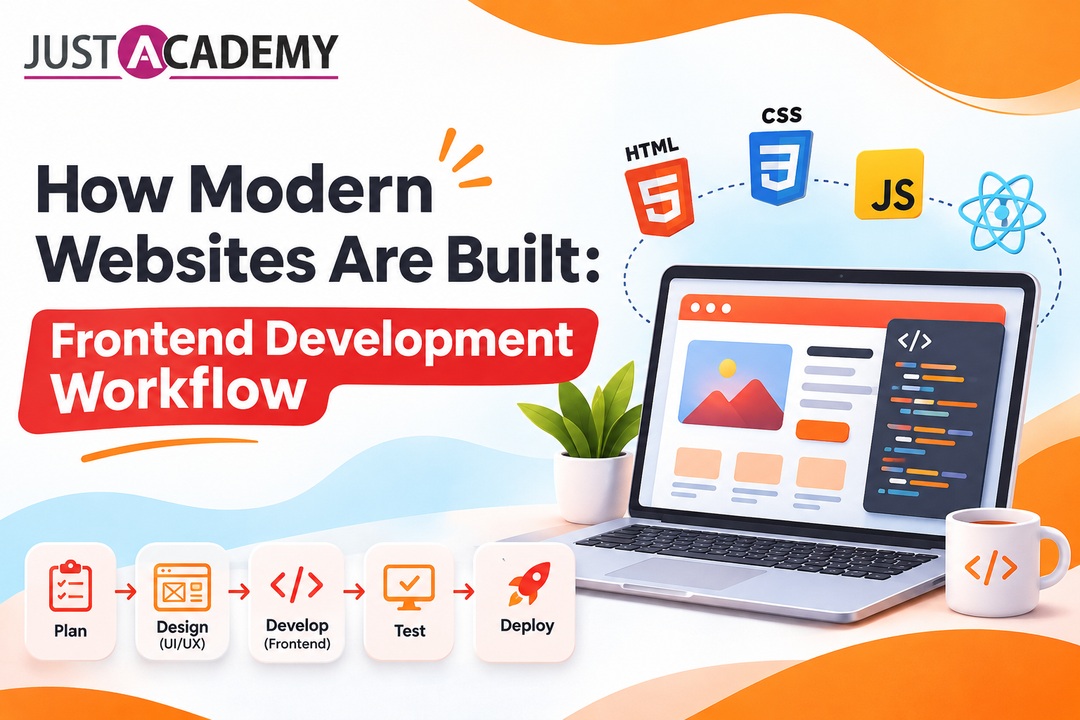
A practical walk through every stage of website development, written for Hyderabad learners who want to think and code like working front end engineers
A mentor style breakdown of React, Vue and Angular for Hyderabad learners, covering market share, hiring demand, learning curve and the smartest way to train.
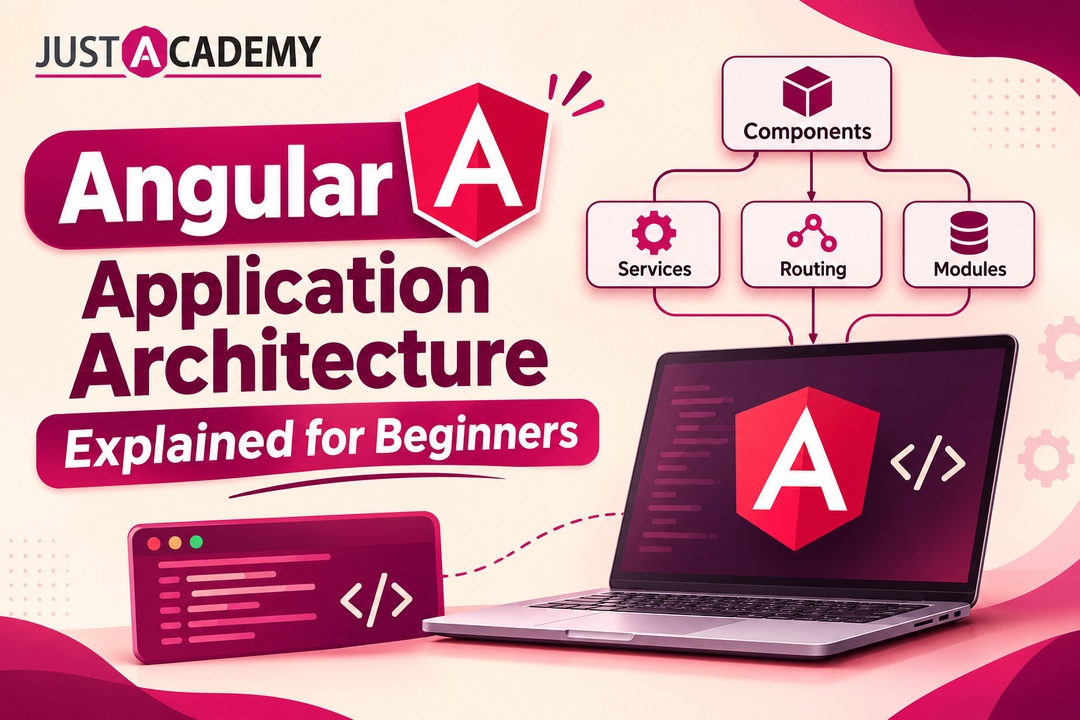
How components, services, standalone building blocks and the Angular CLI fit together, explained in plain words with live interactive and mentor led learning in mind
A practical guide for Hyderabad developers to react hooks, custom hooks and the design patterns that keep real projects clean, taught through live interactive, instructor led and mentor led learning