I am learning flutter from JustAcademy, They provide very much great environment where people gather and work simultaneously. totally project based training institute.
MOHD ABU BAKAR ANSARI
Flutter Developer
Awesome Experience. I am a Front-end Web Designer working at Star India for 3 years now. I applied for Full-stack development and my experience has been phenomenal & they really do help with placements exceptionally. Thank you Roshan sir so much.
An honest, practical look at the Java framework decision for Hyderabad developers who want to build, debug and ship real applications
Ask five Java developers in Hyderabad which java framework they would pick for a brand new project, and at least four of them will say Spring Boot before you finish the question. The fifth will quietly mention a banking portal that still runs on servlets and configuration files older than half the interns in the office. Both answers are honest, and that is exactly why the comparison between Spring Boot and traditional Java development deserves more than a ten minute video or a heated forum thread. This guide walks through the whole picture, from the first minute of project setup to security, testing, deployment and the career that grows out of all of it.
If you are reading this because you want to move into serious java software development, whether that means a first job at a product company in Gachibowli or a switch from testing into backend work, JustAcademy has a path built for exactly that. The Full Stack Java Developer Bootcamp runs as live interactive training online, so learners in Hyderabad sit in the same instructor led sessions as everyone else, with mentor led doubt clearing and placement support attached. If you would rather begin with the language itself, the Core Java course covers the fundamentals properly, and you can always feel how the classes work through a free demo session before committing to anything.
A quick word about how this works for you. JustAcademy is an ISO certified training institute with classroom branches in Mumbai and Pune, and since you are in Hyderabad you would be joining the live online batches. Do not imagine pre recorded videos and a forum. Think cameras on, questions welcome, and an instructor writing code in front of you while a mentor follows up on whatever did not click the first time. That format matters a lot for a topic like this one, because the difference between Spring Boot and old style Java is not something you absorb from slides. You have to watch an application break, fix it, and see why the framework behaves the way it does.
Here is the plan for the next few thousand words. We will look at what traditional Java development actually was, how Spring Boot changed the daily routine, and where each approach still earns its place. Along the way we will cover the Spring Framework itself, Spring Initializr, Spring MVC, Hibernate, security, testing, microservices, Kafka, Redis, cloud deployment and the frontend side of the java stack. By the end you should be able to explain the difference to an interviewer, and more importantly, choose sensibly on your own projects.
Two Roads to the Same Application
Imagine two developers asked to build the same thing: a small employee management portal with login, a few REST endpoints and a database behind it. One of them starts with a blank folder and a long checklist. The other opens a browser, picks a few options and has a running server in about the time it takes to make chai. The final product looks similar to the user. The experience of building it could not be more different, and that gap is the heart of the spring boot vs java conversation.
What Traditional Java Development Really Looked Like
Before Spring Boot arrived, a typical java web development project began with decisions that had nothing to do with your actual business problem. You picked an application server such as Tomcat or JBoss, installed it separately, and wrote deployment descriptors so the server knew what your application contained. You wrote servlets by hand, mapped them in a web.xml file, and sometimes mixed in JSP pages that blended HTML and Java in ways that made code reviews painful. Dependencies were downloaded manually in the early days, and when Maven came along it solved a huge problem but still left you managing version compatibility between libraries yourself.
None of this was bad engineering. It was simply the cost of working close to the platform, and it taught people a great deal about how Java applications really run. Developers who grew up in that world usually understand class loaders, thread pools and request lifecycles better than many freshers today. The downside was speed. A simple feature could involve changes in four or five files, and a new team member might need two days just to get the project running on their laptop.
How Spring Boot Changed the Daily Routine
Spring Boot took the opposite philosophy. Instead of asking you to assemble everything, it assumes sensible defaults and lets you override them when you have a reason. You add a starter dependency for web, data or security, and the framework configures what it can detect on your classpath. An embedded server such as Tomcat ships inside your application, so you run a single jar file with one command rather than deploying a war file into a separately managed server.
The effect on daily work is hard to overstate. Configuration moves into a short properties or YAML file. Boilerplate shrinks. Health checks, metrics and environment specific settings come through built in tooling rather than weeks of custom code. For anyone doing java spring boot work professionally, the first week on a new project is about understanding the business domain, not wrestling with plumbing. That shift is the biggest reason Spring Boot became the default choice for a java backend developer in most modern teams.
Spring vs Spring Boot: Clearing the Confusion
Many beginners treat the spring framework and Spring Boot as competitors, and this confusion shows up in interviews all the time. They are not rivals. The Spring Framework is the foundation, offering dependency injection, aspect oriented programming, transaction management, Spring MVC and a huge ecosystem of modules. Spring Boot sits on top of it and removes the setup friction. When people ask about spring vs spring boot, the clean answer is that Boot is an opinionated way of using Spring, not a replacement for it.
That also means learning Spring Boot without understanding the java spring framework underneath leaves gaps. If you do not know what a bean is or why dependency injection exists, the magic of auto configuration will feel like superstition. Good training teaches the core concepts first and then shows how Boot automates them, which is exactly the order a decent online java programming class should follow. If you want a broader view of how the pieces fit into a career, the Spring Boot developer roadmap and skills required in 2026 lays out the sequence in plain language.
Starting a Project: XML Files Versus Spring Initializr
Project setup is where the two worlds feel most different, and it is also where beginners form their first opinion about Java. A painful start can make a learner quit. A smooth start lets them reach the interesting parts, like designing APIs and handling data, much sooner. So it is worth slowing down and looking at what actually happens in those first fifteen minutes.
The Old Setup Ritual
In a traditional project you would create a Maven or Ant structure, add a long list of dependencies, and then write configuration for each layer. The Spring Framework before Boot often meant an applicationContext XML file declaring every bean, every data source and every transaction manager. A single typo in a class name inside XML would not show up until the application started, and the error message could be several screens long. Teams developed rituals, like keeping a working sample project around to copy from, because starting from nothing was risky.
The ritual also created inconsistency. Two teams in the same company would structure projects differently, name configuration files differently and choose different library versions. Moving a developer from one team to another meant relearning the setup, not just the product. That is a real cost, and it is one reason enterprises were eager to adopt a more standardised approach once Spring Boot matured.
Spring Initializr in Ten Minutes
Spring Initializr is a small web tool that generates a ready to run project skeleton. You choose Maven or Gradle, pick your Java version, tick the dependencies you need, such as Spring Web, Spring Data JPA, Spring Security or a database driver, and download a zip file. Open it in your IDE and the main class is already there, waiting for you to run it. Within minutes you can have an endpoint answering requests in your browser.
For learners, this changes the emotional curve of the first class. Instead of spending two sessions on installation problems, you can write a controller in the first hour and see a response on screen. That quick win matters because it keeps motivation alive long enough to reach the harder topics. In our live interactive sessions the first Spring Boot class usually ends with every student having a working API, and the discussion afterwards is about why it works rather than how to make it start.
Java Software Development Kit and Tooling Choices
One thing both approaches share is the foundation: the java software development kit. Your JDK version decides which language features you can use, and Spring Boot releases are tied to minimum Java versions. Recent Spring Boot generations expect a modern JDK, which means features like records, text blocks and better pattern matching are available to you without any workarounds. Traditional projects stuck on older Java versions often cannot use any of that, which is another quiet reason legacy codebases feel heavy.
Tooling matters too. IntelliJ IDEA and Eclipse both understand Spring projects well, Maven and Gradle handle builds, and Git is assumed knowledge on every team. A good java coding program teaches this toolchain as part of the course, not as an afterthought, because employers expect a java software developer to be comfortable with it from day one. Choosing between Maven and Gradle is less important than learning one of them properly and understanding what a build actually does.
Writing Code That Talks to the Web
Almost every Java application you will build in a job talks to a browser, a mobile app or another service. How you receive requests and send responses is one of the clearest places to compare traditional Java with Spring Boot, because the same job gets done with very different amounts of code and very different habits of thinking.
Servlets, JSP and the Memory of Request Objects
With servlets, you work directly with request and response objects. You read parameters, set headers, write output and manage sessions yourself. It is educational, and anyone who has done it will never be confused by what happens during an HTTP call. The trouble is repetition. Every endpoint needs similar parsing, validation and error handling, and teams ended up building their own mini frameworks inside each project, with all the bugs that implies.
JSP made the view layer easier at first, but mixing logic with markup produced files that were hard to test and harder to maintain. Many Java developers of that generation have a story about a JSP file that grew to two thousand lines. Those stories explain why the industry moved toward clear separation between controllers, services and views, and why frameworks that enforced that separation gained ground so quickly.
Spring MVC and the Rise of API Spring Boot Controllers
Spring MVC introduced annotations that describe what a method does rather than how to wire it. A method marked as a GET mapping returns an object, and the framework turns it into JSON for you. Path variables, request bodies, validation and exception handling are all declared in a few lines. When you combine this with Boot, building an api spring boot developers can be proud of becomes a matter of design decisions, not setup battles.
Good API design is still a skill, though. You need to choose sensible URLs, return correct status codes, validate input and handle errors consistently, and no framework does that thinking for you. This is where a mentor led session pays off. A mentor can look at your controller, notice that you return a 200 status for a failed login, and explain why that will confuse every client that calls your service. That kind of feedback is slow to get from videos alone.
Java Website Development When the Frontend Is Separate
Modern java website development rarely renders full pages on the server anymore. Instead, the backend exposes data through APIs and a separate frontend consumes it. This change affects how you think about the java stack as a whole. Your backend becomes a contract: given this request, return this data in this shape. The browser side can then be built with Angular, React or plain JavaScript without caring how the server was written.
Traditional server rendered pages still exist, and for internal tools or content heavy sites they can be perfectly reasonable. But for products that need rich interaction, mobile clients or third party integrations, the API first approach wins. Spring Boot fits that model naturally, which is why it keeps showing up in job descriptions that mention full stack development java alongside a JavaScript framework. We will return to that pairing later when we talk about Angular and React in detail.
Data, Hibernate and the Collections Underneath It All
Every business application is really a story about data: who owns it, how it is stored, how fast it can be fetched and what happens when two people change it at once. This is the layer where careless shortcuts hurt the most, and it is also where the choice between hand written Java and Spring Boot makes the biggest difference to your weekends.
JDBC Pain and Why Hibernate Arrived
Plain JDBC gives you total control. You open a connection, prepare a statement, loop over a result set, map columns to fields and close everything in the right order, hoping nobody forgets a finally block. Do this for fifty tables and you will start dreaming in ResultSet objects. Connection leaks were a classic production incident, the kind that wakes someone up at two in the morning when the database refuses new connections.
Hibernate and the JPA specification arrived to take that burden away. You describe your entities with annotations, and the framework handles mapping, caching and generating most queries. Traditional projects adopted it through XML mapping files at first, which was progress but still verbose. Many older codebases contain a mix of raw JDBC, Hibernate and stored procedures from different eras, and reading them feels like archaeology.
Spring Boot Hibernate in Practice
With Spring Boot, adding the data JPA starter and a database driver is usually enough to get a working connection. You define an entity, extend a repository interface, and suddenly methods like save, findById and delete exist without you writing implementations. Custom queries can be expressed through method names or a short annotation. The combination of spring boot hibernate and a connection pool configured by sensible defaults removes a surprising amount of risk.
That convenience comes with a responsibility to understand what is happening underneath. The N plus one query problem, lazy loading exceptions and accidental full table loads are all easy to create when the framework hides the SQL. A strong learner turns on SQL logging, reads the generated queries and learns to spot trouble early. This is the type of habit we push hard in instructor led sessions, because it separates developers who merely use Spring Boot from those who truly understand it.
Java Collections: The Quiet Hero
Underneath every repository call and every JSON response sit java collections. Lists, sets and maps carry your data between layers, and choosing the right one affects both correctness and performance. A HashMap is wonderful for lookups until someone uses a mutable object as a key. An ArrayList is fast to read until you start removing items from the middle in a loop. These details are not framework specific, and they show up in interviews for both traditional and Spring Boot roles.
Streams and functional style operations have also changed how developers handle collections in everyday code. Filtering a list of orders, grouping them by customer and summing the totals can happen in a few readable lines. Developers who invest time in advanced java programming topics, such as concurrency utilities and the internals of the collections framework, find that Spring Boot becomes easier because they understand the objects being passed around. Framework knowledge sits on top of language knowledge, never in place of it.
Caching with Spring Boot Redis
Once an application grows, repeated database reads become a bottleneck. Redis is a popular in memory store used to cache frequently requested data, keep session information or implement rate limiting. Setting up spring boot redis support takes a starter dependency and a few properties, and annotations for caching let you mark methods whose results should be stored for a while.
The interesting part is deciding what to cache. Product catalogues and configuration data are friendly candidates. Account balances or anything that must be perfectly fresh needs more thought. A traditional application could use caching too, but you would have to integrate a client library, manage serialisation and write the plumbing yourself. Boot reduces that to a conversation about design, which is where your attention should be anyway.
Security Without Losing Sleep
Few topics separate a hobby project from a production system as sharply as security. A login screen is easy. A system that survives stolen tokens, malicious input and curious attackers is not. Here the contrast between older Java approaches and modern Spring tooling is dramatic, and so are the consequences of getting it wrong.
Rolling Your Own Security in the Old Days
Early Java web applications often handled authentication with custom filters and session checks scattered across servlets. Some teams used container managed security through descriptor files, which worked but felt rigid. Others wrote their own password hashing and token logic, and that is where trouble usually began. Homegrown cryptography is a well known source of vulnerabilities, because small mistakes in salting, storing or comparing values can silently open doors.
Another common problem was inconsistency. One endpoint would check the user role, another would forget, and a review months later would discover a page that anyone could open if they guessed the address. Without a central place to declare who can do what, security depended on every developer remembering every rule every time.
Spring Boot Security and Sensible Defaults
Spring Security brings structure to this chaos. It provides a filter chain, password encoders, support for JWT and OAuth2, method level checks and protection against common attacks such as cross site request forgery. With spring boot security, adding the starter secures your endpoints immediately, which is a safe default because you must consciously open what you want to expose rather than hoping you remembered to lock everything.
The learning curve is real, though. Spring Security has a reputation for being confusing, mostly because beginners meet it through copied configuration snippets they do not understand. Our approach in live interactive training is to draw the filter chain on screen, trace a single request through it and then write the configuration together. Once the picture is clear, the annotations stop looking like incantations. Understanding security in spring boot is about knowing where decisions are made, not memorising class names.
What Interviewers Actually Ask
Interviewers in Hyderabad product companies rarely ask for syntax from memory. They ask scenario questions: how would you protect an endpoint that only admins can call, where would you store a refresh token, what happens if a JWT is stolen and how do you rotate keys. Strong answers come from having built a small system and watched it break, not from reading a list of definitions the night before.
If you want a structured look at what to expect across the whole course, the JustAcademy brochure lists the topics, tools and project work in one place, and it is worth reading with a pen in hand before you decide how much time you can give each week. Security usually gets its own dedicated block of sessions, and it deserves it.
Testing, Debugging and the Art of Not Panicking
Writing code is the easy half of the job. The harder half is knowing it works, finding out why it does not, and proving to your teammates that a change is safe. Frameworks differ a lot in how much help they give you here, and Spring Boot has put real effort into making quality checks part of the normal workflow.
Spring Boot Testing Layers
Spring Boot testing gives you options at several levels. Plain unit tests with JUnit and Mockito check a single class in isolation. Slice tests load only part of the application, such as the web layer or the data layer, so they run quickly while still exercising real framework behaviour. Full integration tests start the whole context and sometimes a real database in a container, giving you confidence that the pieces fit together.
Traditional applications could be tested too, but the lack of a unified approach often meant fewer tests in practice. Setting up a servlet container inside a test was awkward enough that many teams skipped it. Today a learner can write a test that calls an endpoint and checks the JSON in a handful of lines. If you are curious about how testers approach the same application from the outside, the Selenium training in Hyderabad shows the other half of quality work, where browser level checks verify the whole product rather than a single class.
Using a Java Debugger Like a Detective
A good java debugger is the most underused tool in a beginner's kit. Many learners litter the code with print statements because it feels familiar, and then lose an hour trying to understand which line printed what. Setting a breakpoint, stepping through a method and inspecting variables shows you the truth of what the program is doing instead of what you believe it is doing.
Conditional breakpoints, watch expressions and the ability to evaluate code while paused turn debugging into investigation. With Spring Boot you can also debug through proxies and auto configured beans, which sounds scary but is very informative. Seeing the framework create your objects, wrap them and call your methods demystifies a lot of what once seemed like magic.
Debugger in JavaScript for Full Stack Work
Full stack work means the bug could live on either side of the network. A wrong value on screen might come from a faulty API response or from a frontend transformation, and you need tools for both. The debugger in javascript, available in every modern browser through the developer tools, lets you pause execution, inspect network calls and see exactly what the frontend received.
A java full stack developer who can move comfortably between an IDE debugger and the browser tools finds problems in minutes that others take hours to locate. That fluency does not come from reading about it. It comes from sitting with a broken project and having a mentor ask the right questions until you find the cause yourself. That is why our sessions include deliberately broken exercises, and why students often say those are the classes they remember best.
When the Monolith Grows Up: Spring Cloud, Kafka and AWS
Sooner or later, a successful application outgrows a single codebase. More users, more teams and more features push architecture toward smaller services that can be deployed independently. This is where traditional Java development and Spring Boot start to feel like different professions, because the tooling around distributed systems is where Boot's ecosystem shines.
Monoliths Are Not the Villain
Before talking about microservices, let us be fair to the monolith. A single deployable application is simpler to build, test and reason about, and for many startups and internal tools it is the right call. Plenty of teams adopted microservices too early and ended up with the complexity of a distributed system without the scale to justify it. Experienced architects often recommend starting with a well structured monolith and splitting only when real pain appears.
Traditional Java applications were frequently monoliths by necessity, packaged as one big war file. That is not a flaw to be ashamed of. The key is whether the code inside is modular enough to be split later, and whether the team understands the trade offs. A learner who grasps both sides will give far better answers in design discussions than someone who simply says microservices are modern.
Spring Cloud and Messaging with Spring Boot Kafka
When you do split things up, spring cloud offers building blocks for service discovery, configuration management, API gateways and resilience patterns like circuit breakers. Each small service is itself a Spring Boot application, so the skills transfer naturally. Services need to talk to one another, either through direct calls or through messages, and spring boot kafka integration is a popular way to handle the messaging side.
Kafka lets services publish events that others consume at their own pace, which decouples them and makes systems more resilient. An order service can announce that an order was placed, and inventory, billing and notification services can each react without the order service knowing they exist. Learning this style of thinking takes practice, and it is one of the topics where a live instructor drawing flows on a board makes a visible difference compared to reading documentation alone.
AWS for Java Developers
Writing the service is only part of the story, because someone has to run it. Cloud platforms are now part of the standard job description, and aws for java developers usually means understanding compute options like EC2 and containers, managed databases, object storage, queues and monitoring. A Spring Boot jar is easy to containerise, which makes deployment to cloud environments straightforward compared to configuring application servers by hand.
You do not need to become a cloud architect to be useful. Knowing how to deploy your service, read its logs, set environment variables and understand what a load balancer does already puts you ahead of many candidates. Training that includes at least one project deployed to the cloud gives you something concrete to show in interviews, and a story to tell about the problems you hit along the way.
The Frontend Side of the Java Stack
Backend skills alone rarely land the best offers anymore. Companies hiring in Hyderabad's IT corridor increasingly want developers who understand how the screen their API feeds actually works. That does not mean you must become a design expert, but it does mean knowing how a modern frontend consumes what you build and what it expects in return.
Spring Boot Angular for Enterprise Teams
Angular and Spring Boot are a familiar pairing in large organisations, especially banks, insurers and consulting firms. Angular's structured, opinionated style feels comfortable to developers who like Spring's conventions, and TypeScript's strong typing resonates with people used to Java. Searching for springboot angular projects will show you how common this combination is, from admin dashboards to customer portals.
In practice, the java angular relationship is about a clean API contract. The backend publishes endpoints with predictable responses and proper security, and Angular services call them and update components. Learning spring boot angular together teaches you cross layer thinking: CORS settings, token handling, error responses and pagination suddenly become practical concerns rather than textbook terms.
Java React and Spring React Pairings
React is the other big partner. Startups and product companies often choose it for its flexibility and huge ecosystem. A java react project typically pairs a Spring Boot REST backend with a React frontend that manages state and renders views, and spring react examples are everywhere because the split between the two sides is so clean.
Whichever frontend you choose, the modern language underneath it matters. A developer javascript skill set built on solid fundamentals, including promises, modules, destructuring and array methods, makes everything easier. If you need a refresher, this walkthrough of ES6 features every developer should be comfortable with covers the syntax you will see in almost every React or Angular codebase.
Why a Java Full Stack Developer Needs Real JavaScript Fluency
There is a temptation to treat JavaScript as a minor add on for Java people. That attitude shows quickly in interviews. A true javascript developer thinks in asynchronous flows, understands the event loop and writes components that behave predictably. A java full stack developer who only memorised a few snippets will struggle the moment something unusual happens in the browser.
Building proficiency takes deliberate practice. Structured classes like the JavaScript training in Hyderabad give you the fundamentals with guided exercises, and then the real learning begins when you build things. Plenty of learners get stuck choosing what to build, so reading about JavaScript projects every beginner should build for a portfolio can save you weeks of dithering and give you a shortlist of ideas that recruiters actually enjoy seeing.
Spring Boot vs Traditional Java Development at a Glance
After all this detail, a side by side view helps. The table below compares the two approaches across the areas that matter in day to day work. It is deliberately simple, so use it as a quick reference rather than a verdict, because real projects always have exceptions.
Area
Traditional Java Development
Spring Boot
Project setup
Manual structure, XML configuration, separate server installation
Generated through Spring Initializr, embedded server, minimal configuration
Configuration style
Descriptor files and explicit wiring
Auto configuration with properties or YAML overrides
Deployment
War file deployed to a managed application server
Single executable jar or container image
Web layer
Servlets, JSP, hand written request handling
Spring MVC controllers with annotations
Data access
Raw JDBC or older Hibernate configuration
Spring Data JPA repositories with Hibernate underneath
Security
Custom filters or container managed rules
Spring Security with a central, declarative configuration
Testing
Inconsistent, often limited to unit tests
Layered support from unit tests to full integration tests
Microservices
Possible but needs heavy custom plumbing
Natural fit with Spring Cloud and messaging tools
Learning curve
Slow start, deep understanding of the platform
Fast start, risk of shallow understanding if rushed
Best suited for
Legacy maintenance and specialised low level work
New products, APIs and cloud ready services
Reading the Table Honestly
Notice that Spring Boot does not win every row by being magical. It wins by removing repeated decisions. The knowledge you need is similar in both worlds, and the table shows where the framework carries weight for you. One row deserves special attention: the learning curve. Boot lets you start fast, but that speed can hide gaps, which is why the best java and spring boot training goes back and explains the foundations after the first working project.
When Traditional Java Still Makes Sense
There are legitimate cases for the older approach. Many enterprises run critical systems on application servers with decades of tuning, and rewriting them is risky and expensive. Some embedded or very specialised environments cannot afford the footprint of a large framework. Maintaining these systems requires developers who understand the old patterns, and those developers are valued precisely because fewer people are learning that style.
If you join a company with a legacy codebase, treat it as a learning opportunity rather than a punishment. You will see how problems were solved before frameworks existed, and that perspective makes you a stronger engineer when you later work with modern tools. The best developers usually respect both worlds.
Migrating Without Panic
Teams moving from traditional Java to Spring Boot often worry about a big bang rewrite. In practice the safest route is gradual. You introduce Spring Boot for new modules, wrap old functionality behind clean interfaces and migrate piece by piece, keeping the system running throughout. Good tests are the safety net that makes this possible, which circles back to the testing habits we discussed earlier.
A Learning Path for Hyderabad Developers
Knowing the differences is useful, but you probably want to know what to do next. Hyderabad has one of the busiest tech job markets in India, with product companies, service firms and global capability centres all hiring for Java roles. Preparing in the right order will save you months and a lot of frustration.
Learn Java Spring in the Right Order
The sequence that works best starts with core java for coding fundamentals: syntax, object oriented design, exceptions, collections and the basics of concurrency. Next come databases and SQL, because every application touches data. Then you move to the Spring Framework concepts, followed by Spring Boot, REST design, security and testing. People who try to learn java spring first and fill in the language gaps later often find themselves lost during debugging sessions.
Projects should run alongside the theory. A small library management API, an expense tracker, a booking system and an ecommerce backend each teach different skills. Writing them yourself, with a mentor reviewing your choices, builds the instincts that no amount of reading can replace. If Python is also part of your plans, perhaps for automation or data work, the Python training in Hyderabad pairs well with a Java foundation, since many teams use both languages for different jobs.
Advanced Java Programming Topics Worth Your Time
Once the basics feel comfortable, deeper topics set you apart. Concurrency and the executor framework, memory management and garbage collection, design patterns, JVM tuning and reactive programming are all areas where advanced java programming knowledge shows up in senior interviews. You do not need all of them on day one, but touching each one gives you vocabulary and confidence.
Equally important is writing clean code. Readable names, small methods, consistent error handling and thoughtful logging make your work pleasant to review and easier to maintain. Interviewers frequently ask you to walk through code you wrote, and clarity in that moment tells them a great deal about how you will behave on their team.
Java Backend Developer and Java Full Stack Developer Roles
Two career paths come up most often. A java backend developer focuses on services, data, security and performance, and the day job revolves around java backend development in the narrower sense of APIs, databases and integrations. A java full stack developer adds frontend skills, working across the whole product. Neither is superior, and many people start in one and drift to the other. What matters is that you can explain what you built and why.
For people who want a single track that covers both, the Full Stack Developer Pro Bootcamp for Hyderabad learners is a job oriented online program that goes broader across web development, and it is worth comparing with the Java focused bootcamp mentioned earlier so you can pick the stack that suits your goals. Either way, a proper java boot camp should give you assignments, code reviews and mock interviews rather than just lectures.
Why Structured Training Beats a Folder of Saved Tutorials
Almost everyone starts with free content, and that is perfectly fine. The trouble begins when the saved playlists pile up, the browser has forty open tabs and nothing ever turns into a finished project. Self study works for the disciplined few, but most people need structure, accountability and someone who can tell them when they are heading the wrong way.
Live Interactive Sessions Change the Learning Experience
Live interactive sessions mean you can stop the instructor and ask why. When Spring Boot throws an error you have never seen, a recorded video cannot help you, but a live instructor can reproduce it, explain the stack trace and show you how to read the next one yourself. This is the biggest advantage of live interactive training over passive learning, and it explains why learners who attend regularly usually make faster progress.
At JustAcademy, every batch follows an instructor led format with hands on coding in the session, and a mentor led layer on top for doubts, assignments and review. Mumbai learners can attend classroom sessions, while learners in Hyderabad and across the world join live online, with the same curriculum and the same expectations. Many people describe it as the best course in Mumbai for working professionals who need flexibility, and the online format brings that same quality to Hyderabad.
Placement Support and Project Experience
Skills are necessary, but jobs also depend on presentation and preparation. Placement support at JustAcademy includes resume guidance, mock interviews, portfolio reviews and interview scheduling help, which is especially valuable for freshers who have never faced a technical round. Real projects matter just as much, because they give you something specific to talk about when an interviewer asks what you have built.
India's trusted, ISO certified training institute approach is straightforward: teach the fundamentals properly, build real projects, review them honestly and prepare candidates for the conversations they will actually have. Whether you pick the Full Stack Java route, a broader web path or start with the core language, the aim is that you leave able to contribute to a team rather than just to recite definitions.
Conclusion
Spring Boot did not make traditional Java development obsolete, but it changed what most developers spend their days doing. Instead of fighting configuration, they design APIs, protect data, write tests and ship features. Understanding the older approach still matters, because it explains why the framework behaves as it does and prepares you for the legacy systems that continue to power large parts of the industry. The strongest candidates know both stories and can explain the trade offs without drama.
If you are in Hyderabad and ready to take java development seriously, the next step is simple: see how structured, live, mentor guided learning feels in practice. Book your free demo session to experience an instructor led class first hand, or download the brochure to see the full curriculum, projects and placement support before you decide. Your first Spring Boot application is closer than it looks.
Two Roads to the Same Application
Security Without Losing Sleep
When the Monolith Grows Up: Spring Cloud, Kafka and AWS
Why Structured Training Beats a Folder of Saved Tutorials
A practical look at instructor led and mentor led live interactive sessions, and how learners in Hyderabad can get classroom quality teaching without leaving the city
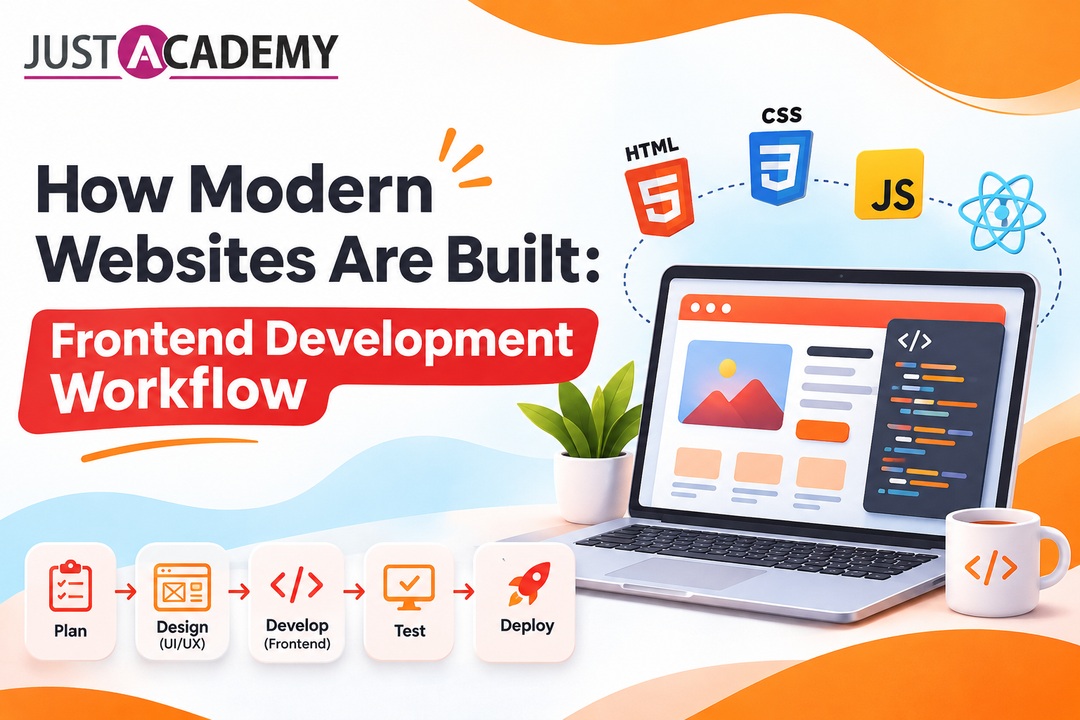
A practical walk through every stage of website development, written for Hyderabad learners who want to think and code like working front end engineers
A mentor style breakdown of React, Vue and Angular for Hyderabad learners, covering market share, hiring demand, learning curve and the smartest way to train.
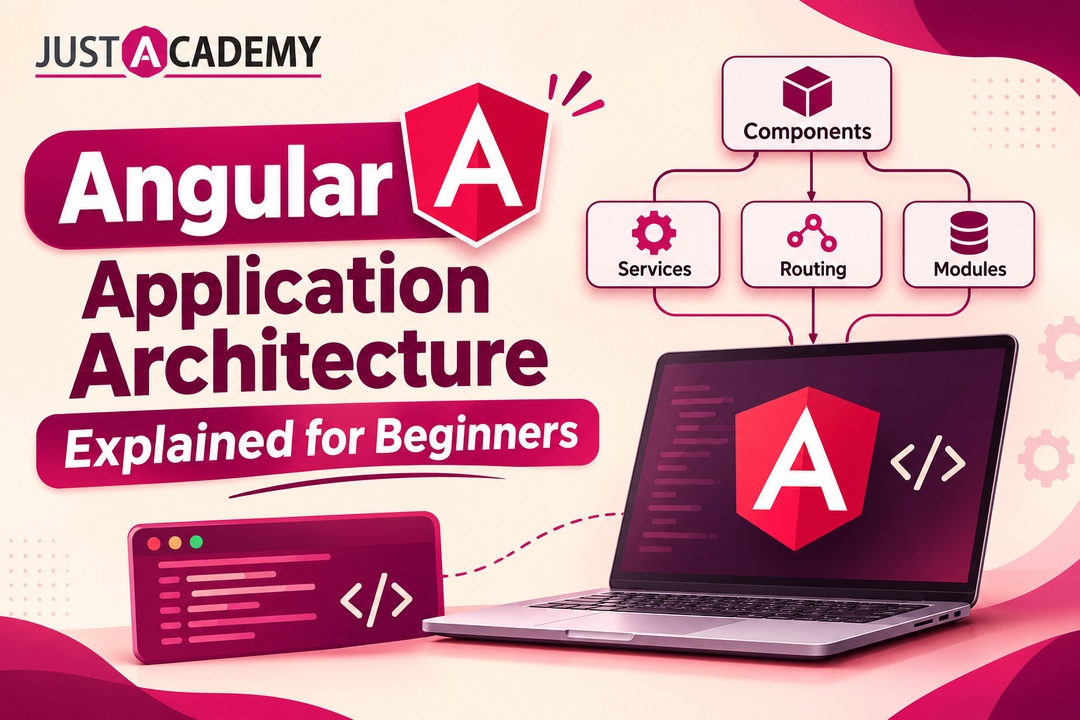
How components, services, standalone building blocks and the Angular CLI fit together, explained in plain words with live interactive and mentor led learning in mind
A practical guide for Hyderabad developers to react hooks, custom hooks and the design patterns that keep real projects clean, taught through live interactive, instructor led and mentor led learning
A practical, honest guide to choosing your first language, understanding modern iOS development, and building a career in Hyderabad’s growing app ecosystem through live interactive, instructor led and mentor led training.
Drop us a Query
+91 99871 84296
Available 24x7 for your queries
Want To Connect with us
🚀 Kickstart Your IT Career
with JustAcademy
Learn Industry-Focused Courses with Live Projects & Placement Assistance
Full Stack Java(Java, Spring Boot, Hibernate, REST API, React JS)
Data Analytics(Excel, SQL, Power BI, Python, Tableau)