I am learning flutter from JustAcademy, They provide very much great environment where people gather and work simultaneously. totally project based training institute.
MOHD ABU BAKAR ANSARI
Flutter Developer
Awesome Experience. I am a Front-end Web Designer working at Star India for 3 years now. I applied for Full-stack development and my experience has been phenomenal & they really do help with placements exceptionally. Thank you Roshan sir so much.
How live, instructor led and mentor led training helps Hyderabad learners move from MEAN stack basics to enterprise grade projects
Walk through Hitech City, Gachibowli or Financial District on a weekday morning and you will notice something that does not show up in any job portal statistic. Almost every second person with a laptop bag is building, fixing or testing software that a company depends on to run its daily business. That is the real world of enterprise application development, and it looks nothing like the neat tutorial projects most beginners start with. Enterprise software has to survive thousands of users, strict security reviews, awkward legacy systems and managers who want changes by Friday.
If you live in Hyderabad and want a place in that world, the MEAN stack is one of the most practical doors you can open. At JustAcademy, we teach it through live, instructor led and mentor led classes that Hyderabad learners can join from home or office, and you can explore the complete MEAN stack course to see how the curriculum is organised. If you would rather feel the teaching style before deciding anything, book a free demo session and sit in on a real class.
This guide is written for the person who is curious but a little overwhelmed. Maybe you are a fresher comparing five technology stacks. Maybe you are a support engineer who wants to move into development. Maybe you already know a little JavaScript and wonder whether MEAN is still worth your time. We will go layer by layer, from what the stack actually is to how real enterprise projects are planned, built, tested and shipped. We will also talk honestly about learning formats, because the way you learn decides how far you go.
What Enterprise Application Development Really Asks of a Team
Before we pick any technology, we need to understand the problem it is solving. A lot of learners jump into frameworks without ever asking what an enterprise application is supposed to do. That gap shows up later in interviews, when a hiring manager asks why you structured a project the way you did and you realise you only followed a video.
What makes software enterprise grade
An enterprise application is software built for an organisation rather than an individual. Think of a bank's loan approval system, a hospital's patient records portal, a logistics company's shipment tracker or an internal HR platform used by ten thousand employees. These systems share a few traits. They handle sensitive data, they need role based access, they must stay available during business hours and beyond, and they keep changing as the business changes.
That last point matters more than most beginners expect. A hobby project is finished when it works. An enterprise project is never finished, it is maintained. So the code you write has to be readable by the person who joins the team next year, structured so that one change does not break five other things, and documented well enough that nobody has to guess.
The role of enterprise application development services
Many companies in Hyderabad do not build everything in house. They hire an enterprise app development company or buy enterprise application development services from specialists who design, build and support the software on their behalf. These providers handle requirement analysis, architecture, development, testing, deployment and long term support. If you work for such a firm, your day involves client calls, estimation, code reviews and a lot of translating between business language and technical language.
Understanding this ecosystem helps you choose what to learn. Service companies and product companies both hire heavily in Hyderabad, and both value developers who can work across the whole application rather than a single layer. That is exactly where a full stack skill set pays off.
Why web first still wins
Most enterprise software today is delivered through the browser, even when it also has a mobile companion. Browser based delivery means no installation headaches, instant updates and a single codebase that works across laptops, tablets and phones. This is why enterprise web development remains the largest slice of the market, and why a JavaScript based stack such as MEAN fits so naturally. One language runs across the database layer, the server and the user interface, which keeps teams smaller and communication simpler.
Reading the MEAN Stack One Layer at a Time
Let us unpack the acronym properly, because a surprising number of learners can recite it without being able to explain what each part does.
The full form of MEAN stack and what each letter does
The full form of MEAN stack is MongoDB, Express.js, Angular and Node.js. Each one handles a different responsibility. MongoDB stores your data as flexible JSON like documents. Express.js is a lightweight framework that sits on top of Node.js and handles routes and requests. Angular builds the interface your users actually see and click. Node.js is the runtime that lets JavaScript run on the server instead of only in the browser.
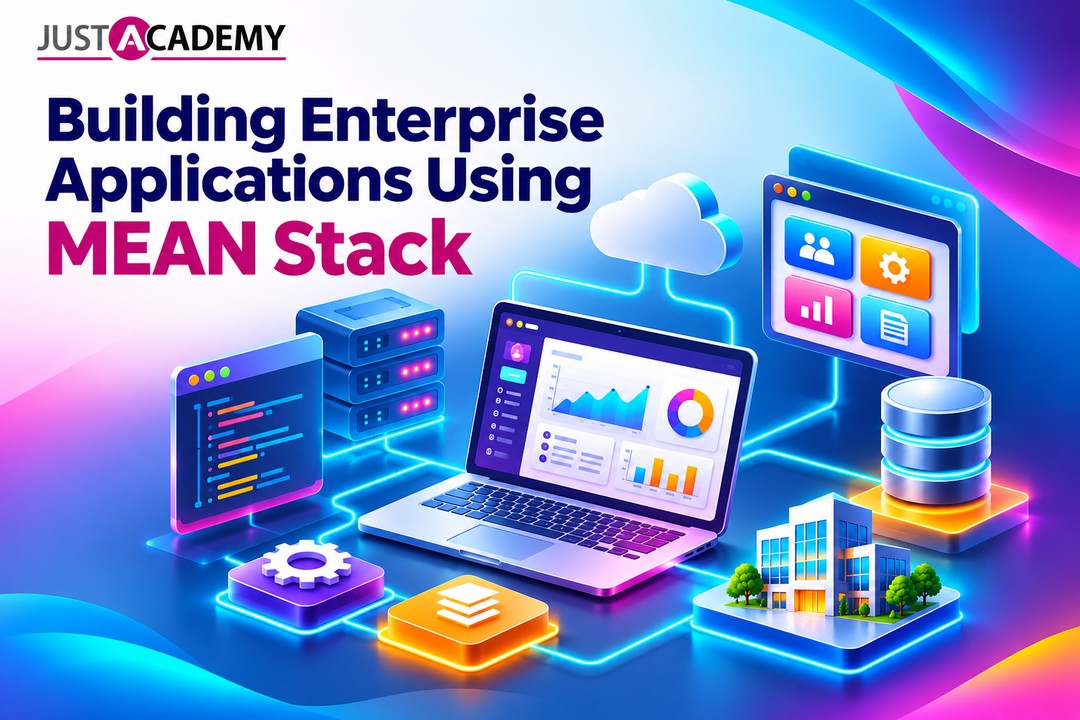
Put together, they form a complete mean software stack where a request travels from the user's screen, through Angular, to an Express route running on Node.js, down to MongoDB, and back again. Because every layer speaks JavaScript or JSON, there is very little translation friction. That is the quiet charm of the stack, and it is why many teams describe it as one of the more consistent choices in the technology stack landscape.
Angular as the backbone of the interface
In an Angular MEAN stack project, Angular is the part that most enterprise teams care about most, because it is opinionated. It gives you modules, components, services, dependency injection, routing, forms and testing tools out of the box. For a large team, that structure is a gift. Ten developers can work on the same application and still produce code that looks like it came from one person.
TypeScript, which Angular uses by default, adds another layer of safety. Catching a type error while typing is far cheaper than catching it in production at 2 a.m. For learners, TypeScript also builds good habits early, which is something interviewers in Hyderabad often notice.
Node.js, Express and MongoDB on the server side
Node.js handles many simultaneous connections without creating a new thread for each one, which suits applications with lots of users making small requests, like dashboards and ticketing systems. Express keeps the code on top clean and minimal, so you decide how to structure your routes, middleware and error handling. MongoDB then gives you the freedom to store data that does not fit neatly into rows and columns, which is common when requirements shift every few weeks.
Terms People Mix Up: Full Stack Meaning, MEAN and MERN
If you have spent any time searching online, you have probably met a pile of overlapping phrases. Let us clear the fog, because interviewers love to test whether you truly understand the vocabulary or just recognise it.
Full stack developer meaning in plain words
The full stack developer meaning is simple. It describes someone who can work on both the front end, which is what users see, and the back end, which is the logic and data behind the scenes. When people ask for the full stack meaning or the full stack development meaning, the honest answer is that it is about range, not about knowing everything. A full stack engineer can build a feature from the database all the way to the screen, even if they are stronger on one side.
You will see the same idea written in many ways, including the meaning of full stack developer, the full stack developer definition, full stack engineer meaning, fullstack dev meaning and stack developer meaning. They all point to the same person. And if you ever wonder what stack overflow means in this context, it is a separate thing entirely: the well known question and answer community, not a type of stack, though every developer ends up living on it.
MEAN and MERN stack compared
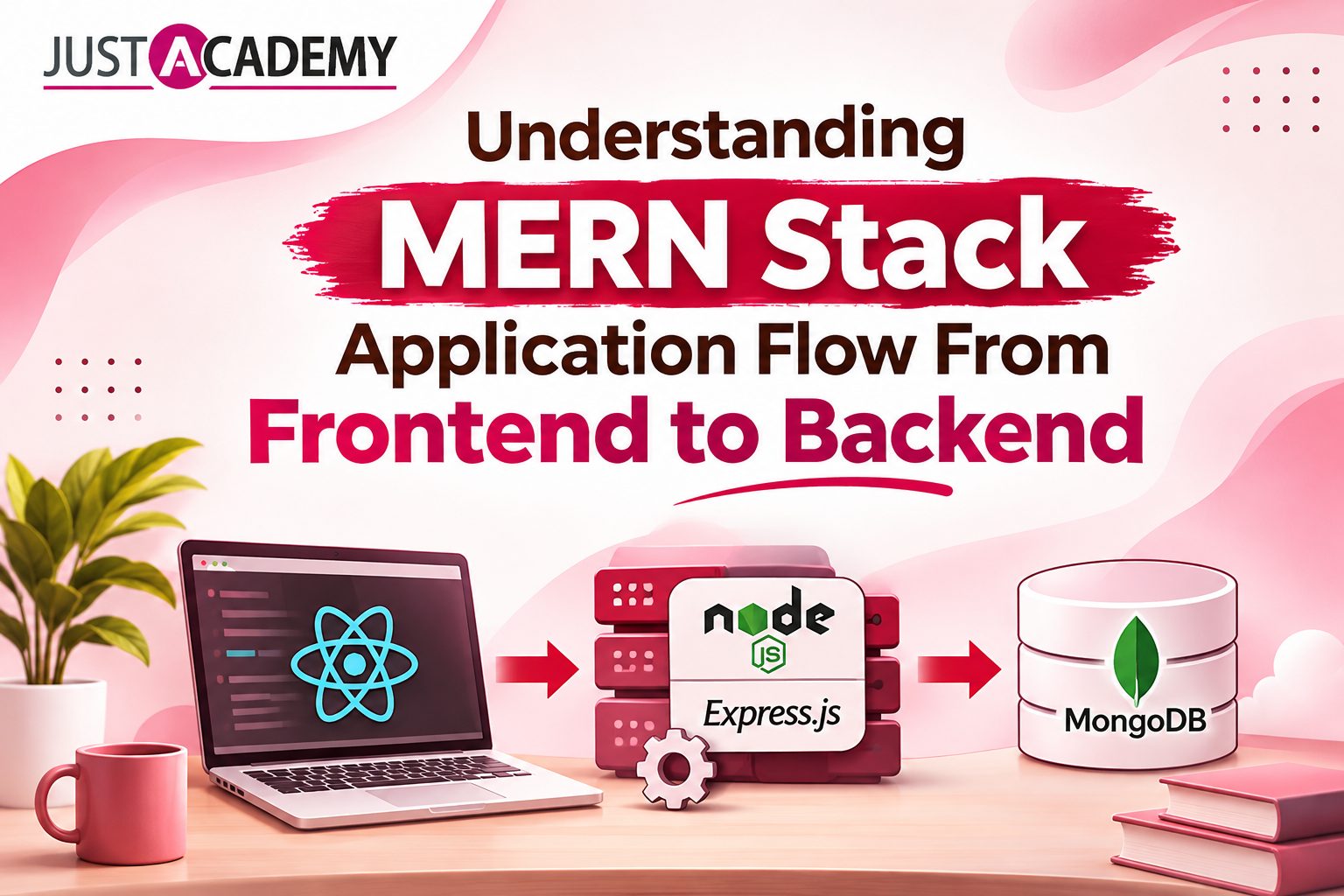
The two names most learners confuse are MEAN and MERN. The mean and mern stack share three layers. MongoDB, Express.js and Node.js are identical. The only difference is the front end. MEAN uses Angular, MERN uses React. The mern stack full form is MongoDB, Express.js, React and Node.js, and the full form of mern stack is simply the same thing said the other way round.
Aspect
MEAN stack
MERN stack
Front end
Angular, a full framework
React, a library
Language flavour
TypeScript by default
JavaScript or TypeScript
Structure
Opinionated, consistent
Flexible, team decides
Typical fit
Large enterprise portals
Fast moving product interfaces
Learning curve
Steeper at the start
Gentler at the start
A mern developer, or what people call a full stack mern developer, usually enjoys flexibility. A mean developer, sometimes written as a meanstack developer, usually enjoys structure. Neither is better. The mern mean debate, or mern stack mean question as people type it into search, really comes down to what your target employers use. For a clear explanation of the roles, the mern stack developer meaning and the mern developer meaning both boil down to a developer who builds with the React flavour of the same JavaScript family.
Which tech stack meaning should guide your choice
When people ask for the tech stack meaning, they are asking about the combination of tools used to build an application: the language, the framework, the database and the hosting. Your choice should follow the jobs you want rather than internet fashion. Enterprise portals, banking dashboards and internal tools lean toward Angular. Consumer products and startups often lean toward React. If you are curious about the broader range, our full stack app developer program for Hyderabad learners covers web and app development together for people who want a wider base.
How an Enterprise Web Development Project Actually Moves
Tutorials teach you to build a todo list. Real projects look different. Let us follow the usual path of an enterprise web development project, because understanding the journey makes you a far more useful junior developer.
From requirements to architecture
Everything starts with conversations. Business analysts and product owners describe what the system should do, and the technical team turns that into user stories, data models and an architecture plan. At this stage, a MEAN developer helps decide how many Angular modules the front end needs, how the Express routes will be organised, what collections MongoDB will hold and how authentication will work.
Good architects think about growth early. They ask how the system will behave with ten times the users, where sensitive data will live and how errors will be logged. You will not be making these calls in your first month, but understanding them helps you write code that does not fight the design.
Building features that survive real users
Once the plan is set, the team works in short cycles. A typical feature might be a leave approval workflow. Angular provides the form and the approval screen, Express exposes the endpoints, MongoDB stores the requests, and Node.js ties business rules together, such as who can approve what. Along the way, developers write validation, handle failures politely and think about what happens when two managers click approve at the same moment.
This is where enterprise application development services earn their price. The difference between a demo and a dependable system is the unglamorous work: input validation, role checks, audit logs, pagination, caching and graceful error messages.
Testing, automation and the quiet role of Python
No enterprise team ships without testing. Unit tests catch small mistakes, integration tests check that layers cooperate, and end to end tests mimic a real user clicking through the application. This is where automation skills become valuable, and our Selenium training in Hyderabad is a natural companion for developers who want to understand how browser testing is done properly.
Python also shows up more often than people expect. Teams use it for scripts that seed test data, process reports, automate deployment chores and connect analytics to the application. If that sounds useful, Python training in Hyderabad is a sensible second skill to add once your MEAN foundations feel steady. A developer who can build in MEAN, test with automation and script with Python becomes the kind of person managers quietly rely on.
Where Enterprise Web Development Meets Enterprise Mobile Development
Hardly any enterprise product stays only on the desktop. Field staff want to approve things from their phones. Customers want to check statuses on the go. This pushes teams toward enterprise mobile development, and it changes how you should think about your skills.
Sharing one backend across web and mobile
The cleanest approach is a single backend that serves both the web interface and the mobile app. Your Express and Node.js layer exposes secure APIs, MongoDB stores the data once, and Angular serves the web client while a mobile client consumes the same endpoints. That is the heart of enterprise mobile app development done sensibly, because you avoid duplicating business logic in two places.
Companies searching for enterprise mobile app development partners usually want to know that the backend is reliable before they worry about the mobile polish. A developer who understands APIs deeply can move into mobile work with little friction.
Low code platforms and where they fit
You may hear the phrase outsystems enterprise in meetings. OutSystems is a low code platform that lets teams assemble applications visually with minimal hand written code. Some large organisations use it to speed up internal tools. It is worth knowing about, because you may meet it on a client project.
Here is the honest comparison. Low code platforms are fast for standard workflows and slower or more restrictive when requirements get unusual. A MEAN stack gives you full control, which matters when the business logic is complicated or performance is critical. Many teams use both, with low code for simple internal forms and custom code for core systems. Knowing real code makes you more valuable even in a low code world, because someone has to extend what the platform cannot do.
A short pause: see it before you decide
If you are reading this and thinking about whether live, mentor led training suits you, the easiest way to find out is to try it. You can register for a free demo, watch how an instructor handles questions in real time, and judge the teaching style for yourself with zero commitment.
What Hyderabad Hiring Managers Look For in a MEAN Developer
Hyderabad is one of the busiest technology hiring cities in India, with global capability centres, service companies, product firms and a lively startup scene. That mix creates steady demand for developers who can build complete features. Here is what recruiters and interviewers tend to value.
Skills that get you shortlisted
Employers rarely want a long list of buzzwords. They want evidence that you can build something that works. For a MEAN role that means comfort with JavaScript and TypeScript, a working grasp of Angular components and services, the ability to build REST APIs with Express, solid MongoDB querying, Git basics and some understanding of authentication.
Portfolio matters. A GitHub profile with two or three well explained projects usually beats a resume with ten technologies listed and nothing to show. Projects that mimic enterprise needs, such as a role based admin portal or an approval workflow, speak directly to how companies think.
Interview preparation that goes beyond memorising
Interviews for MEAN roles test concepts, reasoning and communication. You will be asked how Angular change detection works, why you would pick MongoDB over a relational database for a given case, how middleware functions in Express and how you would secure an API. Some interviewers also mix in comparisons, which is why people search for mern stack developer interview questions even when applying for MEAN roles.
Enterprise teams are collaborative. People who can explain a bug clearly, ask good questions, accept code review feedback and document their decisions stand out fast. A technically average developer who communicates well often gets further than a brilliant one who disappears for days. Mentor led training builds these habits naturally because you present work, defend choices and receive feedback every week.
Why a Live Mentor Beats a Recorded Video Every Time
Let us talk about learning format, because it is the decision most learners underestimate. You can find free MEAN stack tutorials online in unlimited supply. So why do people still struggle to become job ready?
The difference between live and interactive and merely online
Plenty of courses are online. Fewer are live and interactive. In a recorded course, you watch, pause, copy and hope. When you hit an error that the video never mentions, you are alone. In live interactive sessions, you ask the question at the moment the confusion appears, the instructor sees your screen if needed, and the explanation adapts to you rather than to an average viewer.
That is the idea behind live interactive training at JustAcademy. Hyderabad learners join from wherever they are, and the sessions feel like a classroom because they are one. Mumbai learners can also attend in person at our classroom, and the MEAN stack developer bootcamp in Mumbai follows the same curriculum for those who prefer offline learning. Many learners call it the best course in Mumbai for hands on web development, and the online batch gives Hyderabad students the same depth.
Instructor led and mentor led learning explained
These two terms sound similar but do different jobs. An instructor led session is where the concept is taught: the instructor explains Angular services, builds an Express route and walks through a MongoDB query while you follow along and ask questions. A mentor led session is more personal. A mentor reviews your code, points out weak spots, guides your project decisions and helps you prepare for interviews.
Together they create something self paced learning rarely delivers. You get structure from the instructor and personalised direction from the mentor. When you get stuck on day twenty and feel like quitting, a mentor is the person who notices and helps you through.
How accountability changes outcomes
There is a quiet truth about self study. Most people begin with great energy and fade by week three. Fixed class timings, assignments with deadlines and mentors who expect to see progress create accountability that willpower alone often cannot. You turn up because the batch turns up. You finish because someone is waiting to review.
This is also why placement support matters. When a mentor knows your strengths, they can advise which roles to target, help polish your resume and run realistic mock interviews. It turns job hunting from a lonely guessing game into a guided process.
Choosing a MEAN Stack Course Without Regret
Picking a course is a financial and emotional decision, so it deserves some careful thought. Here is how to approach it without getting swept up by flashy marketing.
What a good MEAN stack development course should cover
Look for a mean stack development course that starts with strong JavaScript and TypeScript fundamentals, then moves into Angular, Node.js, Express and MongoDB in a logical order. It should include version control, API design, authentication, deployment and testing. Most importantly, it should include projects that resemble enterprise problems rather than toy examples.
A well designed mean stack online course should also explain why decisions are made, not only how. You should come away understanding the mean framework as an approach to building systems, not only as a list of commands.
Questions worth asking before you enrol
Ask whether sessions are live or recorded. Ask who the mentors are and what industry experience they have. Ask how many projects you will build, whether code reviews are included, and what placement support actually involves. Ask to attend a demo class. A confident institute will happily say yes, and you can request one through the free demo registration page. You can also download the JustAcademy brochure to compare the curriculum, duration and outcomes at your own pace.
A fair comparison of learning formats
Format
Interaction
Accountability
Feedback on code
Best for
Free recorded videos
None
Low
None
Casual exploration
Paid recorded course
Limited
Low to medium
Rare
Self disciplined learners
Live interactive training
High
High
Regular
Career changers and freshers
Classroom plus mentor
Highest
Highest
Continuous
Those who want full immersion
This is not to say recorded content is useless. It is great for revision. But as a primary route into a first developer job, live and mentor supported learning gives most people a stronger shot.
A Learning Plan Hyderabad Learners Can Actually Follow
Knowing the theory is one thing. Turning it into a schedule you can stick to is another. Here is a realistic plan that works for students, working professionals and career switchers.
The first month: foundations that save you later
Spend the first month on HTML, CSS and modern JavaScript. Resist the urge to rush into frameworks. Get comfortable with functions, arrays, objects, promises and async code, because Node.js and Angular both lean on them heavily. Then add TypeScript basics. If you struggle here, that is normal, and a live instructor can unblock you in minutes where a forum thread might take days.
Months two and three: building the full stack
Next, move into Angular components, services and routing, then Node.js and Express APIs, then MongoDB with proper schema thinking. Build small features that connect all three layers. A user registration flow, a profile page and a simple admin screen are excellent starters. Each time you finish a feature, ask a mentor to review it. That feedback loop is where growth actually happens.
The final stretch: a capstone that tells a story
Choose a capstone that resembles a real enterprise system, such as an employee leave management portal, a vendor onboarding platform or a ticket tracking tool. Include role based access, validation, pagination and deployment. Write a short README that explains your decisions. Then rehearse presenting it, because you will be asked to walk interviewers through exactly this kind of project.
If you want to expand beyond web, the full stack app developer bootcamp for Hyderabad is a sensible next step once your MEAN base is solid, since it adds app development to the web skills you already have.
Why Structured Training Makes the Difference
Plenty of capable people learn alone, and some do it well. But structured training removes a lot of avoidable friction, and for most career switchers and freshers, that friction is what causes them to quit.
JustAcademy is an ISO certified technology training institute with classroom branches in Mumbai and Pune, and live interactive online courses available across India and globally, including Hyderabad. Our approach rests on a few simple ideas. Every concept is taught in live interactive sessions led by experienced instructors. Every learner is paired with mentors who review real code. Every project is built the way a working team would build it, with planning, version control and review.
Placement support runs alongside the technical training. That includes resume guidance, portfolio review, mock interviews and help understanding what different employers look for. We do not believe in promising magic. We believe in preparing you properly so that your skills speak for themselves.
The structure also protects you from a common trap, which is learning the wrong things in the wrong order. A designed curriculum introduces ideas when you are ready for them, revisits them in projects and keeps you moving. For people balancing jobs, families and exams, that predictability is worth more than any individual tutorial.
Conclusion
Enterprise application development is not about writing clever code. It is about building dependable systems that real organisations trust with real work. The MEAN stack, with MongoDB, Express.js, Angular and Node.js, gives you a consistent and powerful way to do exactly that, and the demand for developers who understand it across Hyderabad's busy tech landscape remains healthy.
If you take only three ideas from this guide, let them be these. First, learn the layers and also the reasons behind them. Second, build projects that look like enterprise work, not classroom exercises. Third, choose a learning format that gives you live explanation, honest feedback and someone who expects you to keep going. Instructor led sessions teach you the concepts, mentor led sessions shape you into a developer, and together they shorten the road from curious learner to confident professional.
Your next step does not have to be big. It can be as simple as watching one live class and seeing how it feels.
A practical walk through React, Express, Node and MongoDB for Hyderabad learners, explained through live interactive, instructor led and mentor led training.
A practical look at instructor led and mentor led live interactive sessions, and how learners in Hyderabad can get classroom quality teaching without leaving the city
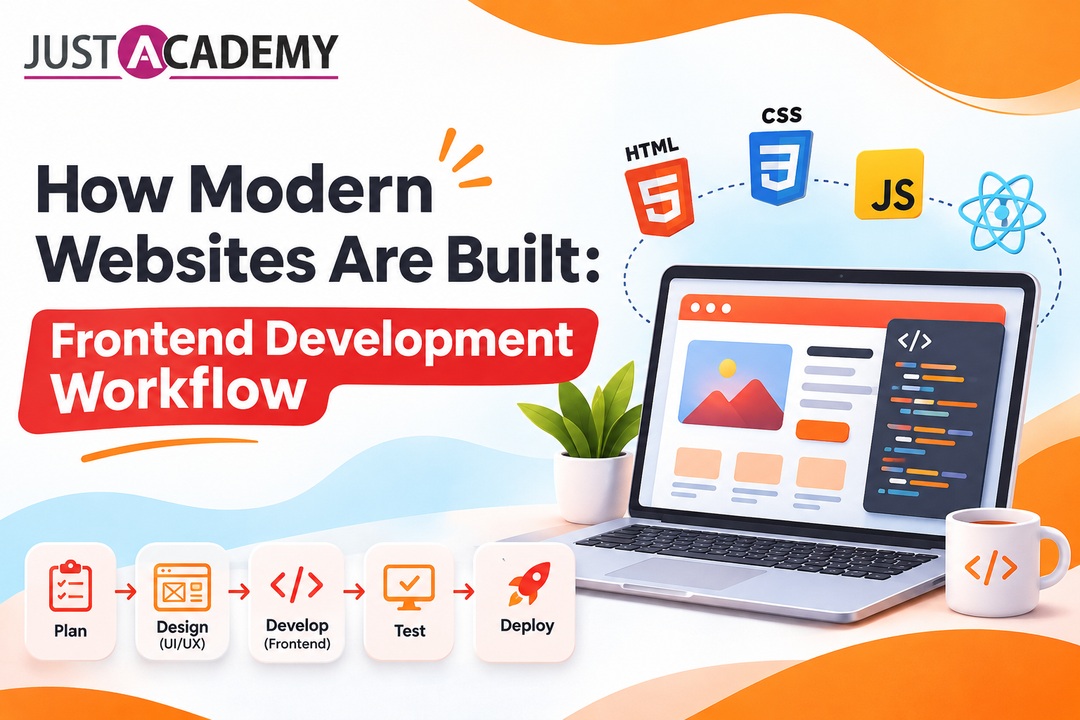
A practical walk through every stage of website development, written for Hyderabad learners who want to think and code like working front end engineers
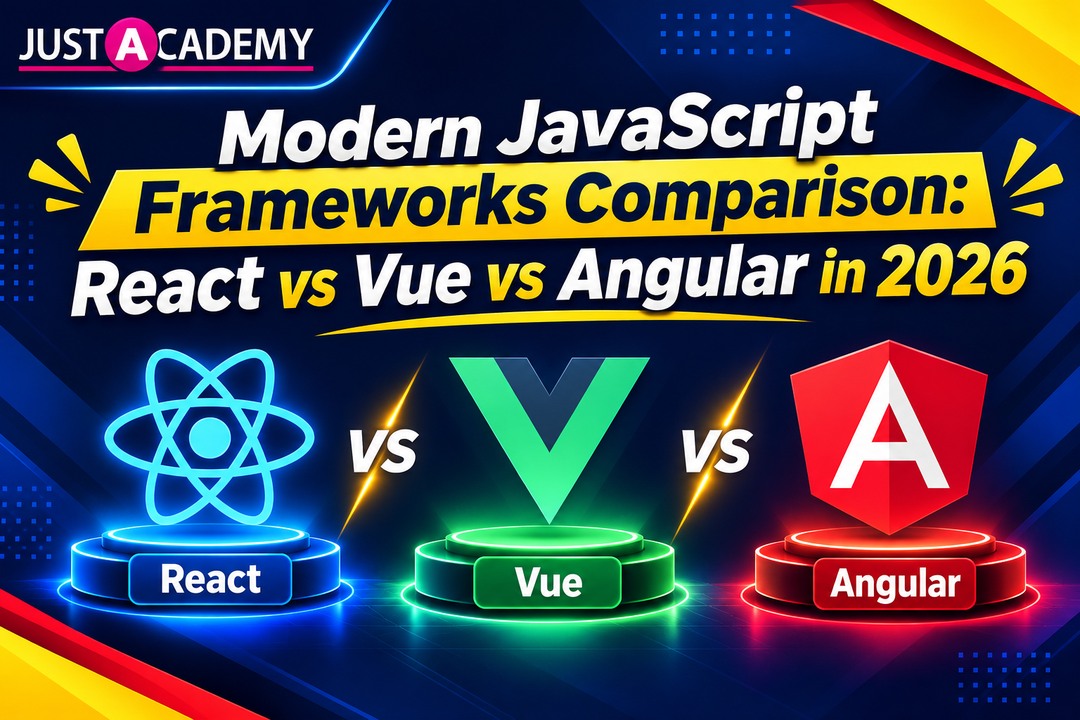
A mentor style breakdown of React, Vue and Angular for Hyderabad learners, covering market share, hiring demand, learning curve and the smartest way to train.
Drop us a Query
+91 99871 84296
Available 24x7 for your queries
Want To Connect with us
🚀 Kickstart Your IT Career
with JustAcademy
Learn Industry-Focused Courses with Live Projects & Placement Assistance
Full Stack Java(Java, Spring Boot, Hibernate, REST API, React JS)
Data Analytics(Excel, SQL, Power BI, Python, Tableau)