A practical, no fluff guide to becoming a job ready MEAN stack developer, from core fundamentals to real world projects and salary expectations in India.
Every year, a fresh batch of engineering graduates and career switchers types the same question into Google: is the mean stack still worth learning in 2026. It is a fair question. The javascript ecosystem changes fast, new frameworks show up every few months, and it is easy to feel like whatever you learn today will be outdated by the time you finish learning it. But here is the honest answer, based on what is actually happening in hiring right now. A skilled mean stack developer who understands MongoDB, Express, Angular and Node js deeply, and who can actually ship a working application end to end, is still one of the most hireable profiles in Indian tech companies, product startups and IT services firms alike.
This blog is not another generic list of buzzwords. It is a practical roadmap, the kind we wish someone had handed us when we were figuring out mean stack developer skills from scratch. We will walk through what the role really involves, the exact technical skills worth prioritizing, project ideas that will actually impress a hiring manager, and realistic salary numbers so you know what to expect. If you are based in Mumbai or anywhere else in India and want structured guidance instead of scattered YouTube tutorials, our live interactive mean stack bootcamp in Mumbai walks you through this entire roadmap with real projects and mentor support, and you can also book a free demo class before deciding anything.
What Does a MEAN Stack Developer Actually Do in 2026
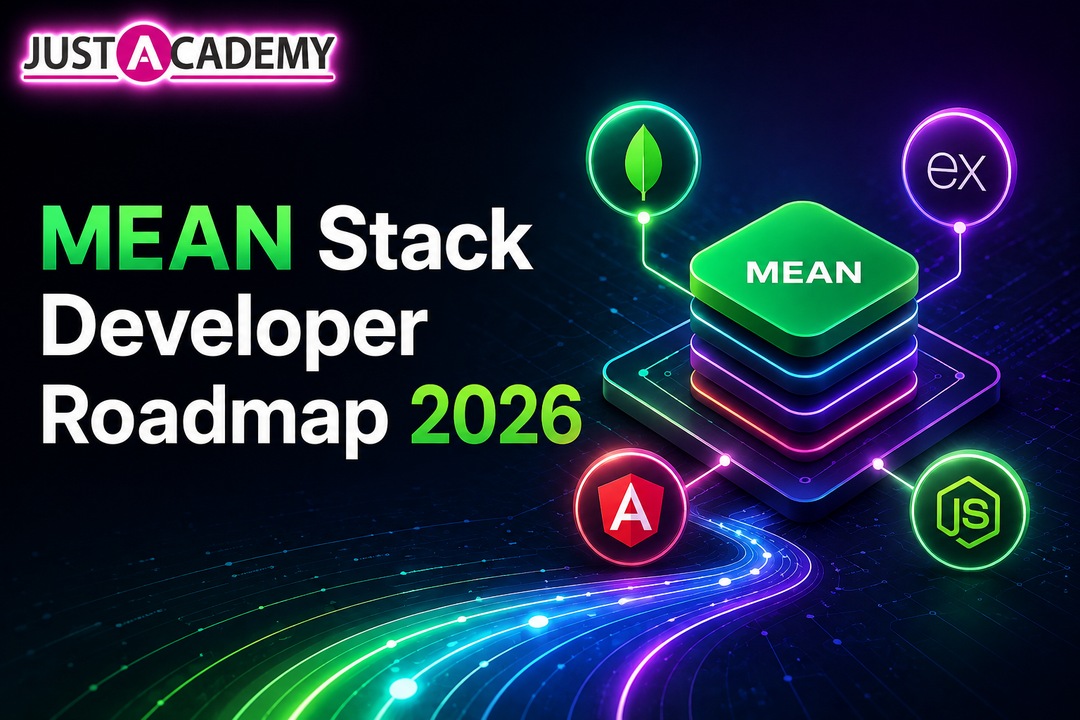
Let's clear up a common confusion first. MEAN is not a single tool, it is an acronym for four technologies that work together to build complete web applications. MongoDB handles the database, Express js runs the backend server logic, Angular builds the user facing frontend, and Node js is the javascript runtime that ties the backend together. When people ask what is the mean framework, this is essentially the answer, four pieces of technology that speak the same language, javascript, and work as one cohesive mean software stack.
A mean dev working in a real company is rarely just writing code in isolation. On a typical day, they might be designing a REST API in Express, structuring collections in MongoDB, building a reactive Angular component, and debugging an asynchronous function in Node js, all before lunch. The appeal of this stack has always been that one language, javascript, covers the entire flow from database to browser. That is why so many companies still prefer hiring developers who understand the mean stack architecture deeply rather than developers who only know isolated frontend or backend skills.
How MEAN Stack Development Fits Into Modern Web Development
Modern mean stack web development is not just about writing CRUD operations anymore. Companies expect developers to understand responsive design principles so applications work seamlessly across devices, to write clean and testable code, and to think about performance from day one. A good mean stack application development workflow today typically includes version control with Git, some form of automated testing, and increasingly, developers are expected to have a working understanding of deployment pipelines even if DevOps is not their primary role.
There is also a growing overlap between java mean stack roles and pure javascript mean stack roles, particularly in enterprise companies that already have Java based backend systems but want Angular for their frontend. A java mean stack developer in this context typically works with Java based microservices while still using Angular for the client side, which is a slightly different flavor of the stack but shares a lot of the same frontend thinking.
The Skills You Need to Build Before You Call Yourself Job Ready
This is where most self learners go wrong. They watch tutorials on each technology separately and assume that knowing bits and pieces adds up to being job ready. It does not. Recruiters and technical interviewers are looking for a specific combination of skills required for mean stack developer roles, and missing even one piece can hold back an otherwise strong candidate.
Frontend Foundations You Cannot Skip
Before touching Angular, you need genuine comfort with html5 and css3. Not just knowing the tags, but understanding semantic markup, flexbox, grid layouts, and how to build a page that looks good on a phone and a laptop without writing separate code for each. Responsive design is not optional anymore, it is assumed knowledge. Once that foundation is solid, Angular becomes much easier to learn because you are focused on component logic and data binding rather than fighting with basic layout issues.
Alongside Angular, you need strong javascript fundamentals, particularly dom manipulation, asynchronous javascript using promises and async await, and increasingly, an understanding of functional programming concepts like pure functions, immutability, and higher order functions. These concepts show up constantly in Angular's reactive programming model through RxJS, so the earlier you build comfort with them, the smoother your Angular learning curve will be.
If Angular specifically is where you want deeper structured guidance, our Angular training course in Mumbai covers component architecture, services, routing and state management with hands on projects rather than isolated theory.
Backend and Database Skills That Actually Matter
On the backend side, Node js and Express js form the core of your mean stack developer skill set. You should be comfortable building REST APIs, handling authentication with JWT tokens, managing middleware, and structuring a backend project in a way that scales beyond a single file of code. This is also where object oriented programming thinking becomes genuinely useful, even though javascript is not a purely object oriented language in the traditional sense. Concepts from oops concepts like encapsulation, inheritance patterns, and modular design directly influence how you structure Express applications and Node modules.
For database work, mongodb is the natural choice within the mean stack, and you should get hands on with mongodb atlas, the cloud hosted version of MongoDB, since almost every real project today deploys the database in the cloud rather than locally. Understanding how to design schemas in a nosql database, when to embed documents versus reference them, and how indexing affects query performance separates a developer who can build a demo project from one who can build something that survives real traffic.
That said, do not ignore relational databases entirely. Many companies still run SQL based systems alongside MongoDB, and familiarity with tools like sql server management studio or general sql studio environments, along with a solid grasp of database management system fundamentals, makes you a far more flexible hire. A student database management system project, in fact, is one of the most common beginner projects precisely because it forces you to think through both SQL and NoSQL approaches to the same problem.
Where JavaScript, TypeScript and the Broader Ecosystem Fit In
Angular is built on TypeScript, so while your core skills remain in fullstack javascript, you will also need working knowledge of TypeScript's type system, interfaces, and decorators. This is a small but important distinction that trips up beginners who assume mean stack learning is purely javascript from start to finish.
It also helps to understand how the mean stack compares to other combinations you will hear about constantly, particularly mean and mern stack discussions. The mern stack full form is MongoDB, Express, React and Node, essentially the same stack with React replacing Angular on the frontend. Many job postings today ask for either, and having a working understanding of full stack react concepts alongside Angular makes you significantly more adaptable in the current hiring market, even if your primary specialization remains Angular based.
Real Projects That Prove You Can Build, Not Just Learn
Here is something we tell every student who joins our bootcamp on day one. Certificates get you an interview call. Projects get you the job offer. No hiring manager cares how many courses you completed if you cannot walk them through a project you actually built, explain the decisions you made, and answer questions about why you structured your database a certain way.
Beginner Friendly Projects to Start Building Confidence
If you are just starting out, resist the urge to jump straight into something overly ambitious. Solid mean stack projects for beginners include a task management application with user authentication, a simple blog platform where users can create and comment on posts, or a personal expense tracker that stores data in MongoDB and displays it through Angular charts. These projects are small enough to finish in a couple of weeks but still touch every layer of the stack, which is exactly what you want when you are learning mean stack tutorial style, one concept building on the previous one.
A student database management system, mentioned earlier as a learning tool for databases, also doubles as a genuinely useful beginner project since it involves managing records, handling relationships between data, and building simple CRUD interfaces, all core to understanding how a mean stack example application should be structured from the ground up.
Projects That Actually Impress in Interviews
Once you have the basics down, it is time to move toward best mean stack projects that demonstrate real world thinking. A mean stack ecommerce project is probably the single most requested type of portfolio project because it naturally forces you to handle user authentication, product catalogs, shopping cart logic, payment gateway integration, and order management, essentially every skill an employer wants to see in one application.
Other strong project ideas worth exploring for mean stack project ideas include a real time chat application using WebSockets, a hospital or clinic appointment booking system, a job portal with resume upload functionality, or a social media style application with likes, comments and follower relationships. What matters most is not picking the flashiest idea, it is building something end to end, deploying it so it is actually accessible online, and being able to explain every architectural decision confidently.
If you want to see how these kinds of applications are typically structured, browsing github mean stack projects is genuinely useful for inspiration, though we always encourage students to build their own version rather than copying existing code, since interviewers can tell the difference within the first few questions.
Learning MEAN Stack the Right Way, By Building Real Applications
There is a reason we structure our training around learning mean stack by building real world application principles rather than isolated exercises. When you build a mean stack full project from scratch, you run into real problems, a query that is too slow, an API that returns the wrong data shape, a component that does not update when it should, and solving those problems is where actual learning happens. Tutorials rarely expose you to these situations because everything in a tutorial is pre solved for you.
This is also exactly where structured, live interactive sessions make a genuine difference compared to solo learning. When you are stuck on a bug at midnight during a self paced course, there is nobody to ask. In a properly run cohort, a mentor is available to walk through the problem with you in real time, which is often the difference between quitting in frustration and actually finishing the project. If a job ready ecommerce style project is what you are aiming to build, our MERN stack developer bootcamp in Mumbai is also worth exploring if you want to compare the React based path alongside Angular before committing to one direction.
What MEAN Stack Developers Actually Earn in India Right Now
Let's talk numbers, because this is usually the question everyone actually wants answered but nobody asks directly. Mean stack developer salary in india varies quite a bit depending on experience, city, and whether you are working for a startup, an established product company, or an IT services firm.
Entry Level and Fresher Salary Expectations
For freshers, mean stack developer salary for freshers in India typically falls somewhere between three and six lakh rupees per annum, depending on the city and the company size. Product based startups in tier one cities tend to pay slightly more than traditional service based companies, but service companies often offer more stability and structured growth in the early years. Mean stack developer salary in mumbai specifically tends to sit at the higher end of this range compared to smaller cities, given the concentration of startups and product companies based there.
Mid Level and Experienced Salary Trends
As you cross the two to four year experience mark, the mean stack developer average salary climbs significantly, often into the eight to fifteen lakh range, particularly for developers who can demonstrate strong system design thinking alongside their coding skills. Looking ahead, mean stack developer salary 2026 trends suggest continued strong demand, particularly for developers comfortable with cloud deployment and API design, since companies are increasingly building distributed systems rather than simple monolithic applications.
It is also worth noting that average full stack developer salary in india figures across different stacks, mean, mern, or otherwise, tend to converge at the senior level, since by that point what matters most is your problem solving ability and system design experience rather than which specific frontend framework you started with. For those exploring full stack mean developer salary versus mean and mern stack developer salary comparisons, the honest truth is that the gap is small and mostly comes down to individual company pay bands rather than the framework choice itself.
Freelancing and Alternative Career Paths
Not everyone wants a traditional employment path, and that is completely valid. A freelance mean stack developer can build a solid income working with international clients on platforms that connect developers with short term projects, particularly since the mean stack's use of a single language across the stack makes it easier to take on full project ownership rather than needing separate frontend and backend specialists. This path requires more self discipline around client communication and project scoping, but the earning potential, especially with clients paying in dollars or other stronger currencies, can be quite attractive once you have a solid portfolio to show.
Common Mistakes That Slow Down MEAN Stack Learners
Before we move to certifications and career paths, it is worth pausing on the mistakes we see repeatedly, because avoiding them will save you months of frustration compared to learning the hard way.
Learning Technologies in Isolation Without Connecting Them
The single biggest mistake self taught developers make is treating MongoDB, Express, Angular and Node as four separate courses rather than one connected system. You can finish an Angular course and a Node js course back to back and still struggle to connect them into a working application, because the real skill is in the integration, how a frontend request flows through an API, gets processed by middleware, hits a database query, and returns formatted data back to a component. This connective tissue rarely gets taught explicitly in single technology tutorials, which is exactly why so many learners feel confident watching videos but freeze when asked to build something from a blank folder.
Skipping Error Handling and Edge Cases
Beginner projects tend to only handle the happy path, where every input is valid and every request succeeds. Real applications spend a surprising amount of code handling what happens when things go wrong, a failed database connection, an expired token, a malformed request body, or a user submitting an empty form. Interviewers specifically probe for this kind of thinking because it separates tutorial level code from production ready code. Building the habit of asking what could go wrong here early in your learning journey pays off enormously later.
Ignoring Version Control and Deployment
Some learners treat Git as an afterthought, something to learn only once they have a job. This is backwards. Every serious mean stack developer course and every real workplace expects you to be comfortable with branching, committing meaningful changes, and resolving merge conflicts from day one. Similarly, never deploying your projects means you never experience the very real differences between how an application behaves locally versus how it behaves once it is live, facing actual network conditions, environment variables, and production level MongoDB Atlas configurations rather than a local database running on your own laptop.
How Long It Realistically Takes to Become Job Ready
This is one of the most common questions we get, and honestly, the answer depends heavily on your starting point and how consistently you practice. If you are starting from complete scratch, with no prior programming background, a realistic timeline to reach a genuinely job ready mean stack developer skill set is somewhere between four and seven months of consistent, focused effort. This includes time spent on fundamentals, individual technology learning, and crucially, enough time to build at least two or three substantial projects rather than rushing straight to job applications after finishing a course.
If you already have some programming background, perhaps from college coursework or a different stack entirely, this timeline compresses significantly, often to two or three months, since you are mostly translating existing problem solving instincts into javascript specific syntax and patterns rather than learning to think like a programmer for the first time.
What consistently separates learners who reach job readiness quickly from those who stall out for a year or more is not raw intelligence, it is structure. Learners following a clear, sequenced curriculum with regular checkpoints and feedback consistently outperform learners piecing together random YouTube playlists, simply because the second group spends enormous amounts of time deciding what to learn next instead of actually learning it.
Building a Portfolio and Resume That Actually Gets Noticed
Once you have a couple of solid projects under your belt, how you present them matters almost as much as the code itself. A common mistake is listing project names on a resume without context, which forces the recruiter to guess what you actually built and why it matters.
Instead, frame each project around the problem it solves and the specific technical decisions you made. Rather than simply writing built an ecommerce application using mean stack, describe it as designed and built a full stack ecommerce platform handling user authentication, real time inventory updates and payment integration, deployed live with a MongoDB Atlas backend. This small shift in framing signals to a recruiter that you understand not just how to code, but why you made the choices you made, which is exactly the kind of thinking a technical interview will probe for anyway.
Hosting your projects live, rather than leaving them only as local code on your laptop, also matters more than most beginners realize. A deployed link that a recruiter can click and interact with immediately builds more credibility than a GitHub repository they would need to clone and run themselves, though of course having clean, well documented GitHub repositories alongside your live links is still valuable and expected.
Certifications, Formal Training and Building Long Term Credibility
A mean stack developer certification can genuinely help you stand out, particularly early in your career when you do not yet have a strong project portfolio or professional references to lean on. That said, a certification alone rarely gets you hired, it works best as supporting evidence alongside real projects and a demonstrated ability to explain your work confidently in interviews.
This is also a good moment to mention that not every skill needs to live purely inside the mean stack umbrella. Many developers strengthen their oop java or general programming fundamentals before diving into javascript frameworks, since strong oop coding habits transfer well regardless of language. Others build comfort with oops in python first as a gentler introduction to object oriented thinking before applying those same principles to javascript and TypeScript in Angular projects. There is no single correct starting point, what matters is that you eventually connect these fundamentals to real, working mean stack applications.
If structured, mentor guided learning appeals to you more than piecing together scattered resources, a proper mean stack developer course should ideally combine all of this, frontend fundamentals, backend architecture, database design, and enough project work that you leave with a genuine portfolio rather than just a certificate. We have written more extensively about how to approach this kind of course structure in our detailed guide on choosing the right mean stack course, and if you want a deeper technical breakdown of the stack itself, our piece on mean stack web development fundamentals is worth a read too.
For learners who want additional flexibility around specific technologies within the stack, strengthening core javascript full stack skills through a dedicated JavaScript training course in Mumbai can also be a smart move before or alongside Angular, particularly if your javascript fundamentals feel shaky. Similarly, since data driven applications increasingly lean on scripting and automation, some developers also pick up Python fundamentals through our Python training course in Mumbai, especially if they are considering backend work that extends beyond pure Node js environments later in their career.
Why Structured Training Actually Speeds Up Your MEAN Stack Journey
We will be direct about this because we genuinely believe it, not just because we run training programs. Self learning the mean stack is absolutely possible, plenty of developers have done it successfully. But it usually takes significantly longer than it needs to, largely because self learners waste time figuring out what to learn next, debugging alone for hours, and building projects that do not actually match what employers are looking for.
At JustAcademy, our approach centers around live interactive sessions rather than pre recorded videos you watch passively. Being able to ask a question the moment you are confused, rather than pausing a video and searching forums for an hour, genuinely compresses the learning timeline. We run classroom training out of our Mumbai and Pune branches for students who prefer in person learning, and the exact same structured, live interactive curriculum online for students anywhere else in the world who want the same depth of mentorship without relocating.
Beyond the technical curriculum, every cohort includes placement support, resume reviews, mock interviews, and guidance on how to present your projects convincingly, because building the skill is only half the job, communicating it well during interviews is the other half. As an ISO certified training institute, we have refined this curriculum over multiple cohorts based on real hiring feedback from companies, not just theoretical course design.
Conclusion
Becoming a confident mean stack developer in 2026 is not about memorizing four technology names, it is about genuinely understanding how MongoDB, Express, Angular and Node js work together to solve real problems, and being able to prove that understanding through projects you built yourself. The mean stack roadmap for freshers we have walked through here, starting with solid frontend and backend fundamentals, moving through database design, building genuinely challenging projects, and understanding realistic salary expectations, gives you a clear and honest path forward rather than vague encouragement.
Whether you choose to learn independently or through structured, mentor led training, what matters most is consistency and building things that actually work end to end. If you would rather not figure this all out alone, we would genuinely love to help. Book a free demo class with us to experience our teaching style firsthand, or download our detailed course brochure to see the complete curriculum, project list and placement support structure before making your decision.
What Does a MEAN Stack Developer Actually Do in 2026
The Skills You Need to Build Before You Call Yourself Job Ready
Real Projects That Prove You Can Build, Not Just Learn
What MEAN Stack Developers Actually Earn in India Right Now