I am learning flutter from JustAcademy, They provide very much great environment where people gather and work simultaneously. totally project based training institute.
MOHD ABU BAKAR ANSARI
Flutter Developer
Awesome Experience. I am a Front-end Web Designer working at Star India for 3 years now. I applied for Full-stack development and my experience has been phenomenal & they really do help with placements exceptionally. Thank you Roshan sir so much.
Artificial intelligence is reshaping the job market faster than any technology in recent history. Roles in data entry, basic customer support, document processing, and routine coding are already being automated. It is natural to ask whether data analytics is safe from ai automation, especially as tools like ChatGPT, Google Gemini, and Microsoft Copilot become capable of generating reports, writing SQL queries, and summarizing datasets with a single prompt.
The answer, supported by hiring data and industry research, is that data analytics is not only safe but is one of the fastest growing career paths in the AI era. In fact, the rise of AI is creating more demand for skilled data analysts, not less. This blog explains exactly why, and what you need to do to position yourself for long-term career security.
Why Data Analysts Are Not Being Replaced by AI
AI Automates Tasks, Not Roles
The most important distinction to understand is that AI automates specific tasks within a job, not entire roles. A data analyst's job involves dozens of tasks including understanding business context, asking the right questions, collecting data from multiple sources, cleaning and validating that data, building models, interpreting results, and communicating findings to decision makers. AI can assist with some of these tasks, particularly the mechanical ones like writing boilerplate SQL or generating basic visualizations. But it cannot replace the full scope of analytical thinking, business judgment, and stakeholder communication that defines the role.
Business Context Cannot Be Automated
AI tools work with data you give them. They do not understand your company's strategic priorities, your industry's competitive dynamics, your customers' behavioral nuances, or the political context of a business decision. A data analyst does. When a sales director asks why revenue dropped in Q3, the answer requires understanding of product launches, pricing changes, regional campaigns, competitor moves, and seasonal patterns. That synthesis of data and business knowledge is deeply human and cannot be replicated by a language model that has never attended a strategy meeting.
AI Outputs Require Human Validation
AI-generated analyses are only as good as the prompts, data, and assumptions behind them. Errors in AI outputs can be subtle and difficult to detect without domain expertise. Organizations need skilled analysts to review, validate, and interpret what AI tools produce. The analyst becomes the quality layer between AI output and business decision making. This role is not disappearing. It is becoming more critical.
Decision Making Accountability Stays With Humans
Companies cannot hand accountability for major decisions to an algorithm. When a bank decides to approve or reject a loan portfolio strategy, when a hospital changes treatment protocols based on data, or when a retailer adjusts its supply chain, a human analyst must own that recommendation. Regulatory frameworks, ethical requirements, and organizational accountability structures all demand human judgment in the loop. Data analysts provide that judgment.
How AI Is Creating More Demand for Data Analytics Jobs
More Data Than Ever Before
AI systems generate enormous volumes of data as a byproduct of their operation. Every interaction with a chatbot, every recommendation from a machine learning model, every automated decision leaves a data trail. Organizations need analysts to monitor this data, assess model performance, identify drift, and ensure that AI systems are producing reliable outputs over time. The more AI a company adopts, the more analytics capacity it needs.
AI Tools Require Analytical Interpretation
Tools like Microsoft Copilot for Power BI, Tableau AI, and Google Looker AI can generate charts and summaries automatically. But they surface insights that still need to be interpreted, contextualized, and acted upon. An executive receiving an AI-generated report still needs an analyst to explain what it means for the business, what actions it implies, and what the risks of different interpretations are. AI raises the speed of analysis. It does not replace the analyst who gives that analysis meaning.
New AI Roles Are Built on Analytics Foundations
The fastest growing job titles in the AI era include AI Analyst, Machine Learning Operations Analyst, AI Product Analyst, Data Strategy Manager, and Analytics Engineer. All of these roles are direct extensions of traditional data analytics work. Professionals who have built strong foundations in SQL, Python, statistics, and business intelligence are the ones being promoted into these new AI-adjacent positions. Data analytics is the on-ramp to the most exciting careers of the next decade.
Industry Adoption Is Still in Early Stages
Despite the rapid pace of AI development, the majority of businesses in India and globally are still in early stages of data maturity. Many mid-sized companies are only now building their first data warehouses, hiring their first analysts, and implementing their first dashboards. The demand for foundational data analytics skills is not declining. It is expanding into industries and geographies that are just beginning their data journeys. Healthcare, education, agriculture, logistics, and government sectors in India represent massive untapped demand for analytics talent.
Job Postings Confirm the Trend
Year
Data Analyst Job Postings in India (Approximate)
2020
45,000
2021
68,000
2022
95,000
2023
1,30,000
2024
1,75,000
2025
Projected above 2,20,000
The trajectory is consistently upward, even as AI capabilities have grown significantly over the same period.
Skills That Make Your Data Analytics Career AI-Proof
Master the Interpretation Layer
Any analyst can run a query or generate a chart. The analysts who are irreplaceable are those who can look at the output and tell a compelling, accurate, business-relevant story. Develop your ability to connect data findings to business outcomes, formulate recommendations, and communicate uncertainty honestly. This is the interpretation layer that AI cannot own.
Learn to Work With AI, Not Against It
The most competitive analysts in the next five years will be those who use AI tools to do in one hour what used to take a day, and then spend the remaining time on higher-value thinking. Learn how to use AI-assisted tools in Power BI, Tableau, and Python. Practice prompt engineering for data analysis tasks. Understand the limitations of AI outputs. Analysts who treat AI as a productivity multiplier will dramatically outperform those who resist it.
Build Deep Domain Expertise
An analyst with strong SQL skills and deep knowledge of the fintech industry is far more valuable and far harder to replace than a generalist with the same technical skills. Domain expertise is the moat that protects your career. Choose an industry you are genuinely interested in, whether that is banking, healthcare, e-commerce, real estate, or manufacturing, and build knowledge of how that industry measures success, what its key metrics are, and what decisions its leaders face.
Strengthen Your Technical Foundation
The following skills form the core of an AI-proof analytics career:
Skill
Why It Matters in the AI Era
SQL
Still the universal language of data access and transformation
Python with Pandas
Essential for automation, modeling, and working with AI APIs
Power BI or Tableau
AI-enhanced versions of these tools reward skilled practitioners
Statistics
Required to evaluate and validate AI model outputs
Data storytelling
Translating AI-generated insights into human decisions
Cloud platforms
AWS, Azure, and GCP are where AI and analytics infrastructure lives
Develop Soft Skills That AI Cannot Replicate
Technical skills get you the interview. Soft skills determine your career ceiling. Stakeholder communication, the ability to simplify complex findings for non-technical audiences, curiosity, critical thinking, and ethical judgment are human capabilities that become more valuable as AI handles more of the routine analytical work. Invest in these deliberately.
Why Now Is the Best Time to Start a Data Analytics Career
The Transition Window Is Open Right Now
We are currently in a transition period where AI capabilities are advancing rapidly but organizational adoption is still catching up. This window, roughly the next three to five years, represents the best opportunity to enter data analytics. Companies are actively hiring, salaries are rising, and the skills required are accessible to anyone willing to invest time in structured learning.
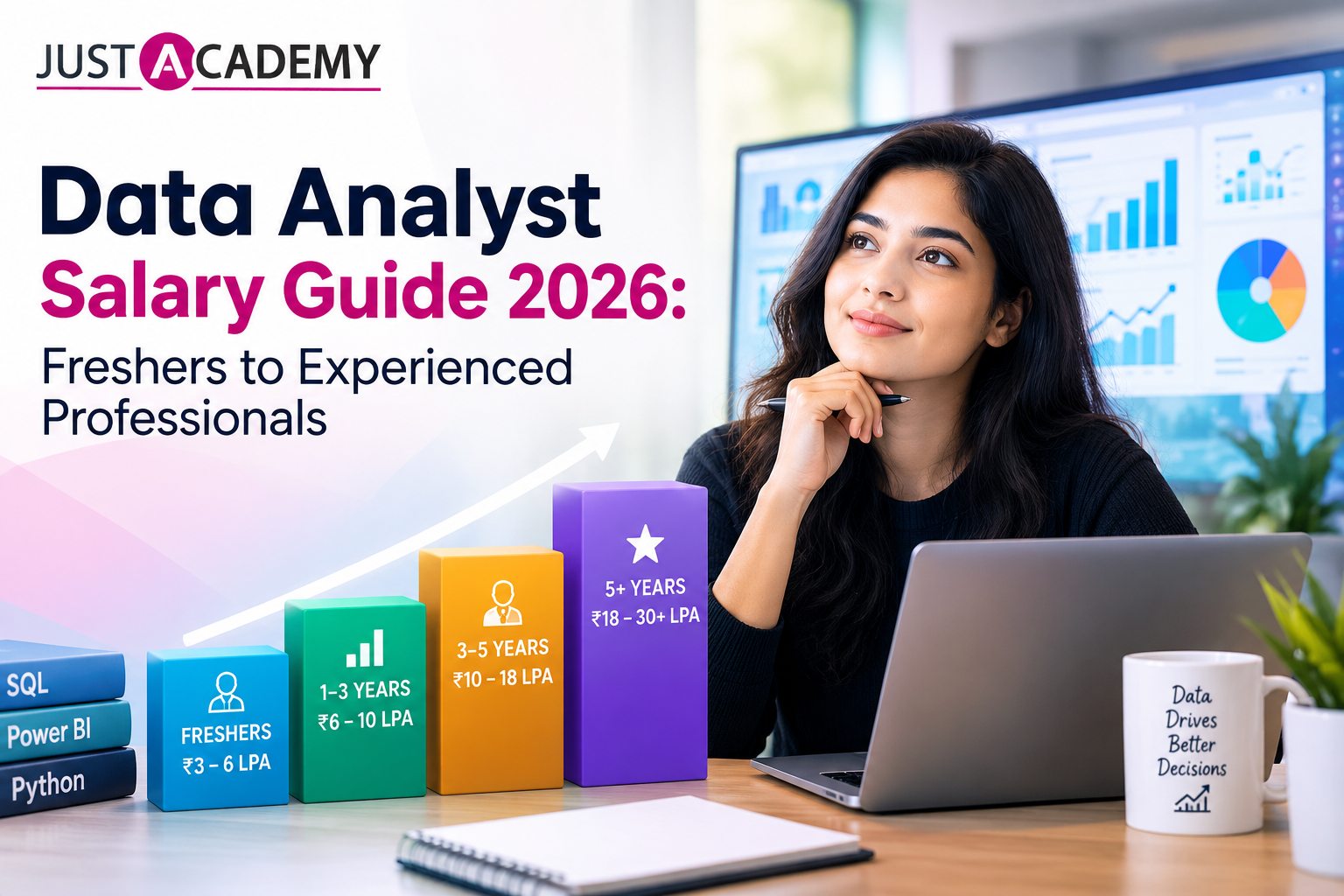
Salaries Reflect the Demand
Role
Average Annual Salary in India (2025)
Junior Data Analyst
4 to 7 LPA
Mid-Level Data Analyst
8 to 14 LPA
Senior Data Analyst
15 to 22 LPA
Analytics Manager
22 to 35 LPA
AI Analytics Specialist
18 to 30 LPA
Salaries in Mumbai, Bangalore, Hyderabad, and Pune are typically at the higher end of these ranges due to the concentration of tech and financial services companies.
Mumbai Is a Major Hub for Analytics Careers
Mumbai is home to the headquarters of major banks, insurance companies, media firms, e-commerce operations, and consulting practices. All of these industries are actively building analytics teams. For professionals based in Maharashtra, proximity to this job market is a significant advantage, and having verifiable, structured training from a recognized institution adds strong credibility to your profile.
Freshers Are Being Hired Right Now
Entry-level analytics roles do not require years of experience. They require demonstrated skills, a project portfolio, and the ability to learn quickly. Freshers who can write SQL queries, build a Power BI dashboard, and explain their findings in an interview are being hired directly out of training programs into analyst roles at companies across Mumbai, Pune, and beyond.
The Cost of Waiting Is High
Every month spent without building analytics skills is a month during which the job market becomes slightly more competitive, the tools evolve further, and the gap between where you are and where you need to be widens. Starting now, even with a part-time commitment, puts you ahead of the majority of people who are still waiting for the perfect moment.
Data Analytics Versus AI: Why They Are Partners Not Rivals
AI Needs Clean Data to Function
Machine learning models are only as good as the data they are trained on. Garbage data produces garbage predictions. Data analysts are the professionals who ensure data quality, design collection systems, identify biases, and prepare datasets for AI consumption. Without strong data analytics foundations, AI initiatives fail. This is one of the most frequently cited reasons why enterprise AI projects underdeliver.
The Analytics Workflow Is Expanding, Not Shrinking
A decade ago, a data analyst primarily worked in Excel and ran SQL reports. Today, the analytics workflow includes cloud data warehouses, real-time streaming data, machine learning model monitoring, natural language query interfaces, and AI-assisted report generation. The scope of the role has expanded dramatically. Analysts who grow with these tools have more opportunities, more interesting work, and higher earning potential than any previous generation of analytics professionals.
AI Literacy Is Becoming a Core Analyst Skill
Understanding how AI models work, what their outputs mean, and where they are likely to fail is rapidly becoming a baseline expectation for senior data analysts. You do not need to build machine learning models from scratch. But you need to be able to evaluate model performance, interpret feature importance, understand confidence intervals, and communicate AI limitations to business stakeholders. This is squarely within the domain of data analytics.
How to Start or Accelerate Your Data Analytics Career
Build the Right Skill Stack
Start with SQL for data querying, add Python with Pandas for data manipulation, learn a visualization tool like Power BI or Tableau, and develop a working understanding of statistics. Add cloud familiarity with AWS or Azure as you progress. This stack covers the requirements for the vast majority of analyst job postings in India today.
Build a Project Portfolio
No amount of course certificates replaces a portfolio of real projects. Build three to five projects on publicly available datasets covering different domains and analytical techniques. Host them on GitHub with clear documentation. This portfolio becomes your most powerful interview tool.
Get Structured Training With Placement Support
Self-learning works for some people but most professionals and freshers benefit significantly from a structured curriculum, live doubt resolution, peer learning, and placement assistance. JustAcademy's bootcamp programs are designed to take you from zero to job-ready with hands-on real-world projects and an industry-relevant curriculum.
Related Courses to Build a Complete Analytics and Tech Profile
The fear that AI will replace data analysts is understandable but not supported by evidence. What AI is actually doing is automating the most routine parts of analytics work while expanding the scope, complexity, and strategic importance of the analyst role. The data analytics career in the AI era is not a career in decline. It is a career in transformation, and the professionals who adapt, upskill, and lean into AI tools will find themselves more in demand than ever before.
If you are a fresher wondering whether data analytics is still worth pursuing, the answer is an emphatic yes. If you are a working professional wondering whether to make the switch, the window of opportunity is open right now and the salary trajectory makes it one of the strongest career moves you can make in 2025 and beyond.
A practical guide for Delhi learners covering react native app ideas for beginners, live mentor led practice, and a portfolio that actually gets interviews
A practical, honest walkthrough of Swift, Xcode, Windows workarounds, Flutter, React Native and the career paths that open up once you can build for Apple devices
A practical, no nonsense guide to software jobs for freshers, from picking a skill path to cracking interviews and aiming at the highest paying software engineering jobs
40 real questions and detailed answers on Kotlin, Jetpack, architecture, performance and security, so you walk into your next android technical interview ready to talk like a working developer.
From your first line of JavaScript to a react native app on the Play Store and App Store, here is the honest, practical route that beginners in India can actually follow.