I am learning flutter from JustAcademy, They provide very much great environment where people gather and work simultaneously. totally project based training institute.
MOHD ABU BAKAR ANSARI
Flutter Developer
Awesome Experience. I am a Front-end Web Designer working at Star India for 3 years now. I applied for Full-stack development and my experience has been phenomenal & they really do help with placements exceptionally. Thank you Roshan sir so much.
A complete 2026 roadmap covering skills, tools, certifications, portfolio building, and placement support to help you launch your data analytics career in Mumbai or online.
If you have typed "how to become a data analyst" into a search bar at 1 a.m., wondering whether your commerce degree or engineering backlog disqualifies you from a data career, you are not alone. Every year, thousands of graduates in Mumbai ask the same question, and the honest answer is this: becoming a data analyst has very little to do with your degree and almost everything to do with whether you can follow a structured, patient plan. This guide lays out that plan step by step, from the first spreadsheet you will ever touch to the day you negotiate your first analytics salary.
Mumbai's job market is unusually kind to new data analysts right now, and we will get into exactly why in the next section. But first, let's set expectations honestly: this is not a 30-day miracle path. It is a realistic 4 to 8 month journey depending on how much time you can dedicate each week, and it works whether you are a fresh graduate, a career switcher from a non-technical background, or a working professional squeezing in study time on weekends.
Who Is a Data Analyst and Why Mumbai Is the Right Place to Become One
A data analyst is, in the simplest terms, someone who takes messy, disconnected business data and turns it into a clear story that helps a company make a decision. That could mean figuring out why sales dropped in the Andheri branch last quarter, or building a dashboard that tells a marketing head which campaign actually worked. It is part detective work, part communication, and part technical craft.
What Does a Data Analyst Actually Do Day to Day
On a typical day, a data analyst pulls data from a database using SQL, cleans it up in Excel or Python, builds a visualization in Power BI or Tableau, and then presents findings to a stakeholder who probably does not want to hear about your code they want to hear the conclusion. You will spend more time cleaning data than analyzing it, more time in meetings than you expect, and more time explaining "why" than "what." This is the unglamorous truth that most YouTube tutorials skip, and it is also exactly why structured, mentor led learning matters so much in this field. Tutorials teach you syntax; they rarely teach you how to explain a pivot table to a non-technical sales manager.
It also helps to understand what a data analyst is not. You are not a data scientist building predictive models from scratch, and you are not an IT administrator maintaining databases. Your job sits closer to business strategy than to pure engineering you are the translator between raw numbers and the decision a manager needs to make by Friday. Understanding this distinction early saves you from over-investing in advanced machine learning content before you have even mastered a pivot table, which is a genuinely common and avoidable mistake among beginners in Mumbai's competitive job market.
Is It Realistic to Become a Data Analyst After Graduation With No Experience?
Yes, and this is where most students get discouraged unnecessarily. Companies hiring entry-level data analysts in Mumbai are not expecting five years of experience they are expecting proof that you can handle real data confidently. That proof comes from a portfolio, a certification, and the ability to talk through a project in an interview, not from a work history you have not built yet. If you are wondering how to become a data analyst after graduation specifically, the honest shortcut is this: spend your first three months on tools and fundamentals, your next two months building three solid portfolio projects, and your final month preparing for interviews with mock sessions and placement guidance. Graduates who follow this order consistently outperform those who try to learn everything simultaneously and end up mastering nothing.
Why Mumbai's Job Market Favors Data Analysts Right Now
Mumbai is home to India's largest concentration of BFSI (banking, financial services, and insurance) companies, e-commerce headquarters, and a fast-growing startup ecosystem in Powai, Andheri, and BKC. Every one of these industries runs on data decisions, and most of them are chronically short on analysts who can combine business sense with tool proficiency. This demand is precisely why a data analyst course in Mumbai with placement support has real weight on a resume here local companies recognize the training institutes that consistently produce job-ready candidates, and they hire from them directly.
Step 1: Build Your Foundation — Skills Every Data Analyst Needs
Before touching a single tool, it helps to know exactly what skill categories you are building toward. Most beginners jump straight into a Python course and wonder six weeks later why they still cannot analyze a real business problem. Skills without context do not translate into job readiness.
Technical Skills: Excel, SQL, Python, and Visualization Tools
Every data analyst job posting in Mumbai, without exception, lists Excel and SQL as baseline requirements. Excel remains the tool you will use for quick calculations, pivot tables, and client-facing reports, even at senior levels. SQL is how you actually pull data out of a company's database it is arguably the single most important skill on this entire list, because without it, you cannot access the raw material of your job. Python and R come next, useful for statistical analysis and automating repetitive cleaning tasks. Finally, visualization tools like Power BI and Tableau turn your analysis into dashboards that non-technical stakeholders can actually understand and act on.
It is worth noting that you do not need to master every tool with equal intensity from day one. Employers typically weigh SQL and Excel most heavily for entry-level screening, followed by at least one visualization tool, with Python often treated as a strong differentiator rather than a strict requirement for your very first role. This means your learning sequence should mirror your hiring priorities: get SQL and Excel to a genuinely confident level before spreading your attention across Python, Power BI, and Tableau simultaneously. Trying to learn all five tools at the same shallow depth is a common trap that leaves candidates unable to answer even moderately detailed interview questions on any single one of them.
Soft Skills That Recruiters Quietly Screen For
Here is something most beginners underestimate: interviewers spend as much time judging how you explain a chart as they spend judging whether the chart is correct. Business communication, the ability to simplify a complex finding into two sentences, and basic stakeholder management are skills that separate candidates who get hired from candidates who merely get technically qualified. This is one of the biggest, quietest advantages of live interactive sessions over solo online courses — you are forced to explain your reasoning out loud to an instructor and classmates every week, which builds exactly the muscle interviewers are testing for.
Step 2: Choose the Right Learning Path — Degree, Self-Study, or Structured Training
This is the decision point where most people either waste six months going in circles or fast-track their way into a job. There are broadly three routes, and each has a real trade-off worth understanding honestly.
Self-Taught vs Institute-Led Learning: What Actually Gets You Hired
Self-study through free YouTube videos and scattered blog posts is possible, but it demands enormous discipline and, frankly, most people underestimate how disorganized free content is. You end up with fragmented knowledge strong on Excel formulas, weak on how those formulas connect to a real business dataset. Structured training solves this by sequencing your learning logically, correcting your mistakes in real time through live interactive sessions, and critically connecting you to placement support once you are job-ready. A structured data analyst course in Mumbai with placement support typically compresses what would take 8 to 10 months of self-study into a focused 4 to 6 month program, because your instructor has already made and fixed every beginner mistake you are about to make. If classroom learning with hands-on projects suits you better than solo study, our Data Analytics Bootcamp in Mumbai with classroom training and real-world projects is worth exploring at this stage, well before you commit to a full self-study plan.
The Degree Question: Do You Need One at All?
You do not need a degree in statistics, computer science, or mathematics to become a data analyst. Companies hiring in Mumbai care far more about demonstrated skill than the name on your degree certificate. That said, a certification from an ISO-certified training institute does carry weight, because it signals standardized, verified learning rather than an unverifiable claim of "I taught myself."
This matters even more if you are coming from a completely unrelated academic background, such as commerce, arts, or mechanical engineering. Recruiters screening resumes for entry-level data analyst roles in Mumbai often see hundreds of applications for a single opening, and a recognized certification acts as a fast, trustworthy signal that lets your resume clear the first filter alongside candidates from more conventional academic backgrounds. In practice, many of the strongest analysts hired by Mumbai-based companies each year come from non-technical degrees precisely because they combine business intuition from their original field with the technical skill built through structured training, which is often a more valuable combination than technical skill alone.
Step 3: Master the Core Tools of Data Analytics
Tool mastery is where theory becomes practical ability. Employers are not testing whether you know what SQL stands for they are testing whether you can write a query under mild pressure during a live interview round.
SQL and Excel: The Non-Negotiables
Start with SQL fundamentals: SELECT statements, JOINs, GROUP BY, and subqueries. These four concepts alone cover roughly 80 percent of what you will use in your first job. In Excel, focus on pivot tables, VLOOKUP and XLOOKUP, conditional formatting, and basic charting. Do not move to Python until these two are genuinely comfortable, because Python builds directly on the logic you develop here.
Python, Power BI, and Tableau for Advanced Analysis
Once your foundation is solid, Python (particularly the Pandas and NumPy libraries) lets you automate cleaning and run statistical tests that Excel cannot handle efficiently. Power BI and Tableau then take your cleaned, analyzed data and turn it into interactive dashboards. Many training programs, including our Microsoft Power BI training and Python training courses, are structured so that each tool builds on the previous one rather than being taught as isolated modules.
Step 4: Build a Portfolio That Proves You Can Do the Job
A resume tells an interviewer what you claim to know. A portfolio shows them. This is, without exaggeration, the single highest-leverage thing you can do in your entire job search, and it is the step most self-taught learners skip or rush.
Where to Find Real Datasets to Practice On
You do not need proprietary company data to build a strong portfolio public datasets work just as well, provided you treat the project seriously rather than as a five-minute exercise. If you are unsure where to start, this breakdown of best free datasets for data analytics projects is a genuinely useful place to pick your first three project datasets, covering everything from retail sales data to public health records.
Turning Raw Data Into Dashboards Recruiters Notice
The mistake most beginners make is stopping at a clean spreadsheet. Recruiters want to see the full journey: raw data, your cleaning process, your analysis, and a final visualization that answers a specific business question. If you are deciding which visualization tool to lead with in your portfolio, this guide on top data visualization tools every analyst should learn walks through how Power BI, Tableau, and even advanced Excel dashboards each suit different types of projects. Aim for three complete projects, each answering a different type of question one on trends over time, one on comparisons across categories, and one on correlation between variables. That range signals versatility far better than five shallow projects covering the same skill.
If you want feedback on your portfolio direction before you invest weeks into it, a free demo session with a live instructor is a fast, no-cost way to get that clarity early.
Step 5: Get Certified Through Structured Training in Mumbai
Certification is not just a certificate on your LinkedIn profile when it comes from a recognized, ISO-certified institute, it becomes a credibility shortcut that helps you clear the resume screening stage faster.
What to Look for in a Data Analyst Course in Mumbai
Not every institute offering a "data analytics course" delivers the same outcome. Look specifically for live interactive sessions rather than pre-recorded video libraries, a curriculum that covers Excel through Python and Power BI in sequence, real project work rather than only quizzes, and this is the part people forget to check actual placement support with employer connections, not just a vague promise of "career guidance." Our Data Analytics Bootcamp in Mumbai is built specifically around this checklist, combining classroom training with real-world projects and direct placement assistance.
Weekend and Evening Classes for Working Professionals
If you are currently employed and cannot commit to weekday classes, weekend data analytics classes in Mumbai are increasingly common and, honestly, often produce more disciplined learners because time is scarcer and better protected. For those outside Mumbai or unable to attend classroom sessions, the same curriculum is available through our Data Analytics Bootcamp online with live interactive training, so location is never actually the barrier people assume it to be.
Working professionals often worry that a part-time schedule will slow them down compared to full-time learners, but in practice the opposite is frequently true. Someone already working in a corporate environment, even in an unrelated role, tends to grasp business context faster and asks sharper questions during live sessions, because they have already seen how a manager reacts to a poorly explained report. Weekend and evening batches are structured with this reality in mind, pacing tool instruction slightly differently from full-time daytime batches while still covering the same depth of Excel, SQL, Python, and visualization content by the end of the program.
Step 6: Crack the Interview and Land Placement Support
You have the skills, the certification, and the portfolio. The final step is converting all of that into an actual job offer, and interviews for data analyst roles follow a fairly predictable pattern in Mumbai.
Common Interview Rounds for Entry-Level Data Analysts
Most companies run three rounds: a technical screening covering SQL and Excel problem-solving, a case study round where you are given a small dataset and asked to derive insights on the spot, and a final HR or hiring manager round focused on communication and cultural fit. The case study round is where portfolio practice pays off directly the format is nearly identical to the personal projects you have already built.
A detail many first-time candidates overlook is that interviewers are often less interested in whether your final number is exactly correct and more interested in how you got there. Talking through your logic out loud which columns you would check first, how you would handle missing values, why you chose one chart type over another demonstrates the kind of structured thinking that a resume alone cannot convey. Practicing this habit of narrating your reasoning during mock interviews, rather than working silently and only presenting a finished answer, is one of the simplest ways to noticeably improve your case study round performance.
How Placement Support Actually Shortens Your Job Search
Placement support at a good training institute is not a passive job board. It typically includes mock interviews, resume reviews tailored to data roles, and direct introductions to hiring partners who already trust the institute's certification. Students who complete a data analyst training with placement generally land their first offer 6 to 10 weeks faster than those job hunting independently, simply because the initial trust barrier with employers has already been crossed by the institute's reputation.
A Month-by-Month Roadmap to Becoming a Data Analyst
Reading a list of skills is one thing; knowing how to sequence them across an actual calendar is another. Here is a realistic six-month roadmap that most working professionals and fresh graduates can follow without burning out.
Months 1 and 2: Fundamentals and Mental Models
Your first two months should be almost entirely about Excel and SQL, with no distractions from Python, machine learning, or advanced dashboards. This is the phase where you build the mental models that everything else depends on understanding what a relational database actually is, how tables relate to each other through keys, and why a pivot table is really just a simplified GROUP BY query wearing a friendlier interface. Resist the urge to rush; most learners who skip this phase end up relearning it later, in the middle of a much harder Python module, which slows them down far more than spending the extra few weeks here ever would. By the end of month two, you should be able to take a messy spreadsheet of sales data and, without help, clean it, summarize it by region and month, and answer three or four basic business questions about it.
Months 3 and 4: Tools, Automation, and Visualization
With fundamentals in place, months three and four are where you add Python for automation and statistical work, and Power BI or Tableau for visualization. This is also when structured, live interactive sessions matter most, because Python's syntax and logic errors are notoriously frustrating to debug alone a five-minute fix with an instructor can otherwise cost a self-taught learner an entire evening of frustration. By month four, you should be comfortable pulling a dataset with SQL, cleaning and transforming it in Python, and building a two or three page interactive dashboard in Power BI or Tableau that tells a coherent business story, not just a collection of disconnected charts.
Months 5 and 6: Portfolio, Certification, and Job Search
The final stretch is where preparation turns into results. Month five should be dedicated almost entirely to building your three portfolio projects using the process described earlier in this guide, while month six shifts focus to mock interviews, resume refinement, and active applications, ideally supported by a training institute's placement team rather than navigating job boards alone. Students who follow this exact rhythm two months of fundamentals, two months of tools, two months of portfolio and job search consistently report shorter job searches than those who blend everything together without a clear sequence, simply because each phase builds cleanly on the one before it instead of competing for the same mental bandwidth.
Common Mistakes Beginners Make While Becoming a Data Analyst
Even motivated learners tend to repeat the same handful of mistakes, and knowing them in advance can save you months of wasted effort.
Learning Tools in the Wrong Order
The most common mistake is starting with Python or machine learning before SQL and Excel are solid. This feels productive because Python looks impressive, but interviewers almost always test SQL and Excel first, because those are the tools you will use daily in an entry-level role. Learn in the order the job actually demands: Excel and SQL first, then Python, then visualization tools.
Treating Certification as the Finish Line
A certificate proves you completed a course. It does not, by itself, prove you can solve a business problem. Too many learners stop the moment they receive their certification instead of continuing to build portfolio projects, and then wonder why interviews go poorly. Treat certification as the midpoint of your journey, not the end of it.
Ignoring Business Context
Technically correct analysis that answers the wrong question is worthless to an employer. Beginners often obsess over getting a formula perfect while forgetting to ask what business decision the analysis is actually meant to support. Practicing with real business scenarios, rather than purely academic exercises, is one of the biggest advantages of structured, project-based training over generic online tutorials.
A useful habit to build early is asking "so what" after every finding before you present it. If your analysis shows that sales dipped in a particular month, the raw number is only the starting point the "so what" is whether that dip was seasonal, tied to a specific campaign, or a genuine warning sign that needs attention. Analysts who consistently connect their findings to a concrete next step for the business tend to stand out immediately in interviews, because most candidates stop at describing what the data shows without ever explaining why it matters.
Quick Reference: Comparing Your Learning Path Options
Learning Path
Time to Job-Ready
Structure & Mentorship
Placement Support
Best For
Self-Study (Free Content)
8–10 months
Minimal, self-directed
None
Highly disciplined self-learners
University Degree
2–4 years
High, but often theoretical
Limited, generic
Long-term academic route
Structured Institute Training
4–6 months
High, live interactive sessions
Direct, employer-connected
Fastest, most job-focused route
Why Structured Training Makes the Real Difference
The gap between someone who "knows Excel" and someone who gets hired as a data analyst is almost always structure. Live interactive sessions matter because data analytics is a feedback-heavy skill you need someone correcting a wrong JOIN logic or a misleading chart choice in real time, not three days later in a forum comment. JustAcademy, as an ISO-certified training institute with branches in Mumbai and Pune plus live interactive online courses available globally, is built around this exact principle: small batches, real project work, and placement support that continues until you are actually hired, not until the course ends. Whether you choose classroom training in Mumbai or live online sessions, the goal stays the same turning you into someone a company trusts with their data on day one.
Career Growth: What Happens After Your First Data Analyst Job
Your first role is a foundation, not a ceiling. Understanding what comes next helps you make smarter decisions even in your first six months on the job.
Salary Expectations for Data Analysts in Mumbai
Entry-level data analysts in Mumbai typically start in a respectable range that scales quickly with demonstrated impact, particularly in BFSI, e-commerce, and consulting firms where data-driven decisions directly affect revenue. Salary growth in this field tends to reward tool versatility and business communication skill far more than tenure alone an analyst who can present findings confidently to leadership often gets promoted faster than one who only writes clean code.
It is also worth noting that certifications and a strong portfolio can influence starting salary negotiations, not just your chances of getting hired. Candidates who walk into a salary discussion with three well documented projects and a clear explanation of the business impact of their analysis are simply in a stronger negotiating position than those relying only on a certificate. Recruiters notice the difference between a candidate who can recite tool names and one who can describe, in plain language, a decision their analysis actually influenced.
Industry also plays a meaningful role in how quickly your salary grows. BFSI companies in Mumbai, for instance, often value analysts who understand regulatory reporting and risk metrics, while e-commerce and D2C brands prioritize analysts comfortable with customer behavior data and marketing attribution. Neither path is objectively better, but knowing which industry interests you early can help you tailor your portfolio projects and even the electives you choose during structured training, rather than treating every data analytics job as interchangeable.
Moving From Data Analyst to Data Scientist or Analytics Manager
After 18 to 24 months, most analysts branch in one of two directions: deeper into machine learning and statistical modeling toward a data scientist role, or toward analytics leadership, managing dashboards, teams, and stakeholder relationships as an analytics manager. Neither path requires starting over — both build directly on the SQL, Python, and visualization foundation you built in your first data analyst role.
Choosing between these two directions usually comes down to what energizes you day to day rather than which path pays marginally more. If you find yourself drawn to the statistical and modeling side of your projects, enjoying the challenge of building a predictive model rather than simply reporting what already happened, the data scientist track is likely the better long-term fit, and it typically involves further study in statistics, machine learning frameworks, and more advanced Python libraries. If instead you find your strongest moments are the ones spent presenting findings to leadership, coordinating with multiple departments, and shaping how a company uses data strategically, the analytics manager track builds more directly on the communication and stakeholder skills you were already developing from your very first month of training. There is no wrong choice here, and many professionals in Mumbai's analytics community shift between the two over a full career.
Conclusion
Becoming a data analyst in Mumbai is not about finding a secret shortcut — it is about following the right sequence in the right order: fundamentals, tools, portfolio, certification, and interview preparation, each building on the last. Whether you are a fresh graduate figuring out how to become a data analyst after graduation, a career switcher, or a working professional exploring weekend data analytics classes in Mumbai, the path is entirely achievable within a focused four to six month window when guided by structured, live interactive training rather than scattered self-study.
What separates the candidates who succeed from those who stay stuck in tutorial loops is rarely raw intelligence or aptitude — it is consistency, the right sequencing of skills, and access to feedback from someone who has already guided others through this exact transition. Mumbai's data-driven industries are actively looking for analysts right now, and the demand is unlikely to slow down given how central data has become to every major business decision across BFSI, e-commerce, and consulting. The six-month roadmap in this guide gives you a realistic, tested structure to follow; the rest comes down to showing up consistently, building projects you can genuinely explain, and choosing training that treats placement as a promise it keeps rather than a line in a brochure.
Ready to take the first real step? Register for a free demo class and experience a live session before you commit, or download our detailed brochure to explore the complete data analytics curriculum, fee structure, and placement process at your own pace.
Build Your Foundation — Skills Every Data Analyst Needs
Build a Portfolio That Proves You Can Do the Job
Get Certified Through Structured Training in Mumbai
Career Growth: What Happens After Your First Data Analyst Job
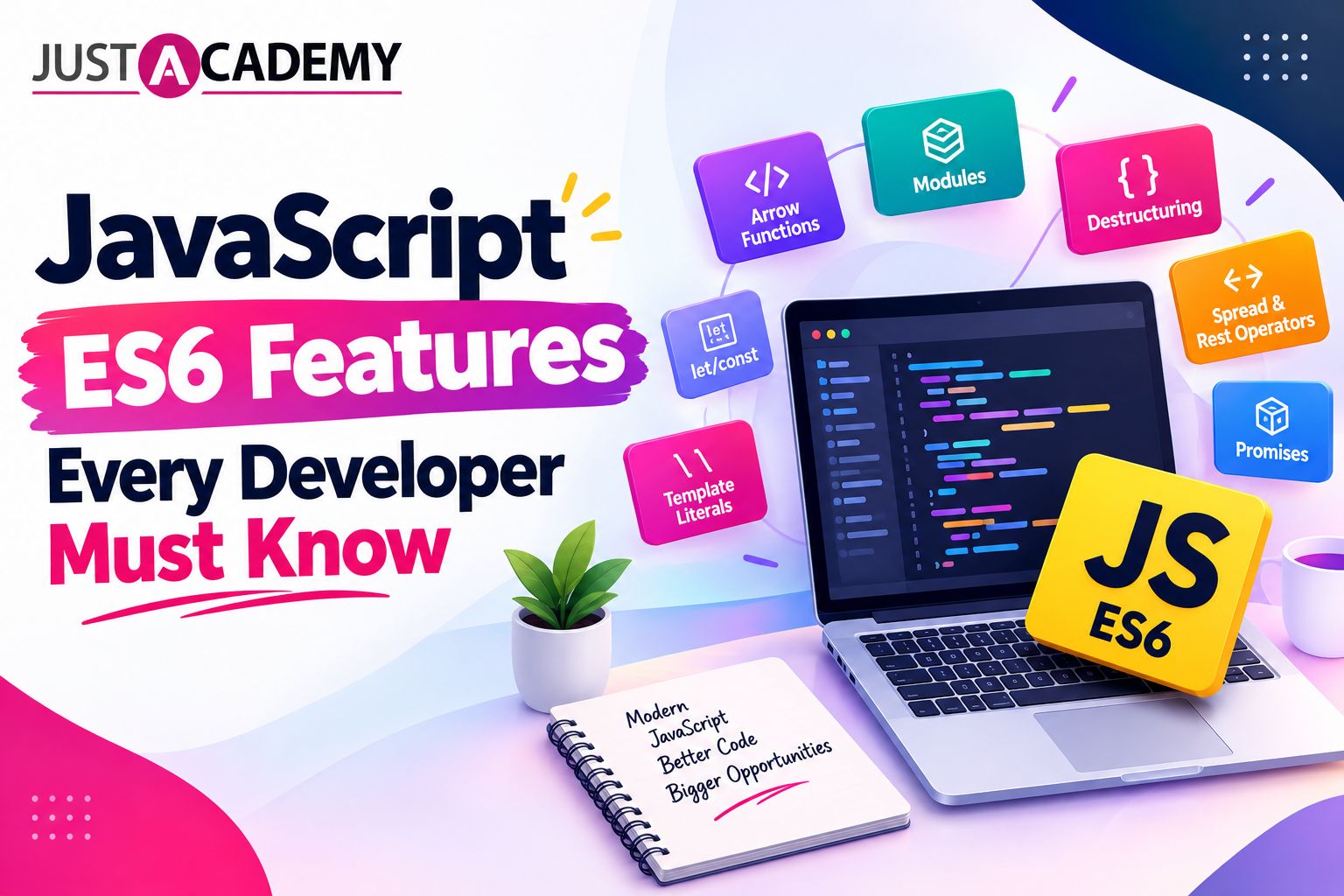
A practical, example driven guide to ES6 JavaScript for learners in Delhi who want to write modern code, think like a developer and get job ready with live instructor led and mentor led training
From your first Angular app to real time dashboards, here is a practical, mentor backed list of angular projects for practice, with source code thinking, live interactive sessions and placement support.
From a humble to do list to a Node JS backend, here are the javascript project ideas that actually teach you something and give recruiters a reason to click your GitHub link.
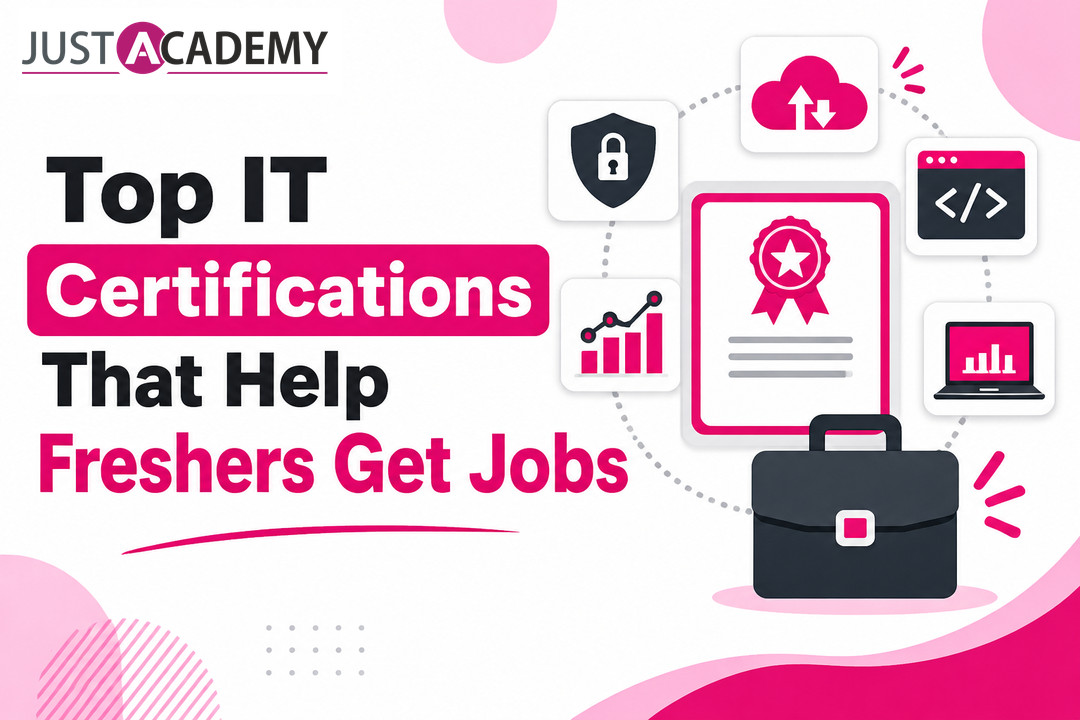
A straight talking guide for Delhi freshers, career switchers and non tech graduates on choosing the right IT certification, and why live interactive, instructor led and mentor led training makes the difference
A grounded, honest guide for Delhi learners on skills, salaries, jobs and the learning path behind each IT career, backed by live, instructor led and mentor led training
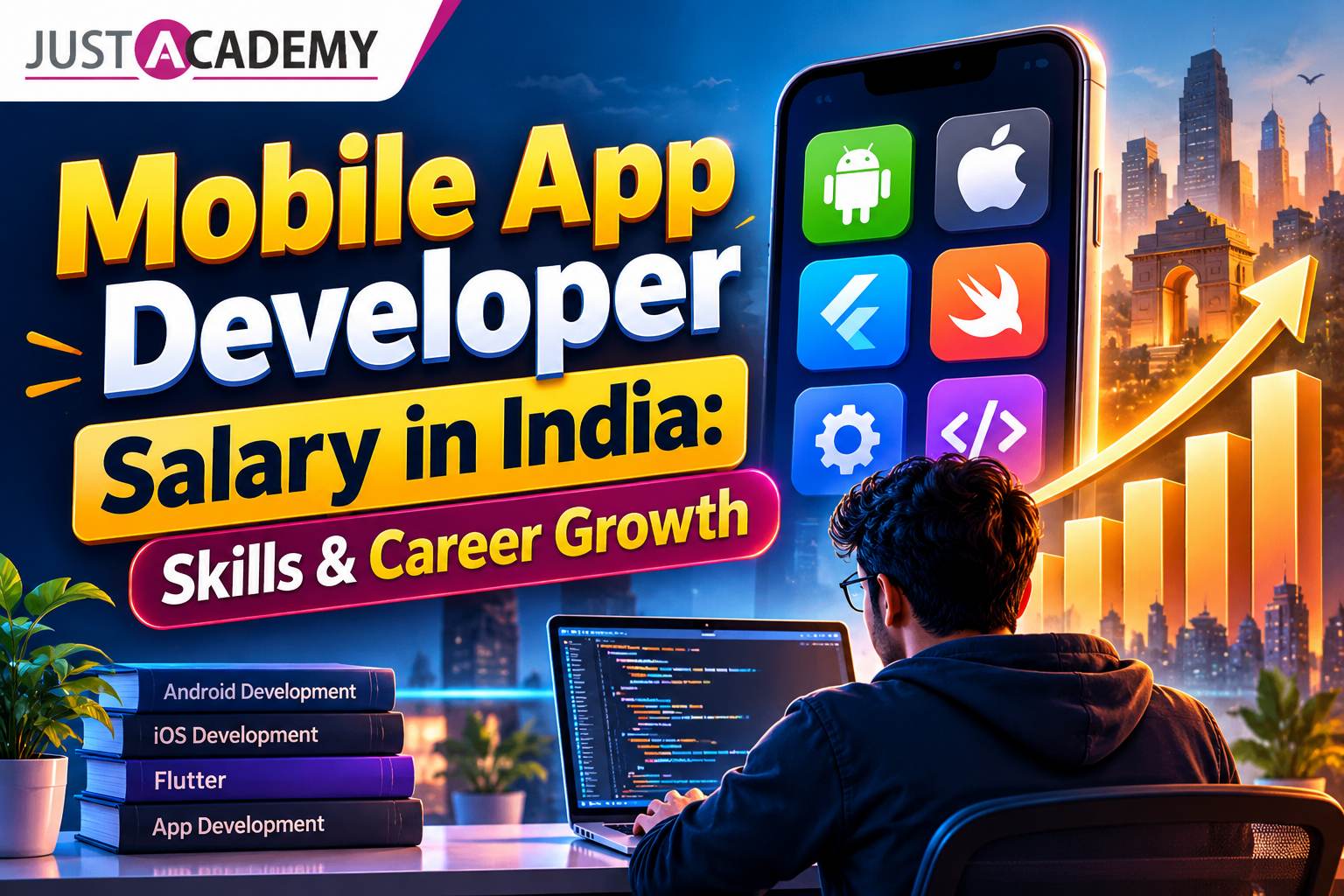
A straight talking guide for Delhi learners on what mobile app developers really earn, which skills raise the number, and how live, mentor led training can shorten the road from beginner to hired.
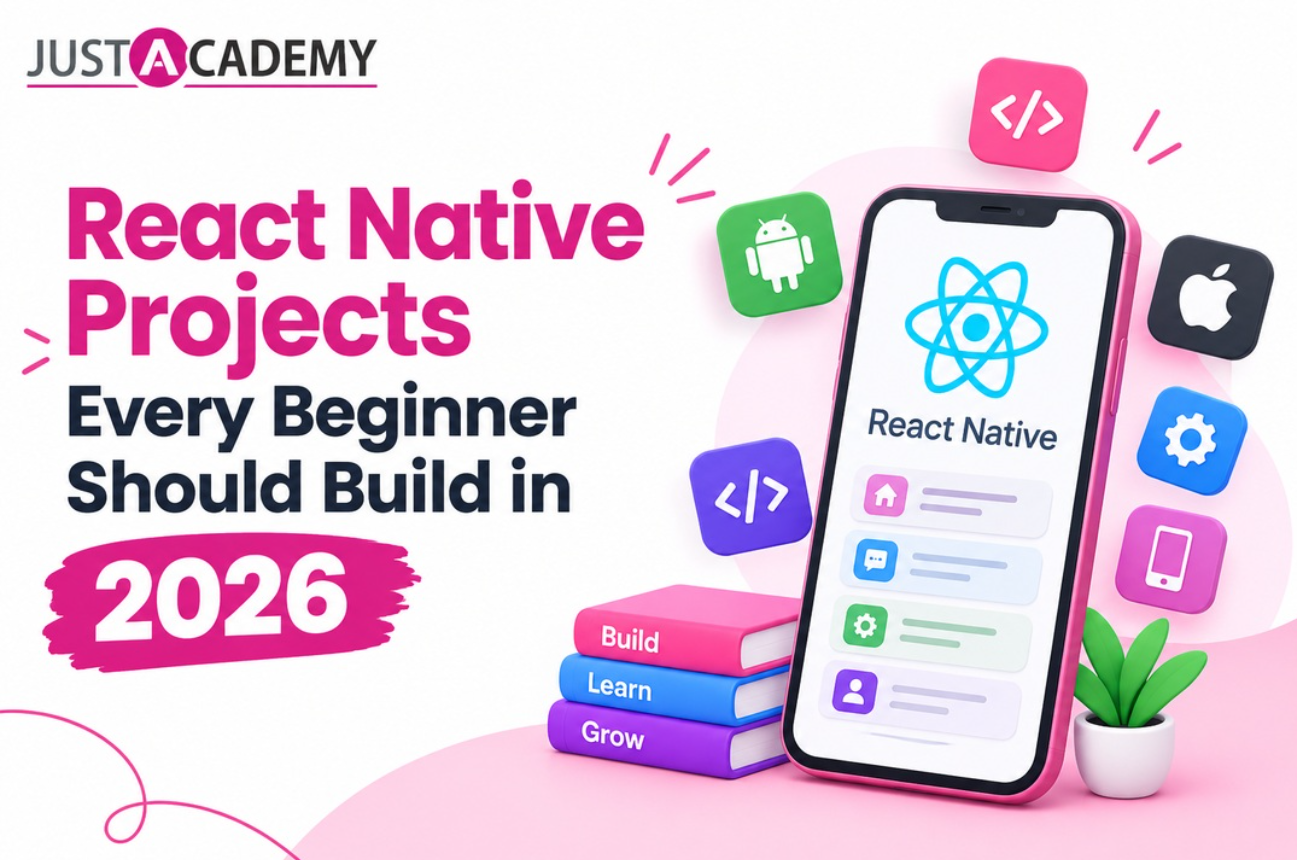
A practical guide for Delhi learners covering react native app ideas for beginners, live mentor led practice, and a portfolio that actually gets interviews
A practical, honest walkthrough of Swift, Xcode, Windows workarounds, Flutter, React Native and the career paths that open up once you can build for Apple devices
Drop us a Query
+91 99871 84296
Available 24x7 for your queries
Want To Connect with us
🚀 Kickstart Your IT Career
with JustAcademy
Learn Industry-Focused Courses with Live Projects & Placement Assistance
Full Stack Java(Java, Spring Boot, Hibernate, REST API, React JS)
Data Analytics(Excel, SQL, Power BI, Python, Tableau)