I am learning flutter from JustAcademy, They provide very much great environment where people gather and work simultaneously. totally project based training institute.
MOHD ABU BAKAR ANSARI
Flutter Developer
Awesome Experience. I am a Front-end Web Designer working at Star India for 3 years now. I applied for Full-stack development and my experience has been phenomenal & they really do help with placements exceptionally. Thank you Roshan sir so much.
A step by step path from your first line of Selenium code to a QA role that actually pays for your effort
Why Selenium Automation Testing Is Still the QA Skill to Learn in 2026
If you have ever typed selenium tutorial into a search bar at midnight wondering whether it is even worth the effort anymore, here is the honest answer, it absolutely is. Manual testing has not disappeared, but the sheer volume of releases modern product teams push out every month means nobody is manually clicking through five hundred test cases before every deployment anymore. Companies need people who can automate that grind, and Selenium remains the backbone of that automation across the vast majority of QA teams in India and globally.
What makes this moment particularly good for beginners is that selenium automation testing has matured into a genuinely learnable skill set. It is not a niche tool buried in obscure documentation anymore, it has a massive community, endless real world use cases, and a clear path from complete beginner to someone drawing a QA automation salary within a few months of focused effort. This blog lays out exactly that path, a full qa testing roadmap for 2026, built the way an actual mentor would walk you through it rather than a vague list of buzzwords. If you would rather skip the trial and error and learn this roadmap with someone guiding you through it, the selenium training program covers all of this in a structured format, and you can also register for a free demo class first to see how a live session actually feels before committing to anything.
It is also worth acknowledging why this particular year matters. Hiring patterns across QA teams have shifted noticeably toward candidates who can demonstrate automation skills from day one rather than learning them gradually on the job, which used to be far more common a few years ago. Companies simply do not have the bandwidth to train someone from scratch on automation basics anymore, they expect a working understanding of Selenium, some familiarity with a testing framework like TestNG, and ideally a small portfolio of projects before you even walk into the interview room. That expectation shift is exactly why a structured roadmap like this one matters more now than it did even two or three years ago.
The Complete Selenium Automation Testing Roadmap for 2026
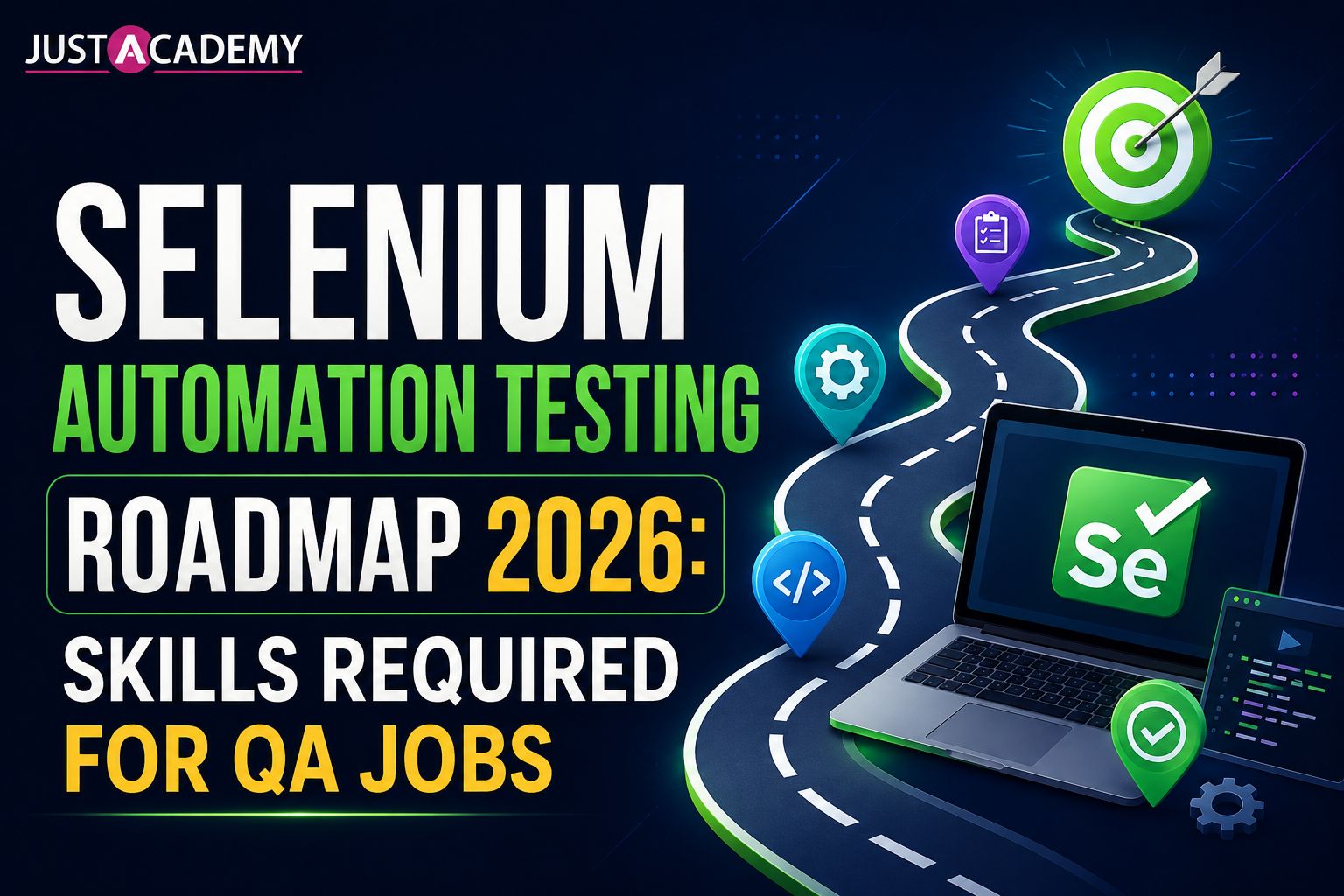
Before diving in, it helps to understand the shape of this roadmap so you are not just memorizing terms out of order. We will move through Selenium fundamentals, the Java versus Python decision that trips up almost every beginner, WebDriver mechanics, TestNG integration, cross browser testing, real automation testing projects worth building, common selenium interview questions, and finally how all of this translates into actual qa fresher jobs.
Nobody becomes job ready by memorizing locator strategies in isolation. Skills stack on top of each other, and this roadmap is arranged so each stage naturally sets up the next one.
Stage One: Getting Comfortable With Selenium Fundamentals
Every strong automation tester starts in the same place, understanding what Selenium actually is and where it fits inside the broader testing ecosystem. Selenium is not a single tool, it is a suite, WebDriver for browser automation, Selenium Grid for running tests across machines, and Selenium IDE for quick record and playback work. Most professional automation work centers around selenium webdriver, so that is where your real focus needs to go early on.
Spend your first couple of weeks purely on locators, understanding the difference between ID, class name, XPath, and CSS selectors, and why choosing the right locator strategy prevents your test scripts from breaking every time a developer tweaks the front end slightly. This sounds like a small detail until you are six months into a job watching half your test suite fail because someone renamed a button, and you realize how much thought actually goes into writing resilient locators.
It also helps to spend a little time simply exploring the Selenium documentation itself rather than relying entirely on secondary tutorials. A lot of beginners skip this step because official documentation feels dry compared to a well produced video course, but getting comfortable reading it directly is a habit that pays off constantly once you are working with newer Selenium versions or debugging something a tutorial never covered. Automation testing skills built this way tend to be more durable than skills learned purely by copying code along with a video.
Choosing Between Java and Python for Your Automation Testing Course With Placement
This is genuinely one of the most common questions beginners ask, and there is no single universally correct answer. Selenium using java remains the more widely used combination inside large enterprise QA teams, partly because Java has such deep roots in enterprise software already, and partly because most existing automation frameworks in bigger companies are already built on it.
Python selenium automation, on the other hand, tends to appeal to beginners coming from a more general programming background, since Python's syntax is noticeably gentler for someone writing their first few scripts. If you are choosing purely based on what will get you hired faster in the current Indian job market, Java still holds a slight edge simply because more job postings explicitly ask for it, but Python is closing that gap quickly, especially among startups and smaller product teams.
If your goal is a genuinely well rounded automation testing course with placement, learning both eventually is not unreasonable, though picking one to go deep on first, ideally Java if you are aiming at traditional QA roles, will get you interview ready faster than trying to split your attention evenly from day one.
It is also worth mentioning that this decision is rarely permanent. Plenty of testers start with Java because that is what their first course or job required, and pick up Python later once they need to script something quickly for a smaller internal tool or a data validation task. Treat your first language choice as a starting point, not a lifelong commitment, and you will worry a lot less about getting it perfectly right on day one.
Stage Two: Building Real WebDriver Scripts
Once the fundamentals settle in, it is time to actually write working WebDriver scripts rather than just reading about them. Start simple, automate logging into a demo website, filling out a form, and verifying a confirmation message appears. These small exercises might feel unglamorous, but they force you to understand waits, both implicit and explicit, which is one of the single biggest sources of flaky, unreliable tests among beginners who skip this step.
A deeper walkthrough of exactly how a structured course sequences this stage, along with the Mumbai specific batch details and pricing many learners ask about, is covered in this selenium automation testing course overview, which is worth reading once your basic scripts start running reliably.
One habit worth building early is version controlling your scripts from the very first project, even the tiny login automation exercise. Beginners often treat early scripts as throwaway practice and skip Git entirely, then struggle later when they actually need to show a clean commit history during an interview. Start the habit now, it costs almost nothing and pays off enormously later.
Understanding Selenium Pricing and Course Options Before You Commit
A fair number of beginners get stuck comparing selenium pricing across different platforms before they have even written their first script, which honestly slows momentum more than it helps. Free resources are genuinely enough to learn the basics, and plenty of learners start with a selenium full course on YouTube before deciding whether a paid, structured program is worth the investment. The real question worth asking is not how much a course costs, but whether it includes actual project work, mentor feedback, and some form of software testing course with placement support, since those three things are what actually shorten your path to a job.
Stage Three: Adding TestNG for Real Test Management
Raw Selenium scripts get messy fast once you are managing more than a handful of test cases. This is where testng with selenium comes in, giving you test annotations, grouping, parallel execution, and proper reporting instead of a folder full of disconnected scripts. Learning TestNG properly is what turns your work from "a bunch of automation scripts" into something that actually resembles a professional test suite.
Focus specifically on assertions, test prioritization, and how TestNG generates HTML reports, since being able to hand someone a clean report of what passed and what failed is exactly the kind of deliverable that shows up in real QA jobs, not just tutorials.
Do not rush past the configuration file either. Understanding how to set up a testng.xml file to control which tests run, in what order, and with what parameters is a small technical detail that a surprising number of experienced testers still fumble through when asked to explain it clearly. Getting comfortable with it early puts you ahead of testers who have been working for a year or two but never properly learned the configuration side of things.
Stage Four: Cross Browser Testing and Why It Matters More Than Beginners Assume
Cross browser testing is one of those topics that sounds like a checkbox item until you actually experience a script that runs perfectly on Chrome and falls apart entirely on Firefox because of a rendering difference nobody anticipated. Understanding cross browser compatibility issues, and how to configure Selenium Grid or cloud based testing platforms to run your suite across multiple browsers simultaneously, is a skill that genuinely separates junior automation testers from people ready for mid level roles.
If you are wondering how this fits into an actual career trajectory, not just a skill checklist, there is a genuinely useful breakdown in this complete career guide for becoming a selenium automation tester, which maps out what a realistic year one to year three progression actually looks like in this field.
That resource also happens to answer a question a lot of learners quietly wonder about but rarely ask out loud, which is whether manual tester jobs for freshers are still worth pursuing as a stepping stone before moving fully into automation, or whether it makes more sense to target automation roles directly from the start.
There is a genuine argument for both paths. Starting in a manual testing role teaches you how real bug tracking, test case documentation, and release cycles actually work inside a company, context that makes your automation scripts noticeably more thoughtful once you eventually pick up Selenium on the job. On the other hand, if you have already built a solid portfolio of automation testing projects before applying, there is often no need to take the manual detour at all, particularly for companies that are actively hiring automation focused freshers directly.
Automation Testing Projects That Actually Get You Noticed
Reading documentation and watching tutorials will only take you so far. What genuinely moves the needle for qa fresher jobs is having real, demonstrable automation testing projects sitting in your GitHub, projects you can walk an interviewer through confidently rather than vaguely describing.
Start with something manageable, automating the login flow and basic navigation of a public demo e commerce site. Once that works reliably, expand it into a small end to end selenium project covering search functionality, adding items to a cart, and verifying checkout totals update correctly. From there, layer in TestNG for structured reporting, and finally push your suite to run across multiple browsers using Selenium Grid.
By the time you have three or four projects like this, each slightly more complex than the last, you have something genuinely impressive to show, not just a certificate claiming you completed a course, but actual proof that you can build and maintain a working automation suite.
A fifth project worth considering once the basics feel comfortable is a small data driven test suite, where your script reads test inputs from an external file, an Excel sheet or CSV works fine, and runs the same test logic across multiple sets of data. This is a genuinely common real world pattern, since QA teams rarely want to hardcode test values directly into scripts, and demonstrating this skill signals that you understand how automation actually scales inside a larger organization rather than staying limited to isolated demo scripts.
Preparing for Selenium Interview Questions
No roadmap is complete without addressing what happens once you actually start applying. Selenium interview questions tend to follow a predictable pattern, expect questions about locator strategies and when to use XPath versus CSS selectors, the difference between implicit and explicit waits, how you handle dynamic elements that change their attributes between page loads, and scenario based questions asking how you would automate a specific tricky workflow.
Interviewers also frequently probe your understanding of the Page Object Model, a design pattern that keeps your test code organized and maintainable as your suite grows. If you have not implemented this pattern in at least one of your projects, it is worth going back and refactoring one before you start interviewing seriously.
For a genuinely thorough breakdown covering the kind of questions freshers specifically get asked, including plenty focused on the Java side of things, this collection of selenium with java interview questions for freshers is worth working through carefully in the weeks before you start interviewing, ideally alongside actually practicing the answers out loud rather than just reading them silently.
Beyond the technical questions, prepare for at least one or two scenario based prompts where the interviewer describes a messy real world situation, a test that passes locally but fails on the CI pipeline, or a flaky test that only breaks intermittently, and asks how you would investigate it. These questions are less about knowing a textbook answer and more about demonstrating that you can reason through a problem methodically, which is often what actually separates candidates who get the offer from candidates who simply knew the same syntax.
Common Mistakes That Slow Beginners Down
Even with a clear roadmap, certain habits quietly stall progress for a lot of learners, and it is worth naming them directly so you can avoid the same traps.
The first is skipping waits entirely and relying on fixed sleep statements to make scripts "work." It feels like a shortcut early on, but it produces slow, unreliable test suites that experienced testers can spot within seconds of reading your code. Learn explicit waits properly instead, it takes a little longer upfront but saves you from rewriting entire test suites later.
The second mistake is writing every test case as one giant script with no structure. This works fine for a five step demo, but falls apart completely once you are managing thirty or forty test cases across a real project. Learning the Page Object Model early, even before you feel like your projects are complex enough to need it, builds the habit before bad structure becomes comfortable.
The third, and possibly the most common, is treating learn selenium as a finish line rather than an ongoing skill. Automation testing tools and best practices genuinely evolve, and testers who stay curious after landing their first job, reading changelogs, experimenting with new Selenium features, tend to progress into senior and lead QA roles far faster than those who stop learning the moment they get hired.
How Long Does This Roadmap Actually Take
A realistic timeline for someone dedicating focused, consistent effort, roughly two to three hours daily, is somewhere between eight and twelve weeks to go from complete beginner to genuinely interview ready. That includes the fundamentals, scripting practice, TestNG, cross browser testing, and enough project work to speak confidently about your experience.
This timeline compresses considerably inside a structured, mentor guided environment, since a lot of the trial and error beginners go through alone, debugging environment setup issues, figuring out why a locator that worked yesterday suddenly fails today, gets resolved in minutes with proper guidance instead of hours of frustrated searching. Learners inside a well paced program often reach genuine job readiness closer to the six to eight week mark, purely because they are not losing days to setup problems that a mentor could have flagged in the first session.
Stage
Core Focus
Typical Timeframe
Fundamentals
Locators, Selenium suite overview, Java or Python choice
2 to 3 weeks
WebDriver Scripting
Waits, form automation, basic assertions
2 to 3 weeks
TestNG Integration
Annotations, grouping, reporting
1 to 2 weeks
Cross Browser Testing
Selenium Grid, compatibility handling
1 to 2 weeks
Projects and Interview Prep
End to end suites, Page Object Model, mock interviews
3 to 4 weeks
How This Roadmap Connects to Broader QA and Development Skills
Automation testing rarely exists in isolation inside a real engineering team. Testers who understand the basics of the languages their developers actually write in tend to progress faster, which is part of why so many QA professionals eventually branch into learning core Java more deeply beyond just what Selenium requires, or pick up Python as a second language for scripting and light backend testing work. Neither is mandatory to get started, but both make you noticeably more versatile once you are a year or two into your QA career.
Why Structured Training Changes How Fast You Get Hired
Here is something worth being honest about, self teaching Selenium is absolutely possible, plenty of working automation testers did exactly that. But it usually takes considerably longer, and involves a fair amount of trial and error that a good mentor could shortcut in a fraction of the time. That is really the value behind JustAcademy's approach to automation testing training.
As an ISO certified institute with a physical presence across Mumbai and Pune, and live interactive sessions available to learners anywhere in the world, the structure is built around exactly the roadmap covered in this blog, fundamentals, real WebDriver scripting, TestNG, cross browser testing, and genuine project work, with an instructor available to catch mistakes early rather than letting bad habits calcify over months of solo learning.
Learners who want to go beyond the fundamentals also get access to a dedicated full stack QA automation bootcamp built for those chasing a genuinely comprehensive, project heavy path with placement support baked directly into the program rather than treated as an afterthought.
Because live interactive training means your doubts get resolved in real time instead of sitting unanswered in a forum thread somewhere, and because placement support means your job search does not start completely from zero the moment your course ends. For many learners, that structured accountability, a fixed schedule, an instructor tracking your progress, a batch of peers working through the same projects alongside you, ends up being the single biggest factor separating people who actually finish the roadmap from people who quietly stall out after week three.
Conclusion
Selenium automation testing in 2026 is not a niche skill anymore, it is close to a baseline expectation for QA professionals across most mid sized and large product companies. The roadmap above, fundamentals, WebDriver scripting, TestNG, cross browser testing, real projects, and focused interview preparation, is not a shortcut, but it is a genuinely efficient path if you follow it in order rather than jumping around based on whatever tutorial algorithm happens to recommend next.
Whether you choose to build this skill set independently or through a guided automation testing course with placement, what actually determines your outcome is consistency and a willingness to build real, working projects rather than just consuming content passively.
Selenium itself will keep evolving, new versions, new integrations, new best practices, but the fundamentals covered in this roadmap, solid locator strategy, reliable waits, clean test structure through TestNG and the Page Object Model, and genuine cross browser awareness, remain the foundation everything else gets built on. Master those fundamentals properly now, and adapting to whatever changes in the Selenium ecosystem over the next few years becomes a minor adjustment rather than starting over from scratch.
If you are ready to turn this roadmap into an actual QA career with mentor support, hands on project work, and placement assistance backing you up, JustAcademy's selenium training is built exactly for that path, with both Mumbai classroom options and live interactive online sessions available for learners anywhere. Register for your free demo class today to see the curriculum in action, or if you would rather review the details first, download the complete brochure and plan your next move at your own pace.
Why Selenium Automation Testing Is Still the QA Skill to Learn in 2026
The Complete Selenium Automation Testing Roadmap for 2026
Automation Testing Projects That Actually Get You Noticed
Why Structured Training Changes How Fast You Get Hired
A practical comparison for Pune based learners choosing between MERN and Java full stack development, covering salary, learning curve, job roles, and long term career growth.