I am learning flutter from JustAcademy, They provide very much great environment where people gather and work simultaneously. totally project based training institute.
MOHD ABU BAKAR ANSARI
Flutter Developer
Awesome Experience. I am a Front-end Web Designer working at Star India for 3 years now. I applied for Full-stack development and my experience has been phenomenal & they really do help with placements exceptionally. Thank you Roshan sir so much.
Python is one of the most popular programming languages in the world, known for its simplicity and flexibility. Two of the most commonly used data types in Python are lists and strings. Although they may look similar at first, they serve different purposes and behave differently in many scenarios.
Python is one of the most popular programming languages in the world, known for its simplicity and flexibility. Two of the most commonly used data types in Python are lists and strings. Although they may look similar at first, they serve different purposes and behave differently in many scenarios.
In this blog, we’ll explore the key differences between lists and strings in Python, how they work, and when to use them effectively in your code.
A string in Python is a sequence of characters. Strings are used to store textual data — like names, sentences, or any group of characters.
Example:
name = "Hello World"
print(name)
Characteristics of Python strings:
Immutable (cannot be changed after creation)
Can be defined using single quotes ' ' or double quotes " "
Supports slicing and indexing
📌 What Is a List in Python?
A list is a collection of items that can be of different data types (integers, strings, floats, or even other lists). Lists are one of the most commonly used data structures in Python.
Example:
my_list = [10, "Python", 3.14, True]
print(my_list)
Key features of Python lists:
Mutable (you can change, add, or remove elements)
Ordered (elements have an index position)
Can store mixed data types
🆚 Python List vs String — Main Differences
Here’s a clear comparison between lists and strings in Python:
✅ 1. Mutability
String: Immutable – you cannot modify a string once it is created.
List: Mutable – you can change, add, remove or update elements.
Example:
s = "Hello"
# Cannot do s[0] = "h" – this will cause an error
lst = [1, 2, 3]
lst[0] = 100 # This works
✅ 2. Data Type Flexibility
String: Stores only characters.
List: Can store integers, strings, floats, and more.
✅ 3. Operations
Feature
String
List
Supports Indexing
✅
✅
Supports Slicing
✅
✅
Allows Modification
❌
✅
Methods (like append)
❌
✅
Example of list methods:
my_list.append(50)
my_list.remove("Python")
✅ 4. Use Cases
📌 Strings – for text manipulation, messaging, and storing messages.
📌 Lists – for storing collections of items, processing data sets, and dynamic data handling.
🧠 Why Understanding the Difference Matters?
Knowing the difference helps you write efficient and error-free Python programs. For example:
If you need to modify elements — use a list.
If you are working with text and don’t need to change data — use a string.
🧪 Example: Using Both in Code
text = "Python"
chars = list(text) # Converts string to list
print(chars)
Output:
['P', 'y', 't', 'h', 'o', 'n']
This conversion allows you to treat text as a list — but remember the original string remains unchanged because strings are immutable.
🚀 Summary
Feature
List
String
Mutable
✔
✖
Can contain different types
✔
✖
Useful for storing items
✔
✖
Best for text
✖
✔
Understanding the difference between lists and strings in Python will help you choose the right data type and write cleaner, more efficient code.
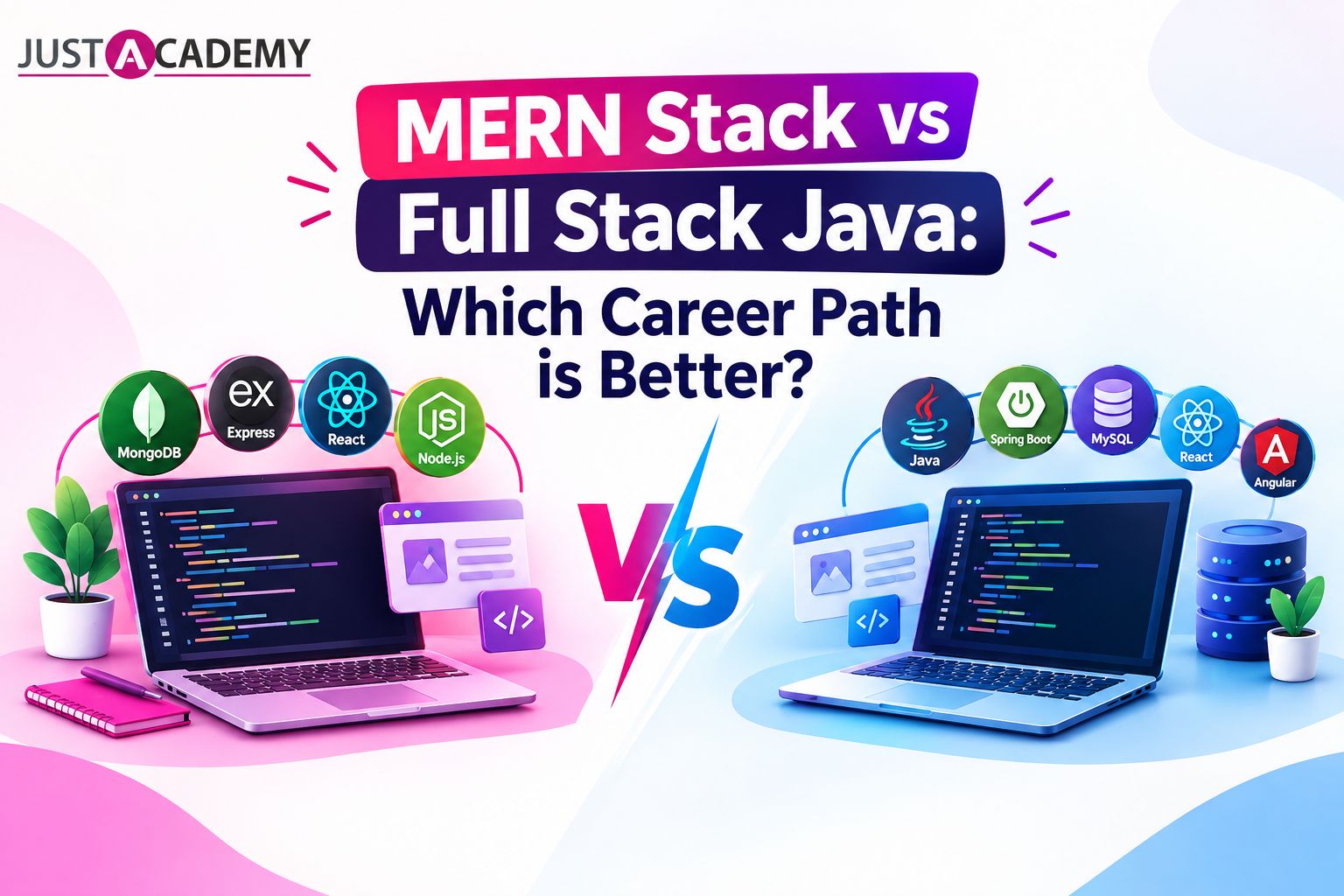
A practical comparison for Pune based learners choosing between MERN and Java full stack development, covering salary, learning curve, job roles, and long term career growth.