The Inside Story on Why Every Tech Company Is Hiring Spring Boot Experts — And How You Can Become One
Why Spring Boot Developers Are in Huge Demand in 2026
Your Inside Story on Why Every Tech Company Is Hiring Spring Boot Experts — And How You Can Become One
Let's be direct. If you open any major job portal today — Naukri, LinkedIn, Indeed — and search for Java backend roles, you will find one framework appearing in almost every single listing: Spring Boot. Not occasionally. Constantly.
In 2026, the spring boot developers demand has crossed a tipping point. It is no longer just a nice-to-have skill on a resume. It is the baseline expectation for anyone working in Java backend development. Banks want it. Startups want it. MNCs won't interview without it.
So why has Spring Boot become so indispensable — and more importantly, how do you position yourself to capitalise on this demand? That's exactly what this guide covers.
Explore the Full Stack Java Developer Bootcamp in Mumbai
The Real Reason Spring Boot Developers Are Dominating the Job Market in 2026
This isn't a trend that appeared overnight. The rise of Spring Boot as the go-to framework for enterprise Java development has been building for years, and by 2026 it has fully matured into the industry standard.
Microservices Became the Default Architecture
Five years ago, microservices were a buzzword. Today, they are how serious software gets built. Every company that has scaled beyond a certain size has broken its monolithic application into independently deployable microservices — and Spring Boot is the framework that makes building those services fast, clean, and maintainable.
When a company builds 15 microservices to power their platform, they need 15 Spring Boot applications. Multiply that across thousands of companies and the spring boot developers demand becomes very easy to understand.
The Cloud Migration Wave Is Still in Full Swing
Enterprises across India and globally are aggressively migrating legacy systems to cloud platforms like AWS, Azure, and Google Cloud. Spring Boot's compatibility with cloud-native architectures, containerisation via Docker, and orchestration through Kubernetes makes it the natural choice for this migration. Every new cloud deployment needs Spring Boot developers to build, test, and maintain the backend services.
BFSI and Fintech Are Running on Spring Boot
India's booming fintech sector — from UPI-based payment apps to neobanks and insurance platforms — overwhelmingly relies on Java backends powered by Spring Boot. The security features, transaction management, and scalability that Spring Boot offers make it the trusted backbone of financial applications where reliability is non-negotiable.
Spring Boot Dramatically Speeds Up Development
From a purely practical standpoint, Spring Boot eliminates the complex XML configurations that plagued earlier versions of the Spring Framework. Developers can spin up a production-ready Java backend in a fraction of the time it would have taken even five years ago. For companies trying to ship products fast, this productivity gain is invaluable — and it makes Spring Boot developers extremely attractive hires.
What Skills Does a Spring Boot Developer Actually Need in 2026
Understanding the demand is one thing. Knowing exactly what skills will get you hired is another. Here is an honest breakdown of what employers expect when they post a java backend course graduate or Spring Boot developer role.
Core Java Proficiency Is Still the Foundation
No amount of framework knowledge covers for weak Java fundamentals. Before you touch Spring Boot, you need to be solid on object-oriented programming, the collections framework, exception handling, generics, Java streams, and lambda expressions. These concepts are tested in technical interviews across every company.
Spring Boot and the Spring Ecosystem
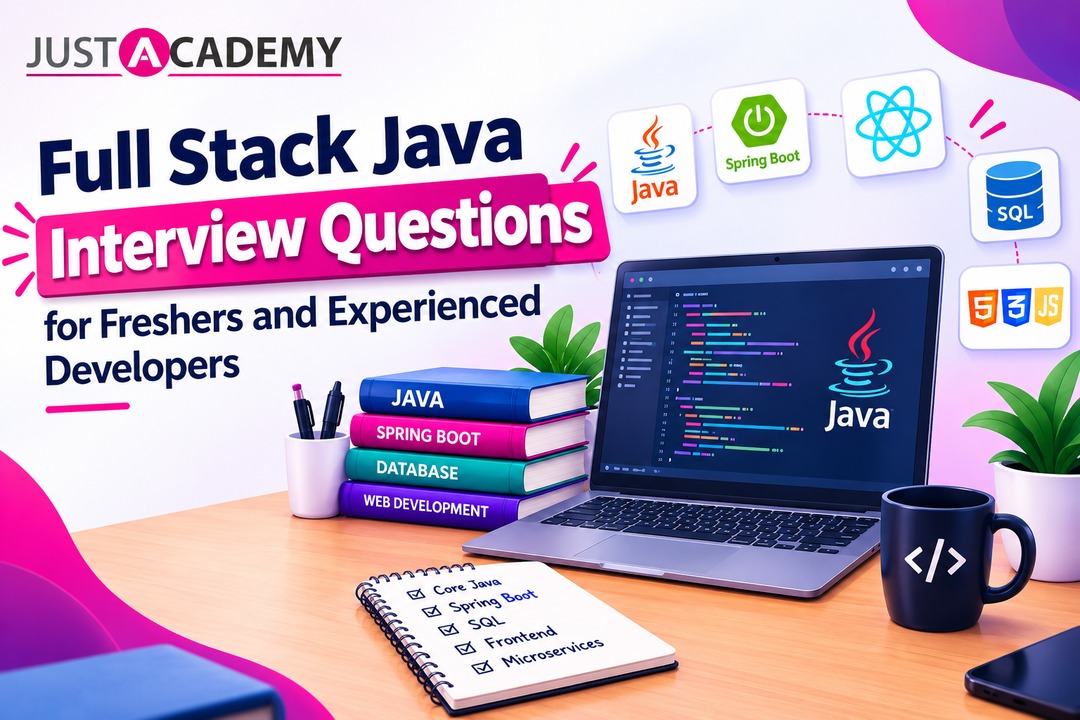
This is the heart of the role. Employers expect hands-on knowledge of Spring Boot for application setup and autoconfiguration, Spring MVC for building RESTful APIs, Spring Security for authentication and authorisation with JWT, Spring Data JPA for database interaction, and Spring Cloud basics for microservices communication and service discovery.
Any serious spring boot course should cover all of these — not just the basics.
Hibernate and Database Skills
Understanding how Hibernate maps Java objects to relational database tables is essential for any java backend course. You should know how to write efficient JPQL queries, manage lazy versus eager loading, and handle transactions correctly. On the database side, strong SQL skills across MySQL and PostgreSQL are expected.
REST API Design and Integration
Building clean, well-documented RESTful APIs is a core day-to-day responsibility of a Spring Boot developer. Employers expect knowledge of HTTP methods, status codes, versioning strategies, pagination, and API security. Exposure to tools like Postman for testing and Swagger for documentation gives you an additional edge.
Docker, Git, and Cloud Basics
In 2026, backend developers who cannot containerise an application with Docker or manage code through Git are increasingly at a disadvantage. A working understanding of AWS services — particularly EC2, S3, and RDS — is now a common requirement even at junior levels. The best java training institute programs now include these DevOps fundamentals as part of their standard curriculum.
Problem Solving and System Design Awareness
Senior roles and fast-growing startups particularly value developers who can think beyond the code — who understand how systems fail, how to design for scalability, and how to make architectural trade-offs. Even as a junior developer, showing awareness of these concepts in interviews sets you apart.
How to Pick the Best Spring Boot Course or Java Training Institute
Given how much is at stake — your time, your money, and your career trajectory — choosing the right spring boot course or java training institute deserves serious thought. Here is a practical framework for evaluating your options.
Does the Curriculum Go Deep on Spring Boot?
Many courses cover Spring Boot at a surface level — just enough to say it's included. Look for programs where Spring Boot is not one module among twenty but the central, recurring thread throughout the course. You should be building complete applications with Spring Boot from early in the program, not just reading about it at the end.
Are There Real Projects, Not Just Tutorials?
Following along with a tutorial and building something from a blank page are completely different experiences. The best programs give you genuine project briefs — a fintech API, an e-commerce backend, a microservices-based application — and expect you to build them with guidance but without hand-holding. This is what produces portfolio-worthy work that impresses hiring managers.
What Does Placement Support Actually Look Like?
"Placement assistance" can mean anything from a vague job board link to a dedicated team that conducts mock interviews, reviews your resume, and has direct relationships with hiring companies. When evaluating a java training institute, ask specifically: How many companies do you work with? What is the average time to placement for your graduates? Can you speak to alumni?
Is the Faculty Industry-Experienced?
There is a significant difference between an instructor who has read the Spring Boot documentation and one who has spent years building production systems with it. Industry-experienced faculty know what real codebases look like, what mistakes junior developers make, and what interviewers are actually testing for. This practical knowledge is irreplaceable.
Online vs Classroom — Which Is Right for You?
The best spring boot course online formats offer flexibility and accessibility, which suits working professionals who cannot commit to fixed schedules. However, for freshers and career-switchers, classroom-based training at a reputed java training institute in Mumbai typically delivers better outcomes — structured schedules, peer accountability, live doubt resolution, and direct mentor access all contribute to faster, deeper learning.
Spring Boot Developer Jobs in Mumbai — Opportunities, Salaries & Where to Start
Mumbai is not just India's financial capital — it is increasingly one of its most important tech hubs. The density of BFSI companies, global MNCs, and fast-growing startups in and around the city creates an exceptionally strong local market for spring boot developer jobs in mumbai.
The Mumbai Job Market for Spring Boot Developers
Financial institutions, insurance companies, payment gateway providers, logistics platforms, and healthtech firms across Mumbai are all actively hiring Java backend and Spring Boot developers. Areas like BKC, Andheri, Powai, Thane, and Navi Mumbai are home to major tech offices and product companies that regularly post Spring Boot roles.
The advantage of being in Mumbai is proximity — physically close to hiring managers, networking events, and walk-in interviews that candidates applying from other cities simply cannot attend.
Salary Expectations for Spring Boot Developers in Mumbai
Entry-level Spring Boot developers with a strong java backend course background and project portfolio typically start between INR 5 LPA and INR 9 LPA in Mumbai. Mid-level developers with two to four years of experience and microservices expertise earn between INR 12 LPA and INR 22 LPA. Senior architects and tech leads with deep Spring Cloud and cloud-native experience can command INR 25 LPA to INR 40 LPA or more.
The Fastest Path to Spring Boot Developer Jobs in Mumbai
The most efficient route to landing spring boot developer jobs in mumbai in 2026 is a combination of structured training, hands-on project work, and targeted placement support. This is precisely the model that JustAcademy's Full Stack Java Developer Bootcamp in Mumbai is built around.
The bootcamp delivers intensive spring boot training as part of a complete full stack curriculum, with classroom sessions in Mumbai, real-world project experience, and a placement cell that actively connects graduates with hiring partners across the city.
Explore the Full Stack Java Developer Bootcamp in Mumbai
Not ready to commit yet? Start with a free demo session to experience the program firsthand before making any decision.
Register for a Free Demo — No Commitment Required
Download Free Brochure
The Real Reason Spring Boot Developers Are Dominating the Job Market in 2026
What Skills Does a Spring Boot Developer Actually Need in 2026
How to Pick the Best Spring Boot Course or Java Training Institute
Spring Boot Developer Jobs in Mumbai — Opportunities, Salaries & Where to Start